Violence in Northern Ethiopia Pushing Health System to the Brink, WHO Chief Warns
Renewed fighting in Ethiopia's Amhara and Tigray regions, including deadly drone strikes on civilians, is pushing an already fragile health system closer to collapse, with hospitals short of staff, medicines and ambulances, the head of the...
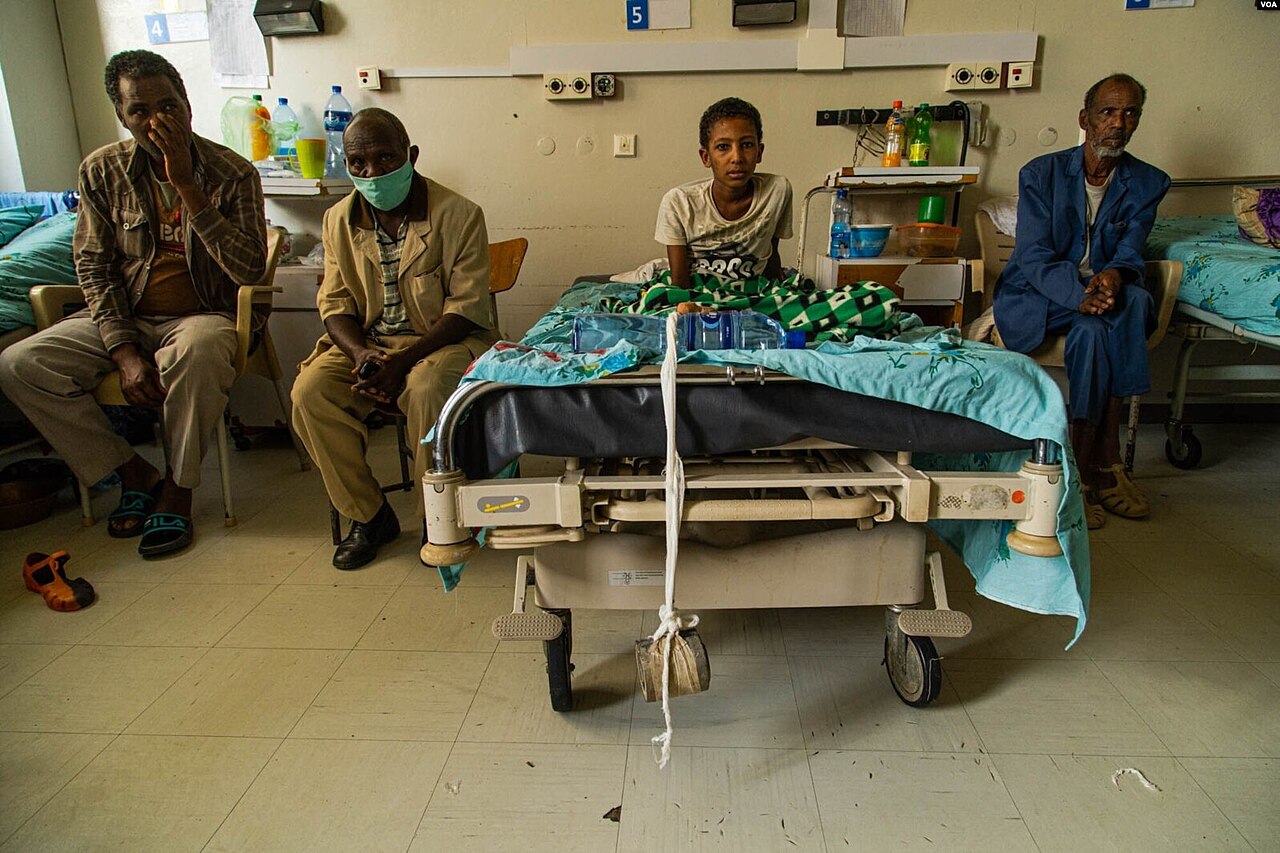
A child receiving care at a hospital in Tigray, northern Ethiopia, where hospitals face shortages of staff, medicines and equipment. (Photo: Wikimedia Commons)
Renewed fighting in Ethiopia's Amhara and Tigray regions, including deadly drone strikes on civilians, is pushing an already fragile health system closer to collapse, with hospitals short of staff, medicines and ambulances, the head of the World Health Organization has warned.
The head of the World Health Organization has called for greater protection for civilians caught in conflict in northern Ethiopia, warning that renewed violence is pushing the region's fragile health system closer to collapse. "Reports of attacks on civilians in Ethiopia's Amhara and Tigray regions are deeply disturbing," Director-General Tedros Adhanom Ghebreyesus wrote in a social media post on Monday 2 November, following deadly drone strikes over the preceding weekend that drew an international outcry.
Two incidents anchored his warning. At the Jaari 2 displacement camp in Amhara, children, including a newborn, were among those reportedly killed in a strike on a camp for people already displaced by conflict. In Rama, in neighbouring Tigray, several people were reportedly killed while trying to get food, gathered around a grain truck that had itself been hit. Rescue sources cited in reporting put the Amhara camp toll at at least 15 people killed, several of them children, with dozens more injured, figures the WHO chief did not himself total or attribute to any party.
"The violence in northern Ethiopia is pushing an already fragile health system closer to collapse," Dr Tedros continued. "Hospitals face shortages of health workers, medicines, and equipment. Ambulance services are severely limited. Insecurity is obstructing the delivery of life-saving medical supplies to some areas." Each element compounds the others: a wounded patient who cannot be reached by ambulance, brought to a hospital that has no surgeon on shift, or treated with medicines that never arrived is failed three times by the same war.
The human cost inside the hospitals has been described by those working in them. Reporting from Mekelle, the Tigrayan capital, recounted a week in September when a two-year ceasefire began to collapse and emergency rooms were flooded with war trauma patients for seven or eight days, without mobile network or electricity, floors filled with the wounded and no space to step. Médecins Sans Frontières reported more than 720 wounded people reaching Tigray hospitals from 22 September, including over 420 patients in Korem and Alamata and more than 300 at Suhul Hospital in Shire.
Diplomatically, the fighting has effectively shattered the November 2022 peace agreement between the federal government and forces in Tigray, stoking fears of a wider conflict. United Nations Secretary-General António Guterres has warned of the risk of escalation and wider destabilisation, and called on the parties to spare the civilian population and critical infrastructure and to agree without delay to a cessation of hostilities as a first step towards ending the conflict, according to a statement issued by his spokesperson and carried by UN News.
Dr Tedros stressed that WHO and its partners are working around the clock to deliver additional, much-needed medical supplies to all the affected regions, and UN agencies are coordinating surveillance, mobile health teams and essential supplies with national and regional authorities. But he warned that as fighting continues, more people are likely to lose access to essential healthcare, including emergency services, maternal and child healthcare and treatment for diseases, services that northern Ethiopia's population cannot simply postpone until the guns fall silent.
For health workers in Amhara, Tigray and Afar, the warning from Geneva is not abstract. It describes the wards they are already working in: understaffed, undersupplied and, in the worst moments, unreachable. The WHO chief's closing appeal was directed at those doing the fighting rather than those treating its victims. Civilians must be protected, he said, adding the line that has closed several of his statements on this war: "The most courageous choose peace." (Source: UN News / World Health Organization)
Source: Juba Global News Network, reporting UN News / World Health Organization coverage.