Waymo Pulls Driverless Taxis Off All US Freeways After California Ban
California's DMV restricted Waymo's freeway operations from November 11, calling them an 'imminent hazard' after three robotaxis entered an active construction closure on US Route 101 and another incident involved Highway Patrol vehicles —...
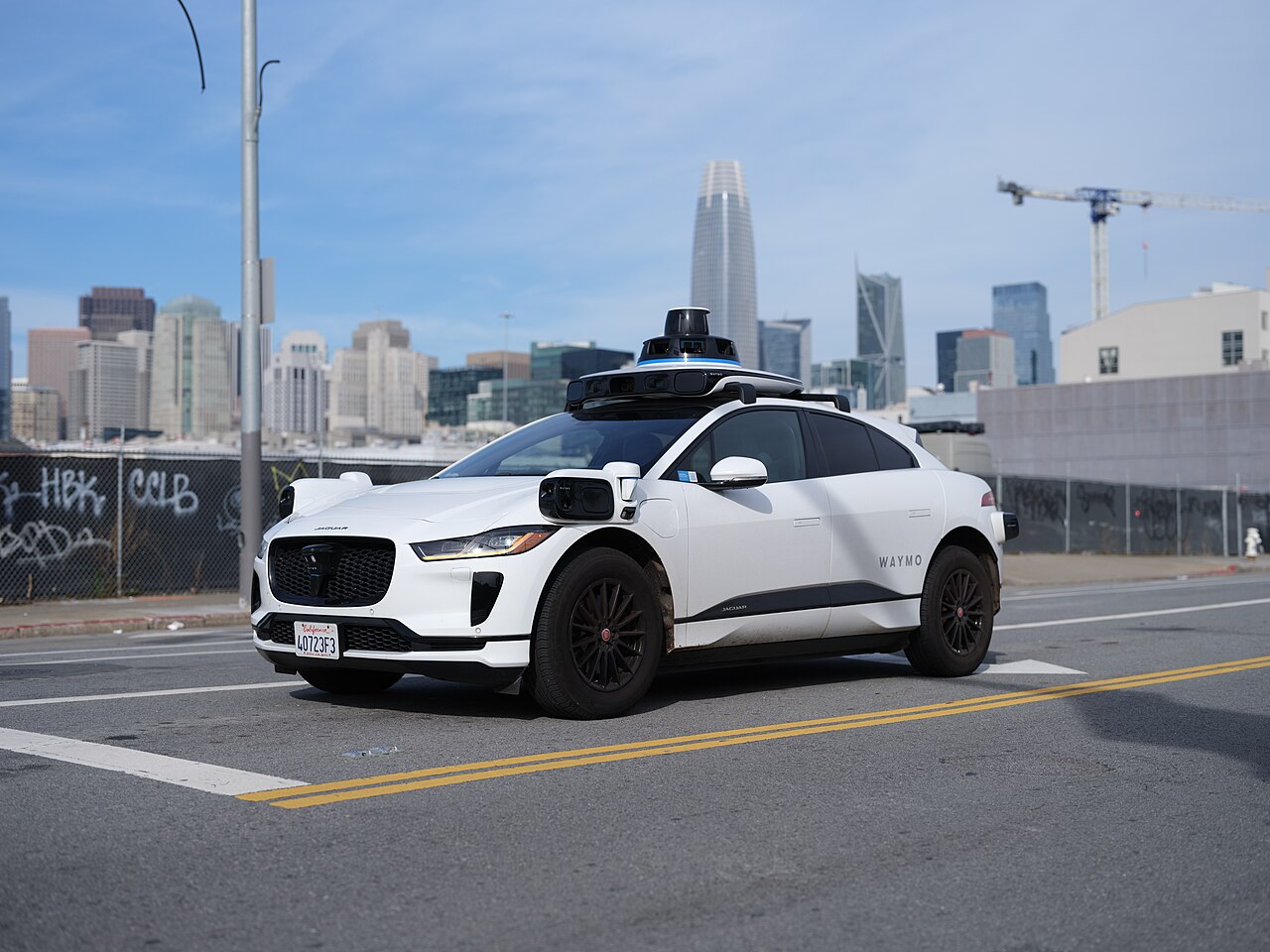
A Waymo driverless Jaguar I-Pace in San Francisco; Waymo has paused freeway rides in all its US markets after California's ban. (Wikimedia Commons, CC BY 4.0)
California's DMV restricted Waymo's freeway operations from November 11, calling them an 'imminent hazard' after three robotaxis entered an active construction closure on US Route 101 and another incident involved Highway Patrol vehicles — and Waymo has paused freeway rides in every market it serves.
Waymo, the driverless-car company owned by Google's parent Alphabet, has suspended freeway rides across the United States after California regulators banned its robotaxis from the state's freeways, in a setback for the industry's most advanced operator. The California Department of Motor Vehicles issued the restriction on November 11, though it became public only this past week, and Waymo responded by pausing freeway operations in all of its markets, not just California.
The DMV said it acted after three Waymo autonomous vehicles entered an active construction closure on US Route 101 near Burlingame on November 5, and a separate incident the following day in which a Waymo vehicle was involved with California Highway Patrol vehicles conducting a traffic break on Highway 280 in San Francisco. 'The Department determined that Waymo's driverless freeway operations pose an imminent hazard to public safety due to recurring incursions by its vehicles into active construction zones where construction workers, vehicles and equipment are present,' DMV spokesperson Jonathan Groveman said.
The word 'recurring' matters. The DMV noted that similar incidents occurred on May 18, 2026, after which Waymo faced restrictions and implemented corrective actions — and the November incursions happened anyway. The new restrictions cover both operating and testing driverless vehicles on California freeways, and will remain in effect until Waymo demonstrates to the department that it has taken 'effective corrective actions' to address the deficiencies. No end date has been set.
Waymo emphasised that the US 101 encounters involved no injuries or collisions. Spokesperson Dana Gallagher told TechCrunch the company has temporarily restricted freeway operations across its other operating markets to evaluate its performance, 'in alignment with our safety-first principles.' A company statement added that its ride-hailing service continues to operate on surface streets, serving over half a million trips each week, and that freeway testing continues with trained autonomous specialists behind the wheel.
The pause is operationally significant because freeways were Waymo's newest frontier. The company had driven fully autonomously on California freeways for a few years and began offering public rider trips using freeways in November 2025. Before the suspension, riders could hail freeway trips in five areas — the San Francisco Bay Area, Los Angeles, Phoenix, Miami and Austin — out of the thirteen to fifteen US cities where Waymo operates commercially. Those longer, faster trips were a key part of the case that robotaxis could substitute for ordinary car journeys, including airport runs.
For the wider autonomous-vehicle industry, the episode is a reminder that regulatory permission is earned incident by incident. Construction zones are a known hard problem for self-driving systems: lanes shift, markings vanish, workers and equipment move unpredictably, and human flaggers give directions no sensor suite was originally designed to read. A system that handles ordinary freeway traffic well can still fail precisely where the road stops behaving like a road — and regulators, as California has shown, will treat failures around road workers as a hazard to people, not a software bug.
Waymo says it is working with the California DMV and other state officials to resume freeway operations. Until it can demonstrate effective corrective action, the fastest-growing part of its service stays parked: robotaxis will keep carrying their half-million weekly riders on city streets, while the freeway — the environment where driverless technology was supposed to be simplest — waits for proof that the cars can be trusted around the people who build and repair it.
Source: Juba Global News Network, reporting Associated Press / TechCrunch coverage.