Eisenkot Condemns Settler Arson Attacks on Palestinian Villages as 'Jewish Terrorism'
Israeli settlers torched at least a dozen cars and vandalised homes across West Bank villages near Ramallah overnight on Sunday, drawing an unusually blunt condemnation from opposition leader Gadi Eisenkot, who is trying to form a...
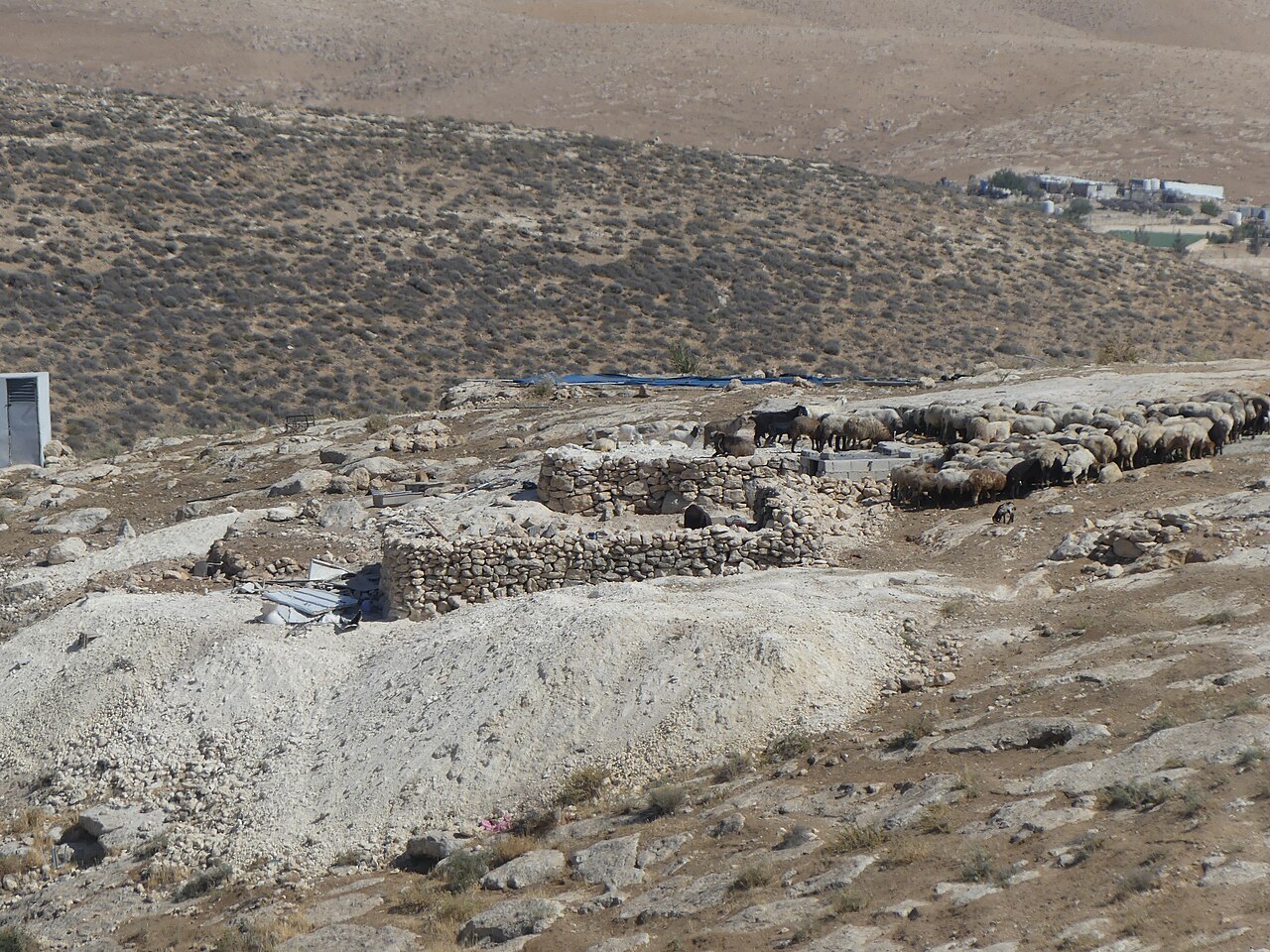
A Palestinian village in the West Bank hills; villages near Ramallah, including Kafr Malik, were attacked by settlers overnight on Sunday. (Wikimedia Commons, CC0)
Israeli settlers torched at least a dozen cars and vandalised homes across West Bank villages near Ramallah overnight on Sunday, drawing an unusually blunt condemnation from opposition leader Gadi Eisenkot, who is trying to form a government to replace Benjamin Netanyahu's.
Israeli settlers launched a series of attacks across the occupied West Bank overnight on Sunday, torching at least a dozen cars and vandalising several homes, in violence that opposition leader Gadi Eisenkot — the man tasked with trying to form Israel's next government — condemned as 'Jewish terrorism.'
Video from the village of Kufr Malik, about ten miles northeast of Ramallah, showed several cars in flames with thick smoke pouring into the sky as a siren blared. A home in the same village was tagged with Hebrew graffiti, including the word 'revenge,' and Reuters reporters saw burned-out vehicles and walls spray-painted with slogans such as 'Revenge' and 'Death to Arabs' in villages near Ramallah. Similar scenes unfolded in Deir as-Sudan and Deir Abu Masha'al, northwest of Ramallah, and the Israel Defense Forces said it had also received reports of an attack on At-Tuwani, near Hebron in the southern West Bank.
Residents described being woken in the early hours. 'We woke up at 2:30 at night to the sound of explosions, which were these cars, seven cars from here to here, on fire,' said Muntasir Al-Malik, a resident of Kafr Malik. Ahmad Ghneimat, another resident, told the Associated Press that violence had increased after several Israeli settler outposts sprang up in the area, and that settlers had stolen sheep and violently harassed olive harvesters. No injuries were reported in the overnight attacks.
Eisenkot's response set the attacks at the centre of Israel's political contest. 'Last night's arson attacks in Judea and Samaria were acts of Jewish terrorism, in every sense of the term,' he said in a statement, using the biblical name for the West Bank. 'Extremist groups that set fire to vehicles and homes are undermining regional stability, putting lives at risk and doing grave damage to Israel's national security and foreign relations.' He called for those responsible to be arrested and severely sanctioned, and said the government should use administrative detention and targeted operations against the assailants.
Eisenkot blamed the policies of far-right ministers Itamar Ben-Gvir and Bezalel Smotrich, saying they had 'brought the area to the brink of anarchy.' Ben-Gvir replied on X that the condemnation amounted to selling out to Arab parties. Yousef Jabareen, chair of the Arab Joint List, said settler violence 'does not take place in a vacuum' and was the direct result of deepening occupation and government policy. Israeli police said they were investigating who set the fires and sprayed the graffiti, and the IDF said it condemned acts of violence of this nature, which harm public order, and that soldiers and police had been dispatched to the affected villages.
The political context gives the attacks weight beyond the damage done. Israel's parliament was sworn in on November 10 after an October 27 election stripped Prime Minister Benjamin Netanyahu of his majority without giving any rival a clear path to power. President Isaac Herzog has tasked Eisenkot, who heads the centre-right Yashar party, with forming a government; he has four more weeks to try, and is likely to need support from Arab parties unless he forms a unity government with Netanyahu. His language on settler violence — and the far-right ministers' reaction to it — is therefore also an argument about what kind of government Israel should have.
More than 500,000 Israelis live in West Bank settlements, which are illegal under international law, alongside around three million Palestinians. Attacks on Palestinians have surged since Hamas's October 7, 2023 attack on Israel, and more than 1,100 Palestinians in the West Bank have been killed by Israeli soldiers or settlers since then, according to the Palestinian Health Ministry. Sunday night's arson, and the argument it ignited at the top of Israeli politics, is the latest chapter in a conflict over land, law and impunity that no investigation alone has yet contained.
Source: Juba Global News Network, reporting Reuters / Associated Press / CNN coverage.