World Court Rules Myanmar Committed Genocide Against the Rohingya in Historic First Judgment
The International Court of Justice held by nine votes to six on November 19 that Myanmar committed genocide during the 2016–2017 clearance operations in northern Rakhine State — the first time any court has found a state itself responsible...
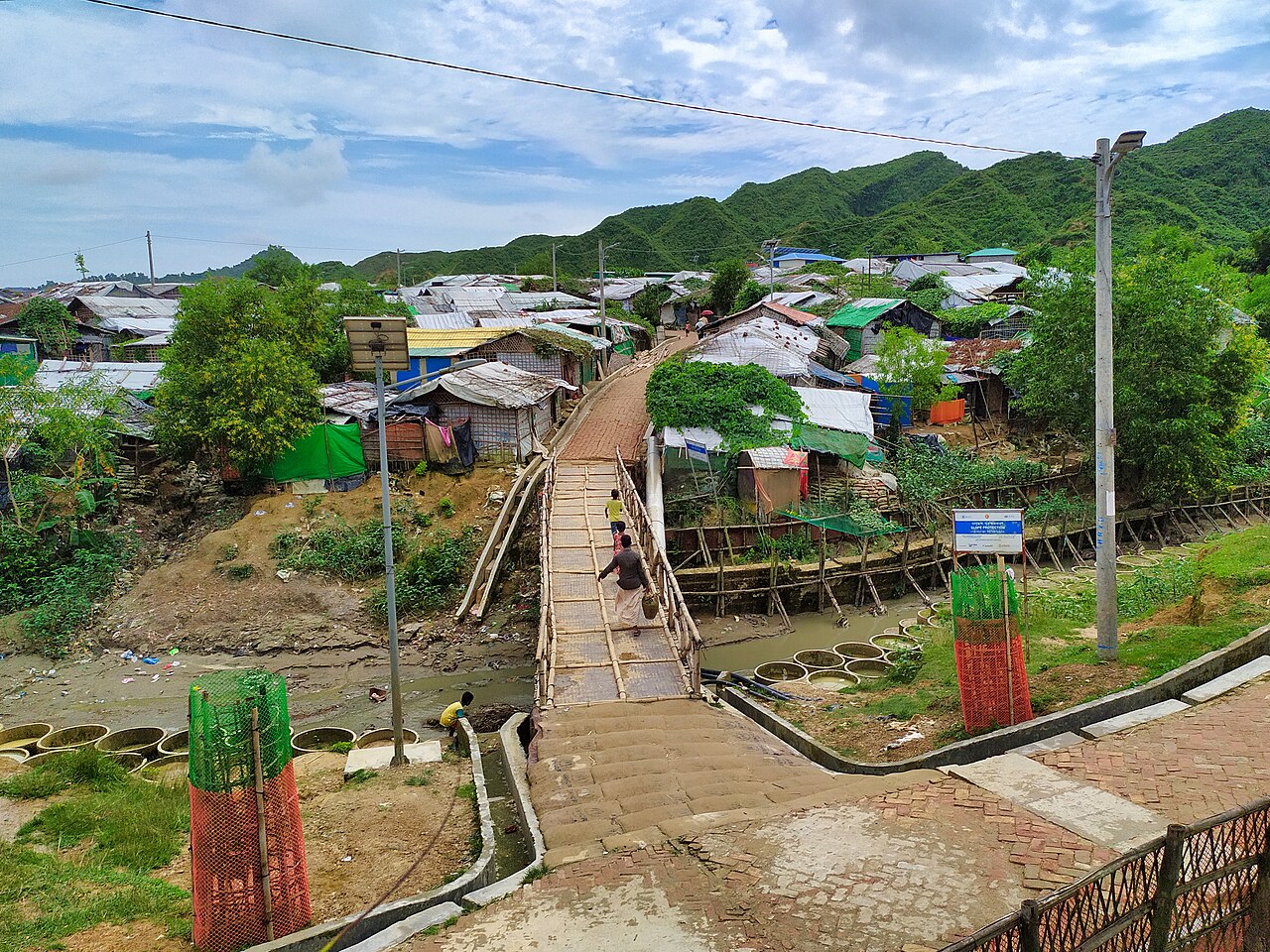
A Rohingya refugee camp in Cox's Bazar, Bangladesh, where more than 700,000 Rohingya fled during the 2016–2017 clearance operations the ICJ has now ruled were genocide. (Wikimedia Commons, CC BY-SA 4.0)
The International Court of Justice held by nine votes to six on November 19 that Myanmar committed genocide during the 2016–2017 clearance operations in northern Rakhine State — the first time any court has found a state itself responsible for committing genocide — and ordered safe return, investigation and compensation.
The International Court of Justice has ruled that Myanmar committed genocide against the Rohingya people of northern Rakhine State, in a landmark judgment delivered on Thursday, November 19, that makes Myanmar the first state ever found by an international court to have committed genocide itself. The court decided by nine votes to six that Myanmar's security forces and other state organs carried out the crime in violation of the 1948 Genocide Convention.
Reading the 191-page judgment in a session lasting almost three hours, Court President Yuji Iwasawa said: 'The Republic of the Union of Myanmar has committed genocide against the Rohingya group in northern Rakhine state.' The court found that Myanmar intentionally committed three of the five genocidal acts listed in Article II of the Convention: killing members of the group, inflicting serious bodily or mental harm, and imposing measures intended to prevent births within the group.
The facts the court accepted were grave. It found that around 10,000 Rohingya were killed during the so-called clearance operations of 2016 and 2017, that at least 1,834 were raped, that several hundred villages were burned and systematically destroyed and replaced with non-Rohingya inhabitants, and that more than 700,000 people fled to Bangladesh. On the central legal question — intent — the court held that genocidal intent was 'the only reasonable inference' that could be drawn from the evidence and the pattern of conduct.
The case was brought by The Gambia in November 2019, with the backing of the Organisation of Islamic Cooperation, and the court heard arguments on the merits in January 2026. Under the Genocide Convention, any state party may bring a case against another it believes is breaching the treaty, which is how a West African country came to carry the Rohingya's claim to The Hague. The six dissenting judges did not dispute that terrible events took place or that serious human rights violations, and possibly war crimes and crimes against humanity, were committed; they divided from the majority on how genocidal intent should be defined and proved.
The court's orders reach beyond the finding itself. Myanmar must stop ongoing violations and give full effect to the Convention in its law; investigate the crimes and, where the evidence warrants, prosecute and punish those responsible; allow and facilitate the safe, voluntary and dignified return of displaced Rohingya and the reunification of families; return their property; and pay compensation, with the amount and form to be decided in a later phase. Myanmar must update the court on restitution within two years. The judgment is final and binding, with no appeal.
Myanmar's response was dismissive. Its foreign ministry said on November 20 that the ruling 'came as a great disappointment,' noting that it was delivered with dissenting opinions and was therefore not unanimous, and presidential spokesperson Khine Khine Soe made the same point. Myanmar's authorities have consistently rejected accusations of genocide, maintaining that the 2017 operation targeted insurgents. Human rights organisations, by contrast, called for military and economic sanctions following the ruling, and the UN Security Council has scheduled closed consultations and a private meeting on December 7 to discuss it.
Enforcement is the judgment's known limit: the ICJ is not a criminal court and has no police of its own, so compliance depends on Myanmar's rulers and on pressure from the Security Council and other states. Even so, lawyers and campaigners say the ruling's significance is historic. In Bosnia v. Serbia in 2007, Serbia was held responsible only for failing to prevent and punish genocide; never before had the court found a state directly responsible for committing it. For the Rohingya in the camps of Cox's Bazar, the judgment is a legal vindication nine years after the operations that drove them from their homes — and, its supporters argue, a precedent that will shape the other genocide cases now before the court.
Source: Juba Global News Network, reporting International Court of Justice / Associated Press coverage.