Central Bank Gives Unlicensed Forex Dealers 30 Days to Regularise — or Face Closure
The Bank of South Sudan's 23 November directive opens a one-month simplified licensing window for mobile, umbrella, informal and street forex operators — and warns that after it expires, unlicensed dealing will face enforcement, including...
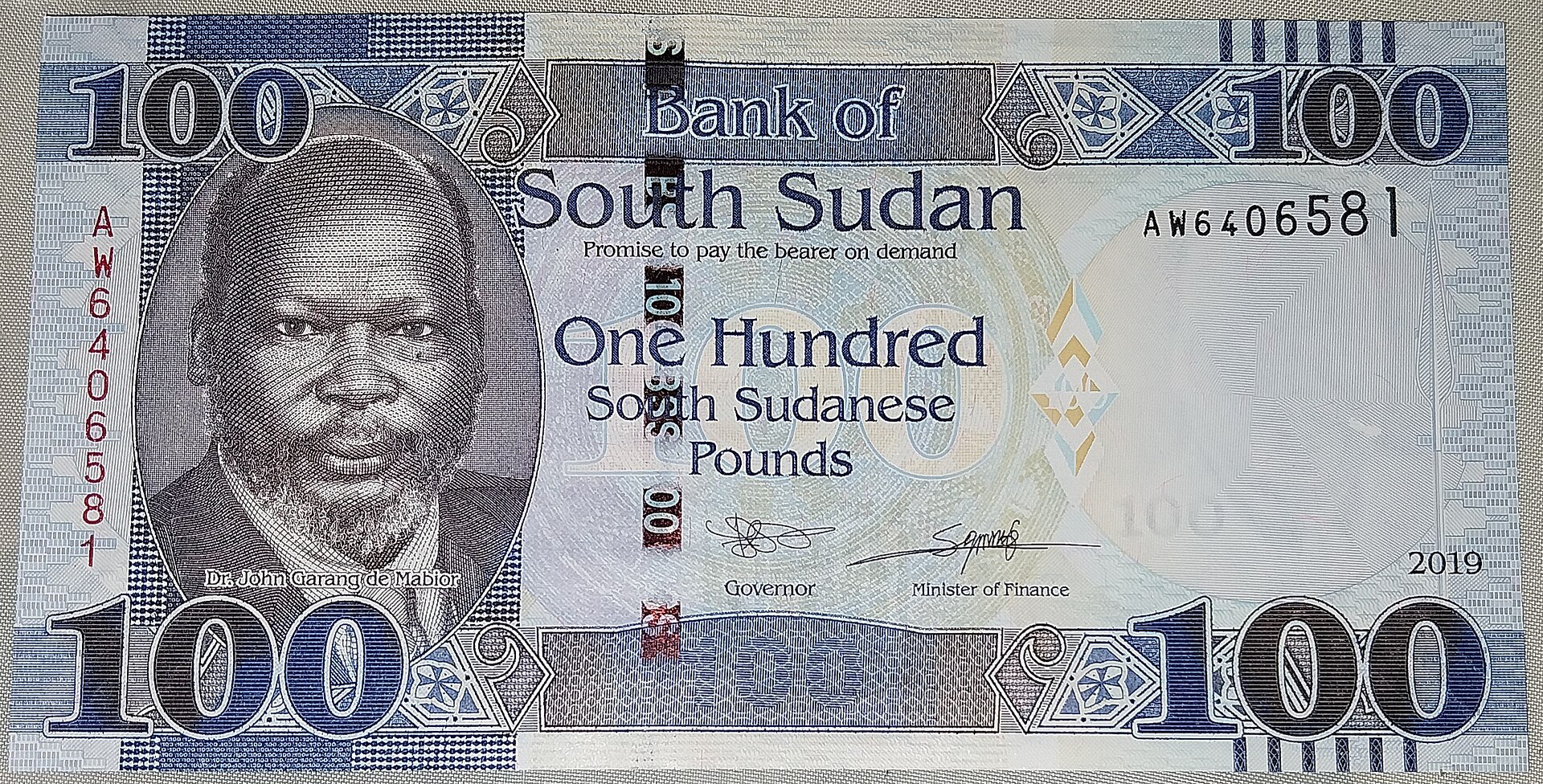
A South Sudanese banknote, in a file photograph of the currency whose foreign-exchange market the central bank is moving to formalise. (Wikimedia Commons, CC0)
The Bank of South Sudan's 23 November directive opens a one-month simplified licensing window for mobile, umbrella, informal and street forex operators — and warns that after it expires, unlicensed dealing will face enforcement, including closure.
JUBA — The Bank of South Sudan (BoSS) has notified all individuals and entities engaged in foreign exchange trading without valid licences — including mobile and umbrella forex operators, informal forex bureaus and street-based dealers — to regularise their operations by applying for the appropriate licences within thirty days, in a directive dated 23 November 2026 and published on the Bank's official site. After the deadline, the Bank warns, unlicensed operators face enforcement that may include closure of their operations.
The directive is framed as an opportunity before it is a threat. In recognition of the need to formalise the foreign exchange market and bring all operators within the regulated financial system, the Bank says it will provide a special one-month licensing window during which simplified and exceptional licensing procedures will be applied, to facilitate the registration and licensing of eligible operators. All concerned operators are strongly encouraged to seize the opportunity and submit their applications within the stipulated period.
The warning that follows is explicit. The Bank emphasises that this is a one-time compliance opportunity, and that upon expiry of the thirty-day grace period, any individual or entity found conducting foreign exchange business without a licence shall be subject to enforcement measures in accordance with applicable laws and regulations. Those measures will be undertaken in collaboration with relevant law enforcement agencies and may include closure of illegal operations and other appropriate legal actions.
The directive is the latest step in a long campaign to order South Sudan's currency market. In September 2026 the Bank issued a circular banning currency hoarding and speculative foreign exchange activities with immediate effect, targeting the deliberate accumulation and withholding of South Sudanese pounds and foreign currency, dealing through unauthorised dealers, and transactions designed to create artificial scarcity or distort exchange rates. Licensed banks and bureaus were ordered to strengthen monitoring, know-your-customer and anti-money-laundering controls, and to report suspicious transactions.
For ordinary South Sudanese, the forex market is not an abstraction. In an economy that imports much of what it consumes, the price of the dollar against the South Sudanese pound feeds directly into the prices of fuel, food and medicine. A market split between licensed bureaus posting official rates and informal dealers trading on street corners produces two prices for the same currency — and it is households, paid in pounds and buying imported goods, who absorb the difference when the informal rate runs away.
Bringing street dealers inside the system, rather than simply driving them off the street, is the logic the Bank's simplified window expresses. Past crackdowns — including earlier deadlines for street dealers to obtain licences or face closure — reduced visible street trading for a time without eliminating the demand that sustains it: people change money informally because it is fast, nearby and open at hours bureaus are not. A licensing route that is genuinely simplified could convert that convenience into regulated trade; one that is slow or costly will be ignored, and enforcement will be chasing the same corners again within months.
The Bank says it remains committed to ensuring an orderly, transparent and well-regulated foreign exchange market. The thirty days now running will show how many of Juba's informal dealers judge a licence to be worth having — and the enforcement promised thereafter will show how far the Bank and law enforcement agencies are prepared to go against those who stay outside. Either way, the era in which unlicensed dealing could present itself as tolerated is, on paper at least, being brought to a close. (Source: Bank of South Sudan)
Source: Juba Global News Network, reporting Bank of South Sudan coverage.