Thousands March Through Rain in Lisbon as Living Costs and Housing Crisis Fuel Anger
Portugal's largest union federation, the CGTP, led thousands through central Lisbon on Saturday, November 21, demanding higher wages and pensions, lower prices and action on housing — with another demonstration planned outside parliament...
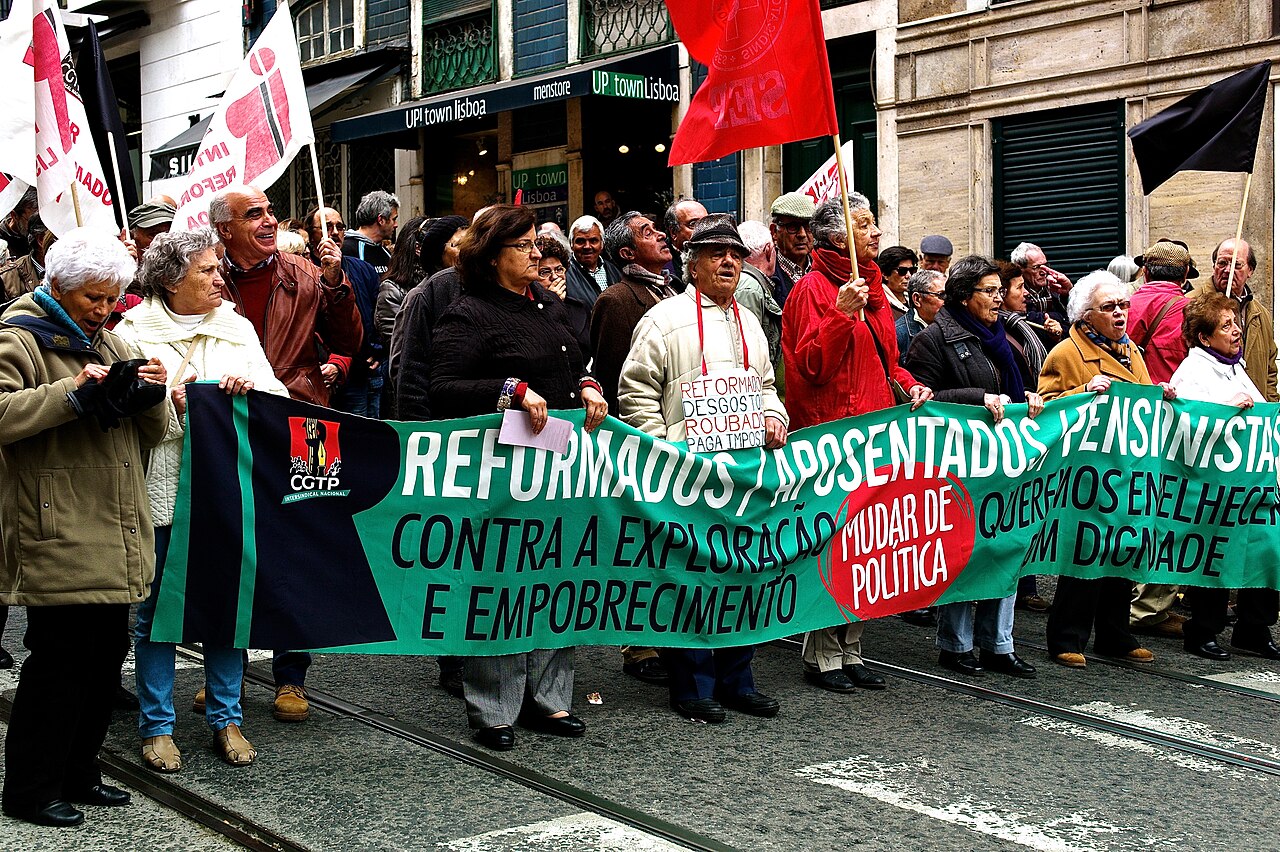
A union demonstration in Lisbon; on Saturday thousands marched through the rain behind the CGTP federation's banners against living costs and the housing crisis. (Wikimedia Commons, CC BY 2.0)
Portugal's largest union federation, the CGTP, led thousands through central Lisbon on Saturday, November 21, demanding higher wages and pensions, lower prices and action on housing — with another demonstration planned outside parliament for the budget vote on November 24.
Thousands of people marched through central Lisbon on Saturday, November 21, despite heavy rain, to protest against soaring living costs, a deepening housing crisis and low wages, in the latest and largest of a season of demonstrations that has put Portugal's government under sustained street pressure.
The march was organised by the CGTP, Portugal's largest trade union federation, which called for higher wages and pensions, lower prices for essential goods and services, and measures to curb housing costs. The CGTP said turnout reached 'many thousands' as protesters carrying umbrellas and wearing hooded ponchos marched along two of Lisbon's main avenues under the slogan 'A New Direction for Portugal.' No independent police estimate of the crowd was available.
The numbers behind the anger are stark. Portugal's average annual earnings in 2025 were 37 percent below the European Union average, according to Eurostat — an average full-time adjusted salary of about €26,202 against an EU average of €41,464. Inflation hit 3.8 percent in October, driven by food and energy prices amid continuing tensions in the Middle East, up from 3.6 percent in September. For workers whose pay already trails the continent, each point of inflation lands on essentials that cannot be postponed.
Housing is the crisis within the crisis. Portugal is grappling with one of Europe's most severe housing affordability problems: house prices have more than doubled since 2017 — Eurostat recorded a 14.2 percent rise in the second quarter of 2026 alone, against an EU average of 4.7 percent — while rents for new leases have nearly doubled, hitting younger people particularly hard. Between 2015 and 2025, Portugal posted the biggest jump in the EU in the home price-to-income ratio, an increase of 61 percent.
Saturday's march did not arrive alone. It followed a public-sector strike on Friday, November 20, and a still larger housing protest a week earlier, on November 14, when tens of thousands marched in more than 30 cities and towns under the slogan 'We won't let them steal our right to housing.' Activists in that campaign have camped in central squares in Lisbon and Porto and demand ceilings on rent increases, stronger protection against eviction and more affordable housing. The demonstrations took inspiration from protests that began in neighbouring Spain last month over similar concerns, amid wider social unrest across Europe this autumn.
'Things have become intolerable,' said Ana Encarnação, 42, at the November 14 march, citing rising living costs and the widening gap between rich and poor — a sentiment Saturday's union march carried into the budget season. The CGTP has announced another demonstration outside Portugal's parliament on Tuesday, November 24, coinciding with the final vote on the proposed 2027 state budget, keeping the pressure on the government at the moment its economic plans face their decisive test.
Portugal's president, António José Seguro, whose role is mostly ceremonial but who wields political influence, convened a Council of State earlier this month to discuss the protests and met some of the protesters. Whether the government of Prime Minister Luís Montenegro answers with measures on wages, rents or prices will be read in the budget vote and beyond. What the rain-soaked avenues made plain on Saturday is that the coalition behind the protests — workers, pensioners, housing campaigners, the young priced out of homes — intends to remain visible until it is answered.
Source: Juba Global News Network, reporting Reuters coverage.