India Holds Third Place in Asia Power Index as Gap With China Narrows to Its Smallest Since 2018
The Lowy Institute's 2026 Asia Power Index scores India at 40.5 points, behind only the United States (78.9) and China (73.6), with Prime Minister Narendra Modi rated the region's second-most effective leader — even as India's economic...
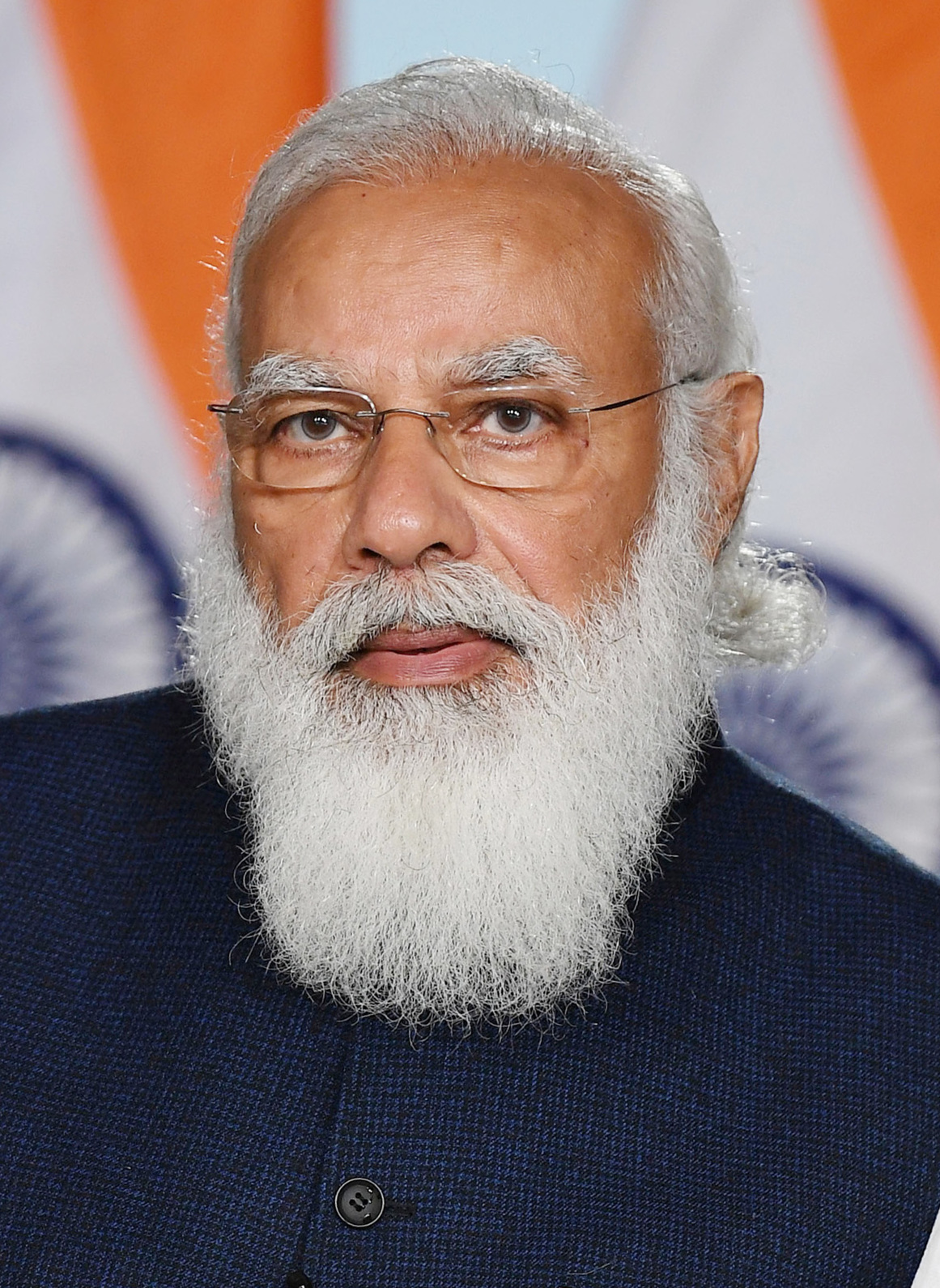
Prime Minister Narendra Modi, rated the second-most effective regional leader in the Lowy Institute's 2026 Asia Power Index, behind China's Xi Jinping. (Wikimedia Commons, GODL-India)
The Lowy Institute's 2026 Asia Power Index scores India at 40.5 points, behind only the United States (78.9) and China (73.6), with Prime Minister Narendra Modi rated the region's second-most effective leader — even as India's economic capability score slipped.
India has consolidated its position as Asia's third-most powerful country in the Lowy Institute's Asia Power Index 2026, raising its overall score by 0.5 points to 40.5 and narrowing its gap with China to the smallest since the index was launched in 2018. The annual assessment, published by the Australian think tank, ranks 27 countries and territories across 131 indicators grouped into eight measures of power.
Only two countries sit ahead of India. The United States leads the index with 78.9 points and China follows with 73.6; India, at 40.5, is the only country the institute classifies as a 'major power' below the two leaders, sitting just above the major-power threshold, with fourth-placed Japan — a 'middle power' on 38.6 — and Russia fifth. India has now held third place for three consecutive editions, and its 0.5-point rise was the biggest improvement among the top ten powers.
Diplomacy is India's strongest suit. Its diplomatic influence score of 70.3 was its highest category mark, and expert assessors rated Prime Minister Narendra Modi the second-most effective regional leader, behind only China's Xi Jinping — a climb of three places for Modi. The institute said India's diplomatic influence held up even though its low profile during the Gulf conflict weighed on views of Modi's global leadership. Defence networks also improved markedly: India's score rose 2.1 points to 18.6, lifting it to ninth, a gain the institute attributes to greater regional defence engagement and BrahMos missile sales to Southeast Asia.
The paradox of India's 2026 result is economic. Its economic capability score slipped 0.7 points to 26.4 — although it retained third place in the category — with the institute attributing the decline partly to a weakening rupee and partly to changes in the International Monetary Fund's methodology for measuring economies. Future resources moved the other way, rising 1.2 points to 56.2 and keeping India third, reflecting the long-run weight of its population and economic trajectory in the index's forward-looking measures.
The eight measures of the index — economic capability, military capability, resilience, future resources, economic relationships, defence networks, diplomatic influence and cultural influence — are designed to capture power as both resources and influence: what a country has, and what it can persuade others to do. India's profile across them is uneven in an instructive way: first-rank diplomatic and demographic weight, improving defence partnerships and cultural reach, and an economic engine whose measured capability, in the institute's terms, has not kept pace with its strategic ambitions.
Not every assessor judgment flattered New Delhi. The institute pointed to India's muted response after a US submarine sank an Iranian naval vessel returning from an exercise hosted by India, and one leadership measure placed India at minus 3.3, 22nd among the 27 countries and territories assessed. The mixed detail is part of the index's purpose: a single ranking invites headlines, but the category scores show where a rising power is gaining ground and where it is losing it.
For India's government, the headline — third place held, gap with China at a record low, Modi second among regional leaders — is a presentable summary of a strategy built on multi-alignment, defence partnerships and diplomatic visibility. For its critics, the same report supplies the caveats: economic capability slipping, and a great deal of distance still separating 40.5 from China's 73.6. Both readings are in the Lowy Institute's tables, which is why the index, now in its ninth year, remains the region's most argued-over scoreboard of power.
Source: Juba Global News Network, reporting Lowy Institute Asia Power Index 2026 via Hindu BusinessLine / IANS coverage.