Rescue Teams Search for Survivors After Funeral Barge Capsizes in Nigeria's Bayelsa State
A crowded barge carrying people to a funeral capsized near Ukubie in Southern Ijaw, Bayelsa State, on Friday, with several passengers feared dead and a police marine unit deployed to the rescue.
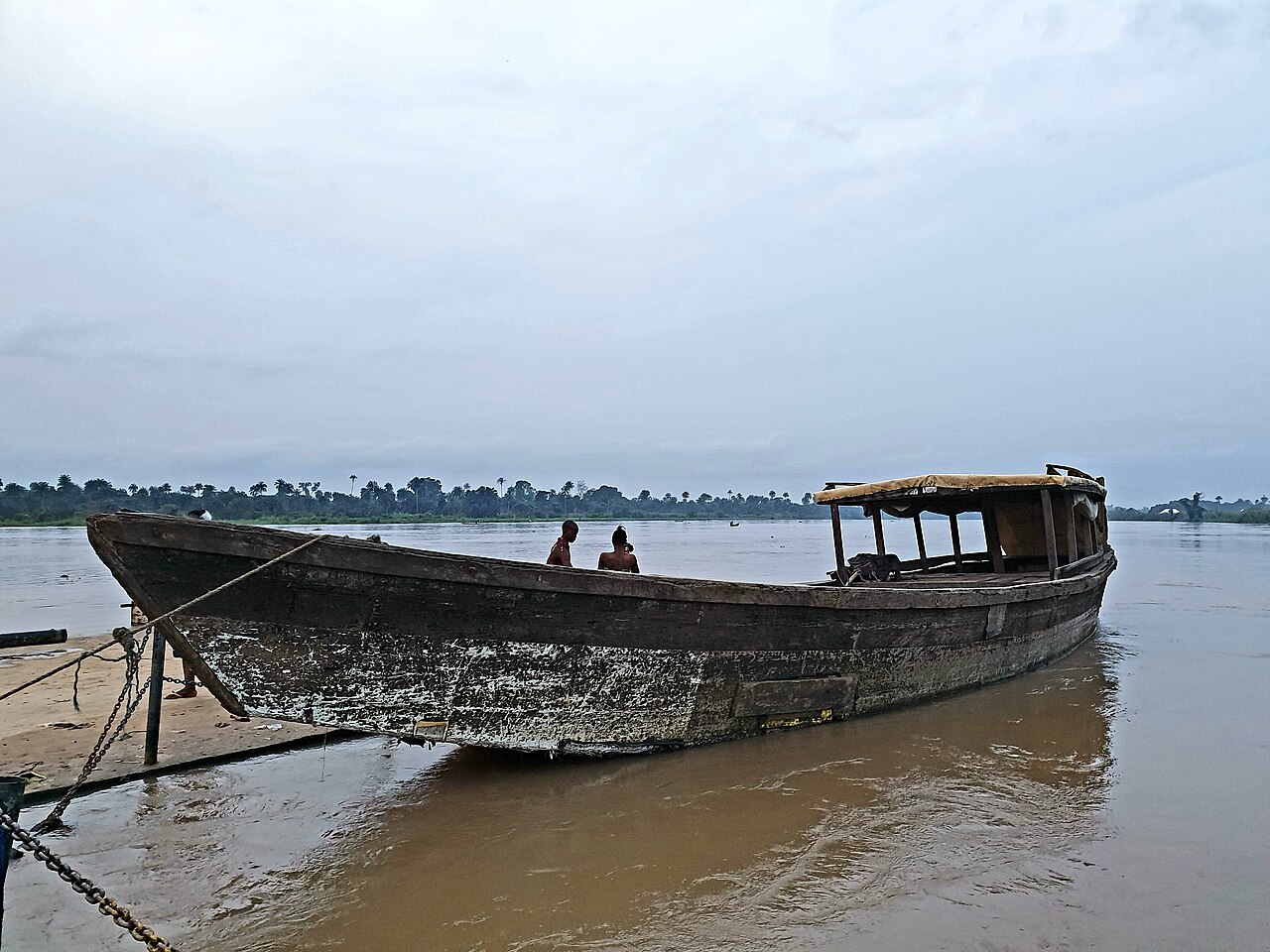
A wooden boat on the River Niger — boats and barges are the main transport links for riverine communities across Nigeria's Niger Delta, where overcrowding is a recurring safety risk. (Photo: Wikimedia Commons — Wooden boat, River Niger, CC BY-SA)
A crowded barge carrying people to a funeral capsized near Ukubie in Southern Ijaw, Bayelsa State, on Friday, with several passengers feared dead and a police marine unit deployed to the rescue.
Rescue workers were searching on Friday for survivors after a crowded barge carrying people to a funeral capsized in Nigeria's southern Bayelsa State, with several passengers feared dead, police and local residents said. The vessel capsized on the waterways near Ukubie, in Bayelsa's Southern Ijaw area, while carrying passengers to a funeral, according to residents who spoke to reporters at the scene. Bayelsa police spokesperson Musa Mohammed said a marine unit had been deployed to assist rescue operations on the creeks and rivers where the accident happened.
Police did not immediately provide the number of people killed, rescued or missing, and that uncertainty is itself part of the story. In riverine communities, passenger lists are often informal or non-existent, boarding is chaotic, and a vessel may pick up and drop off people at several points along its route. Sophie Igoniwari, a witness, said chaotic boarding and overcrowding preceded the boat's departure from Anyama Ijaw, and that several victims were brought ashore after it capsized shortly afterwards. Her account points to the two factors that recur in almost every fatal boat accident in the region: too many people, and too little order at the point of departure.
Bayelsa is a state defined by water. In the Niger Delta, rivers, creeks and lagoons are not obstacles to travel but the roads themselves, and wooden boats and barges carry traders, schoolchildren, farmers and mourners between communities that may have no reliable road connection at all. A funeral, in particular, draws large numbers of relatives and well-wishers travelling together, often at set times and under emotional pressure not to be late. When demand peaks, operators face strong temptation to carry more passengers than a vessel should hold, and passengers, with few alternatives, board anyway.
Reuters noted in its reporting that boat accidents are common on Nigeria's inland waterways, especially in riverine communities where overcrowding is widespread and safety regulations are often flouted. Life jackets may be unavailable, unaffordable or simply not worn. Vessels may be old, overloaded with goods as well as people, and operated without the checks that apply on roads or in aviation. Night travel, sudden weather and submerged debris add further risks on routes that communities have used for generations and cannot easily abandon.
The immediate focus in Southern Ijaw remains the search itself. Marine police and local rescuers, including boat operators who know the waterways, typically lead the first hours of such operations, because they can reach shallow creeks and mangrove channels that larger vessels cannot. Families gather at landing points waiting for names, and the absence of a confirmed passenger list means that waiting can stretch for many hours. Until police publish verified figures for the dead, rescued and missing, any number circulating on social media should be treated with caution.
The accident will renew questions that follow every such disaster in the Delta: who inspected the barge, how many people it was licensed to carry, whether life jackets were provided, and whether departure should have been stopped when overcrowding became obvious. Those questions matter because the pattern is so familiar. Enforcement on busy rural waterways is difficult, but the cost of weak enforcement is paid, repeatedly, by the same riverine communities that depend on the water for everything.
For now, the confirmed facts are narrow and sobering: a crowded funeral barge left Anyama Ijaw, capsized near Ukubie shortly after departure, several passengers are feared dead, and a police marine unit is searching for survivors. Juba Global will update this story when Bayelsa police release verified casualty and rescue figures. The hope in Southern Ijaw tonight is that the search finds more survivors than victims. (Source: Reuters)
Source: Juba Global News Network, reporting Reuters coverage.