South Sudan Ebola Readiness Reaches 72.5% With No Confirmed Case, Containment the Gap
Six months of preparation have lifted the country's Ebola readiness to 72.5%, with detection performing well in exercises — but containing a real case remains the weak point as a major outbreak continues in DR Congo.
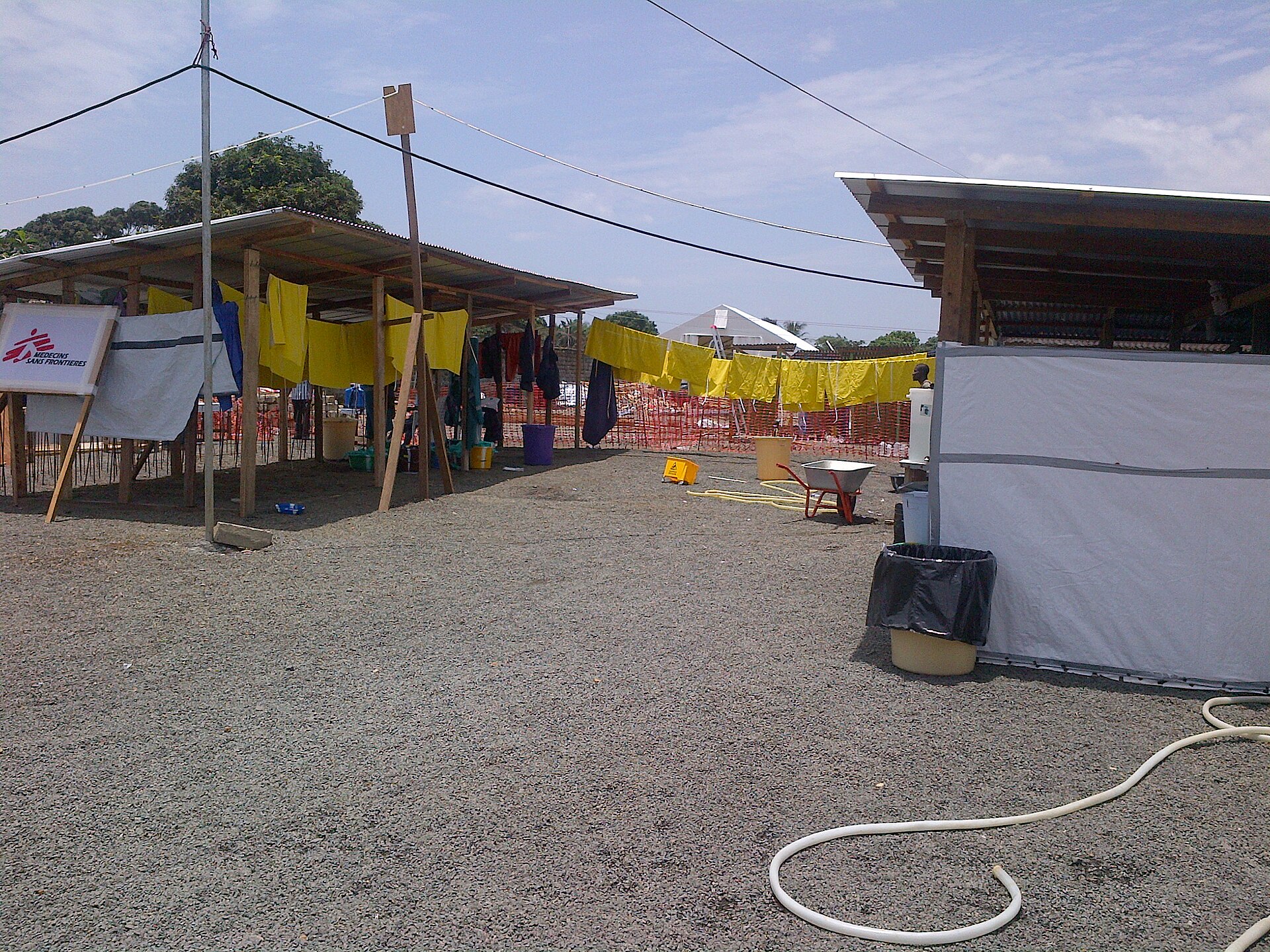
An Ebola treatment unit, in a file photograph of the isolation facilities at the centre of outbreak preparedness. (Wikimedia Commons, CC BY 2.0)
Six months of preparation have lifted the country's Ebola readiness to 72.5%, with detection performing well in exercises — but containing a real case remains the weak point as a major outbreak continues in DR Congo.
JUBA — South Sudan has no confirmed case of Ebola, and after six months of preparation the country's readiness to face the disease stands at 72.5%, according to an assessment reported by Today News Africa. The figure describes a country that has built much of the machinery of a response before any patient has appeared — and that still has a critical gap to close.
The strongest part of the system, on the reported assessment, is detection. In exercises, the steps that identify a suspected case and raise the alarm worked: surveillance, reporting and testing pathways performed as they were meant to. For a disease where the first hours matter enormously, the ability to spot a possible case early — at a clinic, a border point or in a community — is the foundation on which everything else depends.
Containment, however, is identified as the gap. Detecting a case is only the beginning of a response; containing Ebola means isolating the patient safely, tracing every contact, protecting health workers, managing burials safely and sustaining all of that for weeks without the system breaking down. It is the most demanding part of any Ebola response, and it is the part the assessment says South Sudan must still strengthen.
The urgency comes from the region. The Ebola outbreak in the Democratic Republic of Congo is a World Health Organization global emergency, with 11,613 cases and 5,678 deaths reported as of 21 November. South Sudan shares the wider region's movement of people for trade, family and refuge, and preparedness in Juba and the border states is therefore not an abstract exercise: it is insurance bought before it is needed, against a virus that has repeatedly crossed distances faster than expected.
Readiness percentages can sound bureaucratic, but behind the figure sit practical things: trained rapid-response teams, isolation capacity, protective equipment, laboratory pathways, risk communication in local languages, and plans that have actually been rehearsed. Six months of preparation that moves a country to 72.5% represents real work by health officials and partners. It also defines the remaining work precisely — the distance between detecting a case in a drill and containing one in a crowded town, with frightened families and limited staff.
Preparedness also lives or dies at community level. Ebola spreads through close contact with the bodily fluids of a sick person, and its early symptoms — fever, weakness, headache — resemble far more common illnesses such as malaria. That is why surveillance systems depend on ordinary people and frontline health workers reporting unusual illness quickly, and why risk communication, in languages people actually speak at home, is treated by responders as seriously as any laboratory. A rumour reported early is a gift to a response team; a case hidden out of fear can seed a chain of transmission.
For the public, the message of the assessment is twofold. There is no confirmed Ebola case in South Sudan, and no cause for panic. At the same time, readiness is a standing obligation, not a one-off project: the exercises must continue, the containment gap must close, and anyone who falls ill after contact with a suspected case must be reported quickly. A country that prepares before the first case gives itself the best chance that the first case is also the last. (Source: Today News Africa)
Source: Juba Global News Network, reporting Today News Africa coverage.