One in Six Pregnancies in Africa Is to an Adolescent Girl, Yet Youth-Friendly Services Reach Only 12.9% of Facilities, Africa CDC Finds
A new Africa CDC continental assessment, 'Seen, Served and Counted', finds pregnancies among girls aged 10 to 19 make up 16.5% of all pregnancies — 24.2% in Southern Africa — while only 12.9% of health facilities offered adolescent- and...
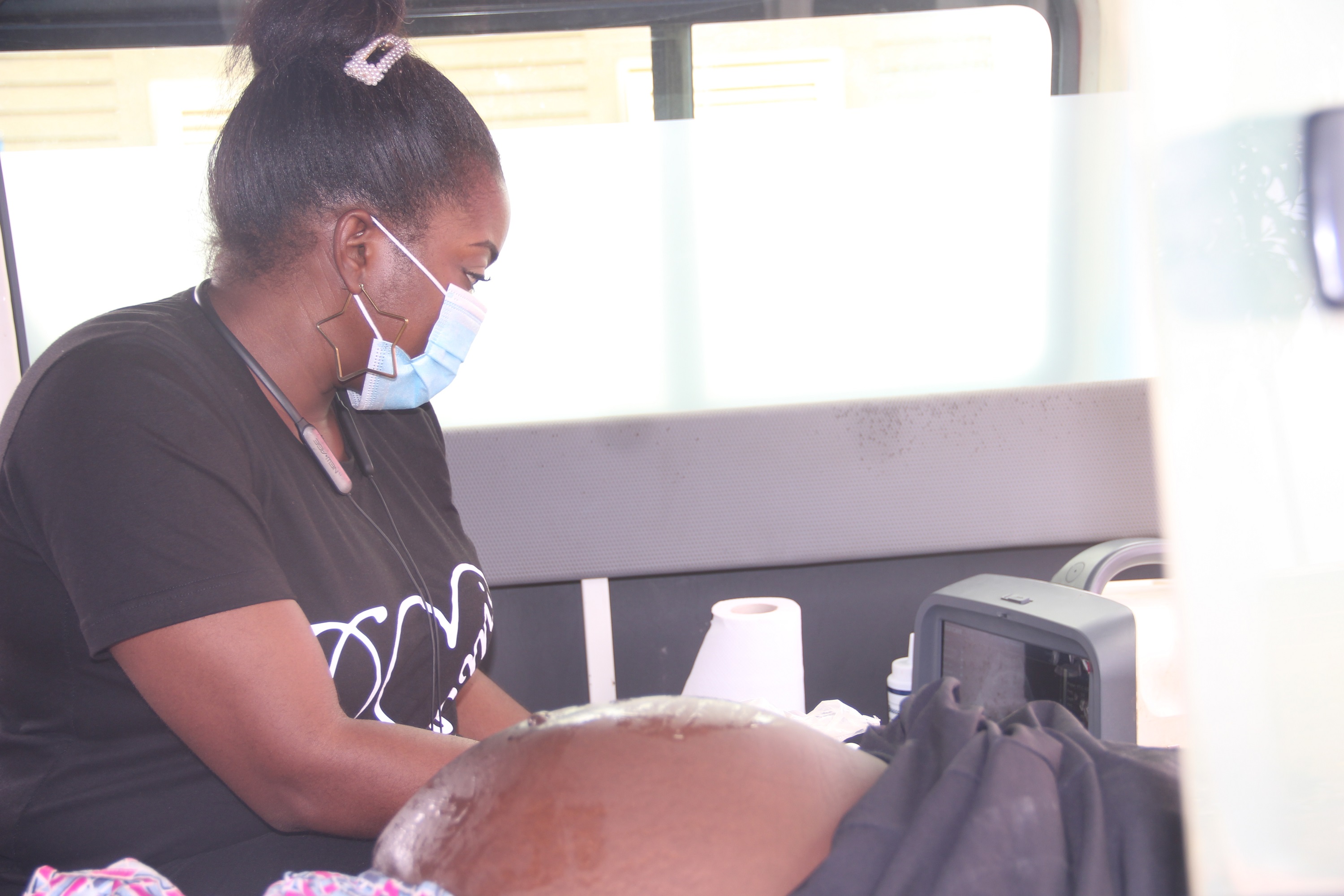
A health worker attending a pregnant woman, illustrating the frontline care that Africa CDC says reaches too few adolescents — only 12.9% of facilities offer youth-friendly services. (Wikimedia Commons, CC BY-SA 4.0)
A new Africa CDC continental assessment, 'Seen, Served and Counted', finds pregnancies among girls aged 10 to 19 make up 16.5% of all pregnancies — 24.2% in Southern Africa — while only 12.9% of health facilities offered adolescent- and youth-friendly services in 2025, almost unchanged since 2021.
ADDIS ABABA — Africa's health systems are failing to reach the continent's 10- to 19-year-olds, not for lack of policy but for lack of delivery, financing and data. That is the finding of 'Seen, Served and Counted: The State of Adolescent Health in African Union Member States', a continental assessment launched by the Africa Centres for Disease Control and Prevention (Africa CDC) on 22 November 2026 at the African Union Commission headquarters in Addis Ababa.
The report's headline figures frame the gap between need and provision. In the countries able to report, pregnancies among girls aged 10 to 19 make up 16.5% of all pregnancies — one in six — rising to 24.2% in Southern Africa, almost one in four, and ranging down to 9.5% in Central Africa. Five years of effort have moved that share only slightly, from 17.9% in 2021. Health facilities recorded 132.9 pregnancies per 1,000 girls aged 15 to 19. Yet only 12.9% of health facilities offered adolescent- and youth-friendly services in 2025, with almost no change since 2021 — roughly one facility in eight.
The assessment draws on a structured questionnaire completed in 2026 by the Ministries of Health of all 55 African Union Member States, covering policy, financing, monitoring and annual service data for 2021 to 2025, analysed by Africa CDC. Adolescents aged 10 to 19 make up about one in four people in Africa, and the report notes that early pregnancy, unsafe abortion, HIV and child marriage continue to shape their health and futures — against commitments in the African Union's Maputo Plan of Action, Agenda 2063 and Africa CDC's own maternal and child health agenda.
Policy, the report finds, is not the missing piece. Adolescent sexual and reproductive health is in the national policies of 83% of responding countries, but comprehensive sexuality education reaches only 60%, and in 12 of 15 countries with data — 80% — fewer than half of facilities offered youth-friendly services. The pattern the authors describe is of commitments translated into documents but not into the clinics, staff and opening arrangements that make a service genuinely usable by a teenager who may fear judgement, cost or disclosure.
One finding carries a particular warning. Pregnancies among girls aged 10 to 14 appear largely hidden, at 1.8% of recorded adolescent pregnancies against a World Health Organization estimate of 5.2%. The report treats every pregnancy at that age as a child protection concern, and the gap between recorded cases and the WHO estimate suggests such pregnancies are largely unrecorded — meaning the youngest and most vulnerable girls are the least visible to the systems meant to protect them. The report recommends that every pregnancy among girls aged 10 to 14 be treated as a child protection case, with action on child marriage and on keeping girls in school.
The report was launched in Mandela Hall at the Youth Pre-Conference and Women in Health Leadership Summit, a pre-event of the Conference on Public Health in Africa (CPHIA 2026), which brought together more than 2,500 young people, women leaders, ministers of health, African Union institutions and development partners. Institutions signed a public Commitments Register, and delegates adopted a Joint Leadership Declaration, read by a young person, for presentation to CPHIA 2026.
Africa CDC calls on member states, supported by the African Union, Africa CDC and partners, to integrate adolescent-friendly service standards into all primary health care facilities, and has committed to support member states in acting on the recommendations and to repeat the assessment so the next report measures progress rather than estimates it. The arithmetic of this first report is stark: one in six pregnancies is to an adolescent girl, one facility in eight is built to serve young people, and five years moved neither figure far. Closing that gap is now the stated task.
(Source: Africa CDC / Today News Africa)
Source: Juba Global News Network, reporting Africa CDC / Today News Africa coverage.