IMF Says Botswana Needs a New Growth Model Beyond Diamonds as Public Debt Climbs to 34% of GDP
The IMF's 2026 Article IV mission to Botswana, held in Gaborone from 9 to 23 November, projects growth of 3% in 2026 after two years of contraction, but warns that without fiscal consolidation and diversification beyond diamonds the country...
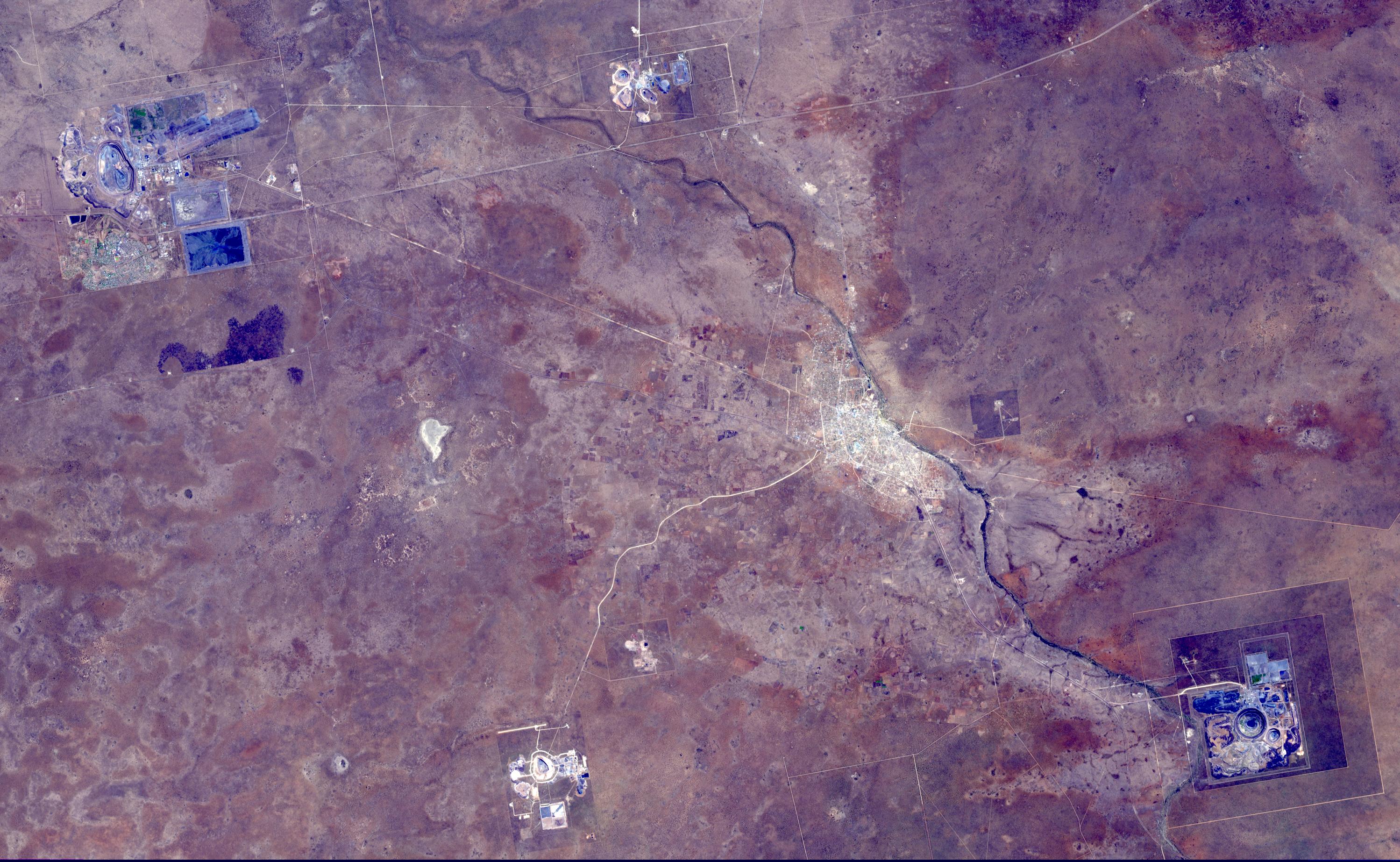
A satellite view of the Orapa diamond mine in Botswana, in the diamond sector on which the IMF says the country's growth model must no longer solely depend. (Wikimedia Commons, Public domain)
The IMF's 2026 Article IV mission to Botswana, held in Gaborone from 9 to 23 November, projects growth of 3% in 2026 after two years of contraction, but warns that without fiscal consolidation and diversification beyond diamonds the country risks weak growth, rising debt and too few jobs.
GABORONE — Botswana needs a new growth model beyond diamonds, the International Monetary Fund has said at the end of its 2026 Article IV consultation, as the country's public debt has climbed to approximately 34% of gross domestic product from 22.5% just two years earlier. The preliminary findings, issued on Monday 23 November after discussions in Gaborone from 9 to 23 November by a mission led by Faisal Ahmed, come as a prolonged downturn in the global diamond industry pressures government finances.
The near-term picture contains some relief. The IMF projected that Botswana's economy would expand by 3% in 2026 after contracting for two consecutive years. But the Fund cautioned that without decisive fiscal consolidation and structural reforms, Botswana risks remaining trapped in a cycle of weak economic growth, rising public debt and insufficient employment opportunities. Mission chief Faisal Ahmed warned that "Botswana's medium-term outlook remains challenging amid structural vulnerabilities and weaker buffers."
The debt trajectory explains the urgency. A rise from 22.5% to about 34% of GDP in two years is rapid for a country long regarded as one of Africa's most prudent fiscal managers, and Botswana's own budget strategy paper — which put debt at 34% in 2025/26 and projected 45% by March 2027, within a revised 60% ceiling — points in the same direction. The IMF recommended a credible medium-term fiscal consolidation strategy centred on expenditure rationalisation, more efficient public investment and stronger controls over recurrent spending, and proposed a fiscal framework with a prudent debt anchor, an expenditure rule and sufficient liquid financial assets to absorb future shocks.
Botswana's fiscal challenges are closely connected to its external position. The IMF projects the current account to register a deficit equivalent to 0.2% of GDP in 2026, reflecting lower net diamond exports and a substantial increase in fuel imports. That single line captures the country's exposure: when diamond earnings fall, both the budget and the balance of payments feel it at once, because the traditional growth model has rested so heavily on one commodity.
That dependence is the heart of the Fund's message. Beyond fiscal and monetary policy, the IMF identified economic diversification as Botswana's most important long-term challenge, arguing that continued dependence on diamonds would leave performance vulnerable to shifts in global demand — including competition from laboratory-grown diamonds, which Botswana's own budget documents also flag as a longer-term risk. A more sustainable model, the Fund argued, would require stronger private-sector participation in non-mineral activities, improved access to finance and reforms to land administration, electricity supply and competition, alongside labour-market flexibility, governance, trade openness and a reduced footprint for the state.
Botswana's starting point remains the envy of many economies: the budget strategy paper lifted the 2026 growth forecast to 3.8% and projected 4.2% for 2027, mainly from higher diamond output, with preliminary figures showing average growth of 6.1% in the first half of 2026. The IMF's more cautious 3% projection and its warnings are therefore not a verdict of crisis but of direction — a diamond-led rebound that does not change the model leaves the vulnerabilities intact.
The mission's conclusion, delivered after two weeks in Gaborone, is that Botswana must use any diamond recovery to build what comes after diamonds: consolidated public finances, a credible debt anchor, and a private sector able to generate growth and jobs outside the mines. With debt already at 34% of GDP and projected higher, the Fund's message is that the window for making that transition from a position of relative strength is open now — and narrowing.
(Source: IMF via Today News Africa / Norvan Reports)
Source: Juba Global News Network, reporting IMF via Today News Africa / Norvan Reports coverage.