Asian Markets Slide for a Seventh Session as AI Doubts Batter Technology Shares Across the Region
Japan's Nikkei 225 tumbled 4.54 percent and South Korea's Kospi fell 4.74 percent on Friday, leaving global stocks on course for their longest losing run in three years.

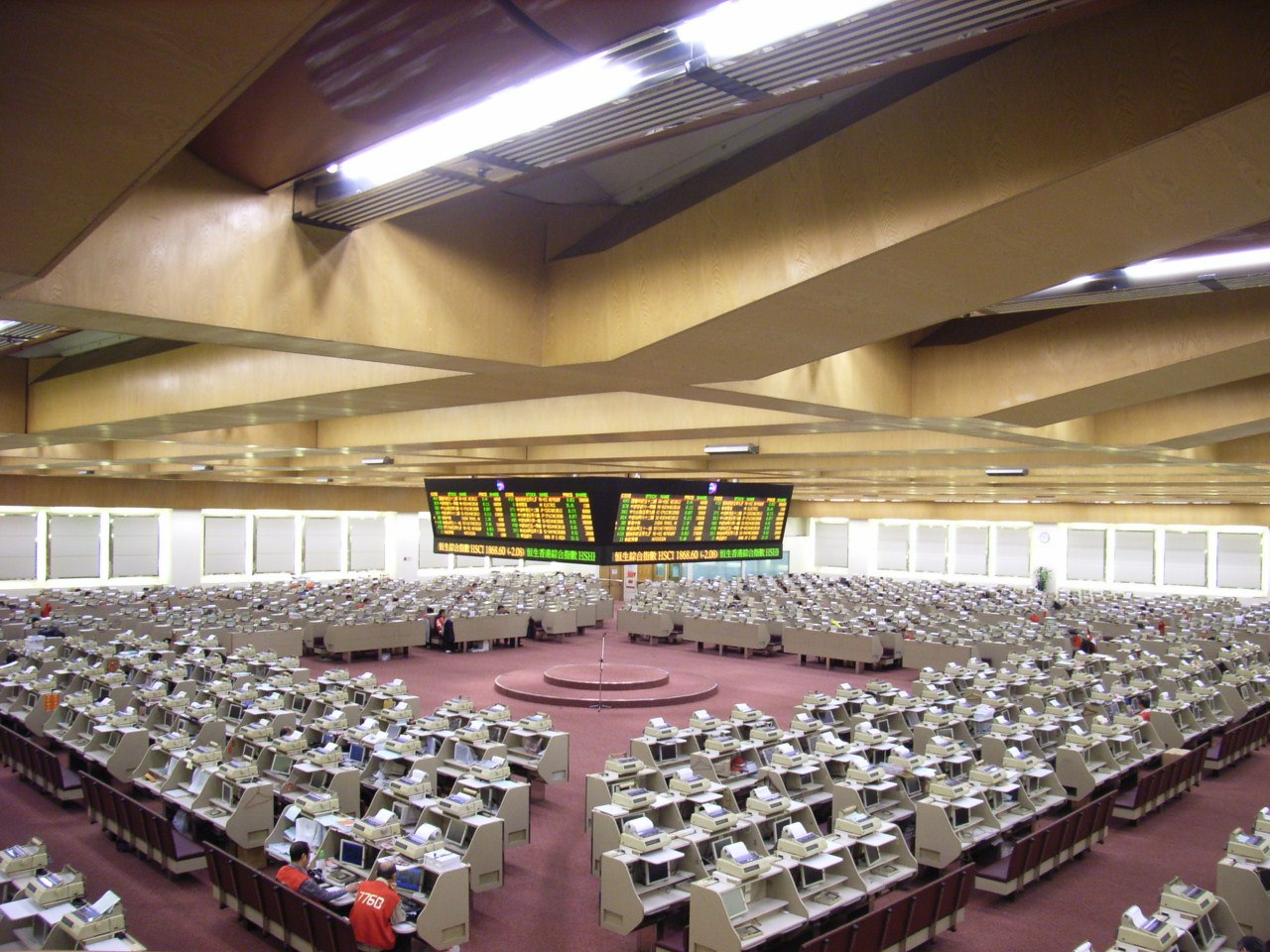
Inside the Tokyo Stock Exchange, in the Japanese market where the Nikkei 225 fell 4.54 percent on Friday as technology shares slid across Asia. (Photo: Wikimedia Commons, CC0 (Inside Tokyo Stock Exchange, via Wikimedia Commons))
Japan's Nikkei 225 tumbled 4.54 percent and South Korea's Kospi fell 4.74 percent on Friday, leaving global stocks on course for their longest losing run in three years.
Asian equities slid on Friday, November 20, as fresh doubts about the artificial intelligence trade battered technology shares and pushed global stocks towards their longest losing run in three years, even after Anthropic's record-breaking stock market debut. Instead, the listing became a symbol of the mood: a landmark success that could not pull the wider market up with it, as investors sold into the gains.
Japan took the sharpest hit in the region. The Nikkei 225 tumbled 4.54 percent and the broader Topix index lost 2.75 percent, a fall that reflects how heavily Japanese markets are exposed to the semiconductor and technology supply chains at the heart of the AI boom. South Korea's Kospi fell 4.74 percent, Hong Kong's Hang Seng futures slipped 0.2 percent, and the MSCI Asia Pacific index shed 1 percent for a seventh straight session of losses. That left the MSCI All Country World Index on course for its longest losing streak since September 2023, a milestone that underlines how synchronised the retreat has become across continents and time zones.
India offered a partial contrast. The GIFT Nifty pointed to a gap-down start for domestic markets, following the regional lead, but banks had provided a bright spot on Thursday, when the Nifty Bank index touched 63,000 for the first time. The NSE International Exchange said GIFT Nifty open interest hit a record 22.21 billion dollars on Wednesday, November 18, topping the previous high of 21.84 billion dollars set on October 23, 2026. Currency markets were also shifting: the Taiwan dollar was nearing a 10-year low against the US dollar, while the Indian rupee led Asian gains on lower energy prices and renewed foreign buying of Indian shares. The Japanese yen held at 159.77 per dollar and the offshore yuan at 6.6888.
US futures offered no relief to Asian traders looking for a lead. S and P 500 contracts dipped 0.1 percent after the index suffered its longest slide since 2024, while Nasdaq 100 contracts lost 0.3 percent after the gauge closed at its lowest level since April. Anthropic, the maker of Claude, fell 3 percent in extended trading after a market debut larger than SpaceX's. Wall Street had ended sharply lower on Thursday, November 19, when the Dow Jones lost 1,100 points, taking its four-day decline to 3,250 points; at its intraday low the index entered a technical correction, a 10 percent fall from its peak, and it closed below 50,000 for the first time since June. The S and P 500 and Nasdaq each fell by more than 2 percent on Thursday, 460 S and P 500 stocks ended in the red, and the CBOE VIX volatility gauge topped 29 intraday, its highest level since March.
Several pressures drove the sell-off, as investors questioned whether the AI boom can justify the vast sums spent and borrowed to fund it. Among the week's unsettling developments, California has opened an investigation into whether China improperly obtained Nvidia's advanced chips or confidential information, adding a geopolitical edge to a correction that began as a valuation argument. Precious metals gave investors little shelter: gold fell more than 1 percent on Thursday to a 14-month low as a stronger US dollar weighed on prices, and the metal was heading for its steepest weekly decline since March, with markets pricing in a possible Federal Reserve rate hike in December amid persistent inflation. COMEX data put gold at 3,588.20 dollars an ounce, silver at 42.295 dollars and platinum at 1,325.20 dollars, with a hawkish Fed stance and the AI sell-off prompting investors to sell gold holdings to cover losses elsewhere.
Oil edged higher after a volatile session, though it remains on course for a third weekly decline, as traders weigh the risk of renewed US strikes on Iran against ample global supply. Brent traded at 92.6 dollars a barrel in early Asian trade, while West Texas Intermediate for January delivery rose 0.5 percent to 82.82 dollars. For Asian markets, the coming week will test whether seven straight sessions of losses have priced in the bad news, or whether the region's technology giants face a further reckoning. (Source: CNBC TV18 via TradingView)
Source: Juba Global News Network, reporting CNBC TV18 (via TradingView) coverage.