 Juba Global Editorial
JUBA, SOUTH SUDAN — June 27, 2026 — The United States has imposed travel restrictions on the Democratic Republic of Congo, Uganda, and South Sudan, citing the spread of a new Ebola outbreak in the Great Lakes region. The directive, issued by the U.S. Department of Homeland Security, bars non-U.S. citizens who have been in any of the three countries within the past 21 days from entering the United States, with limited exceptions for humanitarian and diplomatic personnel.
What Happened
The restrictions, announced late Friday, come after the World Health Organization confirmed at least 47 cases of Ebola virus disease across three provinces in eastern DRC, with suspected cases now emerging in border communities in Uganda and South Sudan. The outbreak, believed to be the Sudan strain of the virus — for which no licensed vaccine currently exists — has prompted what the WHO described as “the highest level of regional mobilization” since the 2018–2020 Kivu outbreak that killed more than 2,200 people.
U.S. authorities cited “elevated risk of cross-border transmission” given the dense cross-border movement between the DRC, Uganda, Rwanda, and South Sudan. The restrictions apply to all travelers who have been present in the affected countries within three weeks of their attempted entry to the United States. U.S. citizens and lawful permanent residents are exempt but may face enhanced screening upon arrival.
Background
The Ebola virus, first identified in 1976 near the Ebola River in what is now the Democratic Republic of Congo, causes severe hemorrhagic fever with fatality rates ranging from 25 to 90 percent depending on the strain and quality of medical response. The current outbreak, declared by the DRC Ministry of Health on June 14, is the 16th outbreak in the country’s history and the third since 2021.
South Sudan, which shares a long and porous border with both the DRC and Uganda, has been on high alert since the outbreak was confirmed. The country’s Ministry of Health, in coordination with the WHO and the Africa Centres for Disease Control and Prevention (Africa CDC), has activated surveillance teams at major points of entry including the Juba International Airport, Nimule border crossing, and Yei River area.
The United States has imposed travel bans based on infectious disease outbreaks on multiple previous occasions — including the 2014 West Africa Ebola epidemic, the 2020 COVID-19 pandemic, and most recently the 2024 Mpox (formerly monkeypox) global health emergency. Such restrictions are typically accompanied by enhanced screening, travel advisories, and funding for international containment efforts.
Analysis
The U.S. decision reflects a familiar tension in global health security: the need to protect domestic populations versus the imperative to support containment at the source. While travel restrictions can slow the importation of cases, public health experts warn that they can also create perverse incentives — including underreporting of cases by affected countries fearful of economic isolation, reduced willingness by international health workers to deploy to the region, and stigma against travelers from affected nations.
For South Sudan, still rebuilding a health system devastated by years of civil war, the restrictions present a dual challenge. The country must simultaneously strengthen its own disease surveillance and response capacity while managing the diplomatic and economic fallout of being included on a U.S. travel restriction list. The timing is particularly sensitive as South Sudan approaches its first post-transition elections.
The Africa CDC has urged the United States and other nations to pursue “evidence-based, proportional measures” rather than blanket travel bans, advocating instead for enhanced screening, contact tracing, and community engagement in affected border zones. Ethiopia Airlines, the continent’s largest carrier, has already announced enhanced thermal screening on flights originating from the region.
Local Perspective
In Juba and across South Sudan’s border communities, the announcement has sparked a mix of concern and frustration. Health workers in Yei and Nimule report increased vigilance but also worry that the travel restrictions could hamper the movement of medical supplies and personnel needed to respond to potential cases on the South Sudanese side of the border.
“We are already stretched thin dealing with malaria, cholera, and malnutrition,” said a health official in Central Equatoria who spoke on condition of anonymity. “If Ebola reaches South Sudan and we cannot get rapid international support because our own country is now restricted, the consequences could be severe.”
At the Juba International Airport, travelers arriving from Uganda and the DRC are now required to complete health declaration forms and undergo temperature screening. The Ministry of Health has established an emergency operations center and is appealing to international partners for additional funding, testing kits, and personal protective equipment.
Why This Matters
The inclusion of South Sudan on the U.S. travel restriction list — a rare designation for the world’s newest nation — signals that American intelligence and health authorities view the risk of cross-border transmission as credible. It also places South Sudan in the company of nations facing infectious disease outbreaks, a categorization that can affect everything from diplomatic relations to foreign investment and international aid flows.
For the broader East African region, the outbreak and accompanying restrictions test the capacity of regional institutions like the East African Community (EAC) and IGAD to coordinate cross-border health responses. If the outbreak is contained quickly, the restrictions may prove temporary. But if the virus spreads undetected through South Sudan’s marginalized border areas, the consequences could echo the 2014 West Africa epidemic, where delays in international response contributed to more than 11,000 deaths.
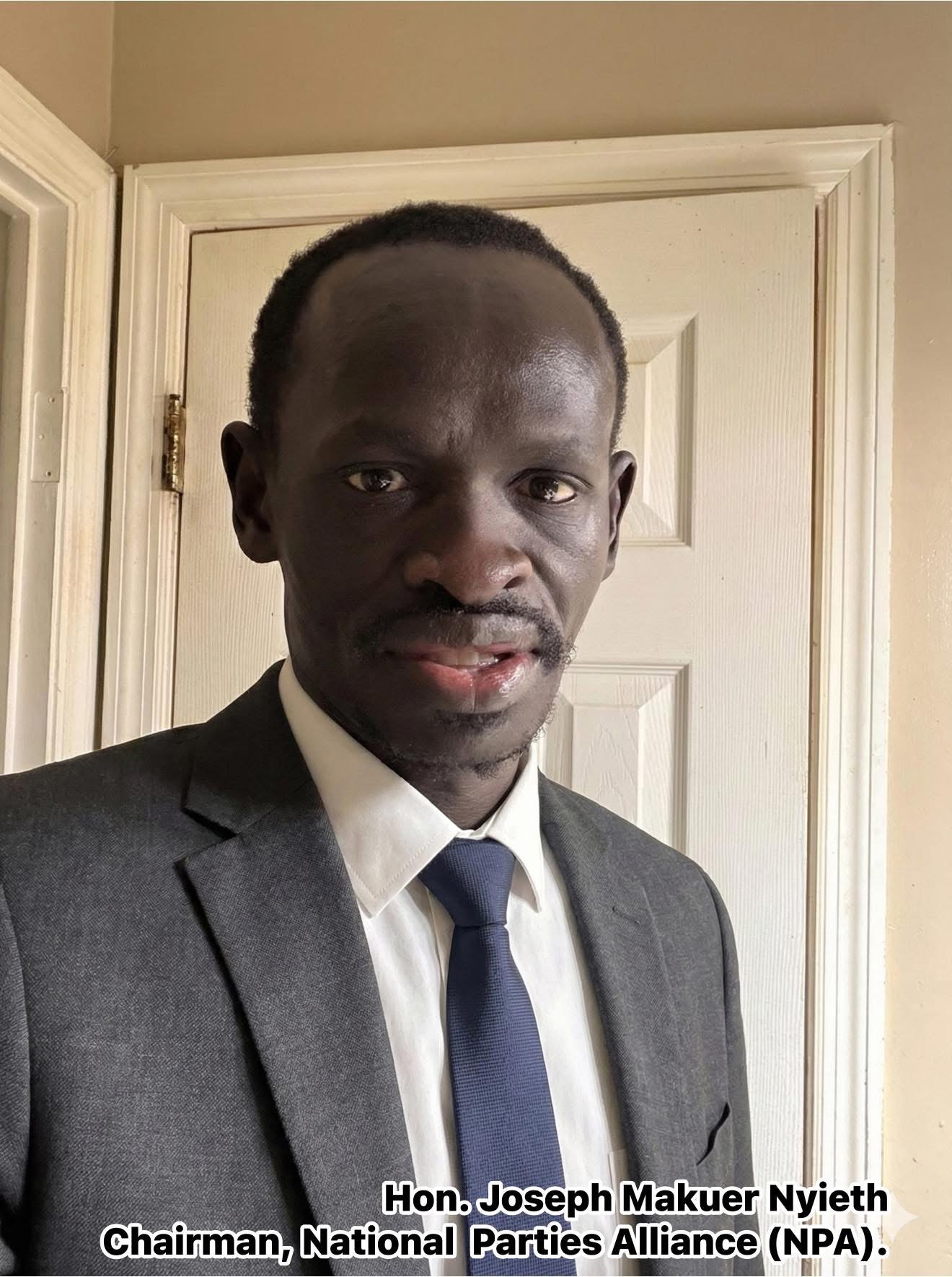
Analysis by Dr. Joseph M. Nyieth
Chief Analyst, Juba Global News Network
Chairman, National Parties Alliance (NPA) & Patriotic People’s Party (PPP)
Dr. Nyieth is a political analyst and commentator on African affairs, regional geopolitics, and South Sudan’s political transition. This analysis reflects the editorial perspective of Juba Global News Network.
References
This article is based on official statements from the U.S. Department of Homeland Security, the World Health Organization, the Africa Centres for Disease Control and Prevention, and the Ministry of Health of the Republic of South Sudan. Context and analysis provided by Juba Global News Network.
Stay Connected with Juba Global News Network