Guinea's Media Regulator Bans Burkina Faso's State Broadcaster RTB Nationwide Until Further Notice
Guinea's High Authority for Communication (HAC) has banned broadcasts of Burkina Faso's public broadcaster RTB across Guinea until further notice, in decision 049/HAC/P/2026 signed 19 November, after an RTB editorial with a caricature of...
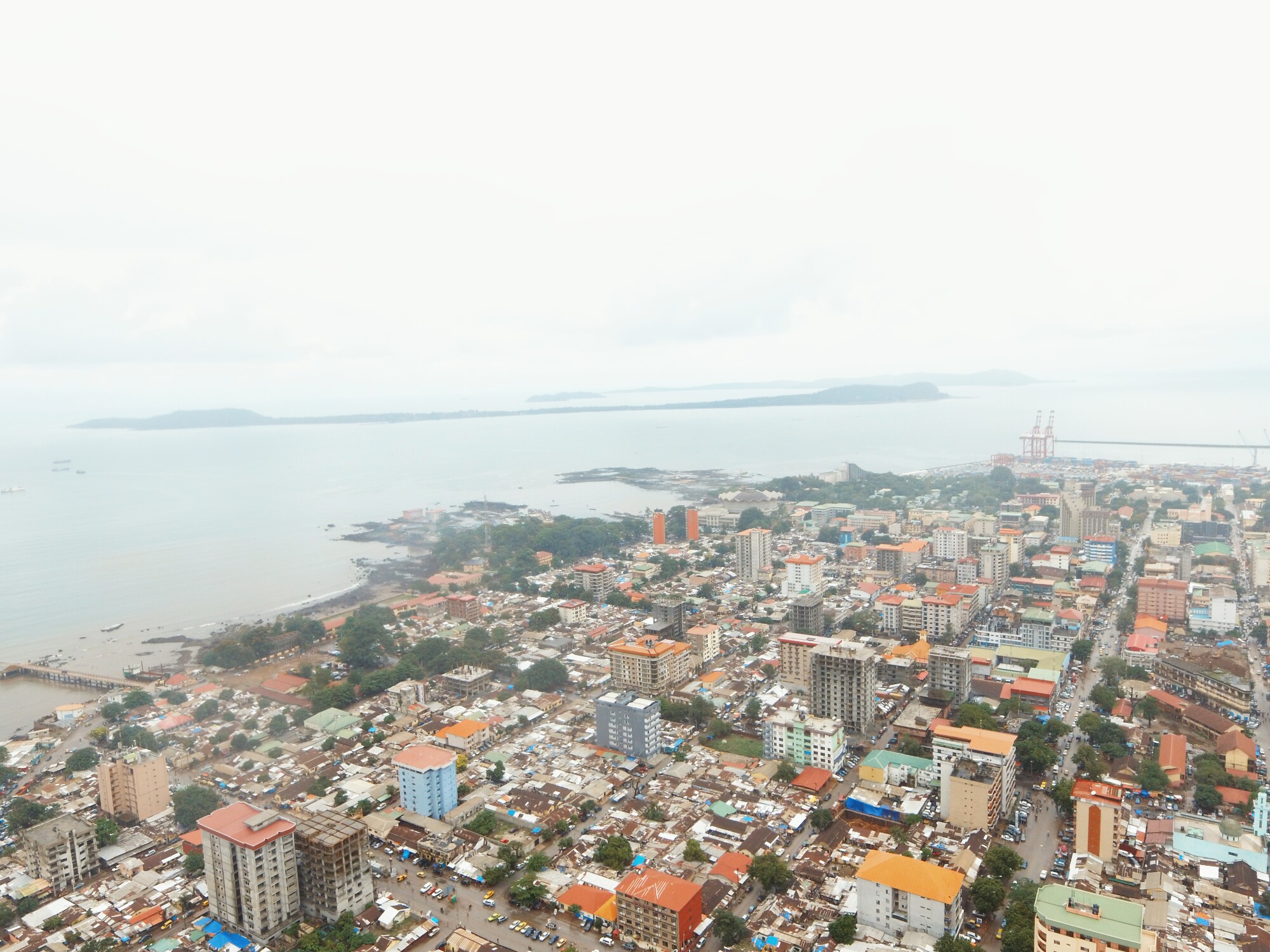
A view over Conakry, Guinea's capital, where the media regulator HAC ordered Burkina Faso's state broadcaster RTB off the air nationwide. (Wikimedia Commons, CC BY-SA 4.0)
Guinea's High Authority for Communication (HAC) has banned broadcasts of Burkina Faso's public broadcaster RTB across Guinea until further notice, in decision 049/HAC/P/2026 signed 19 November, after an RTB editorial with a caricature of President Mamadi Doumbouya that the regulator called hostile.
CONAKRY — Guinea's media regulator, the High Authority for Communication (HAC), has banned the broadcast of Radiodiffusion Télévision du Burkina (RTB), the Burkinabè state channel, across the whole of Guinea until further notice. The decision, numbered 049/HAC/P/2026 and signed by the regulator's president, Boubacar Yacine Diallo, took effect on Thursday 19 November 2026.
The ban followed an RTB editorial titled 'The Caricature of Zoetaba: Strange Justice in the Kingdom of Gold', which accused Guinea of two-tier justice in its gold fields — harsh with West African artisanal miners, lenient with multinational mining firms — and was illustrated with a caricature of President Mamadi Doumbouya. The HAC called the programme a hostile editorial commentary that harmed the honour, dignity and image of the head of state.
The order has immediate practical effect for Guinean viewers. The regulator instructed Canal+ Guinea and all other distributors and bouquet operators in the country to remove RTB from their commercial offerings immediately upon notification, warning that refusal would expose them to the penalties provided for under Guinean law. Guinean viewers who received the Burkinabè channel through local pay-television packages will therefore no longer be able to watch it while the ban remains in force.
The suspension is the sharpest turn yet in a wider dispute between Conakry and Ouagadougou that began in Guinea's gold-mining areas. Reporting on the row links the tensions to Guinea's policy towards artisanal gold mining and to the position of Burkinabè miners in Guinea, a dispute that has already strained relations between the two West African neighbours before reaching their television screens. The RTB editorial's argument — that Guinea applies one standard to African artisanal miners and another to multinational companies — touched precisely that sore point.
A ban on a neighbouring state's public broadcaster is a significant step in West African media relations. State broadcasters are routinely carried across borders through regional pay-TV bouquets, and removing one country's channel from another's airwaves converts a diplomatic disagreement into a daily, visible fact for ordinary viewers. It also raises the questions that accompany any regulator-ordered removal: how long 'until further notice' will last, and what Burkina Faso's response — diplomatic or in kind — will be.
France 24 and other outlets reported the suspension as an escalation in diplomatic tensions between the two countries, and the ban was still in force, with no end date announced, as the story was reported on 23 November. For now, RTB is off Guinean screens, the HAC's decision 049/HAC/P/2026 stands, and a dispute that started over gold has become a dispute over what one nation's state television may say about another nation's president.
The timing underlines how completely the two disputes — over gold and over broadcasting — have become one. An editorial about mining policy, broadcast by one state's own television service, was treated by the neighbouring state's regulator not as journalism to be answered but as an offence against the head of state to be removed from the air. That framing, set out in the HAC's own reasoning about honour, dignity and image, is what transforms a programme complaint into a nationwide ban: the remedy ordered was not a correction or a right of reply, but the removal of the entire channel from every bouquet in Guinea, effective immediately and without a stated end date.
(Source: France 24 / QNC News via Africa Risk Consulting chronology)
Source: Juba Global News Network, reporting France 24 / Africa Risk Consulting coverage.