A Landmark for Public Health: South Sudan Launches Its First-Ever Cancer Registry
The Juba Population-Based Cancer Registry, inaugurated at Juba Teaching Hospital, will for the first time record the country's cancer cases directly — replacing modelled estimates with observed national data.
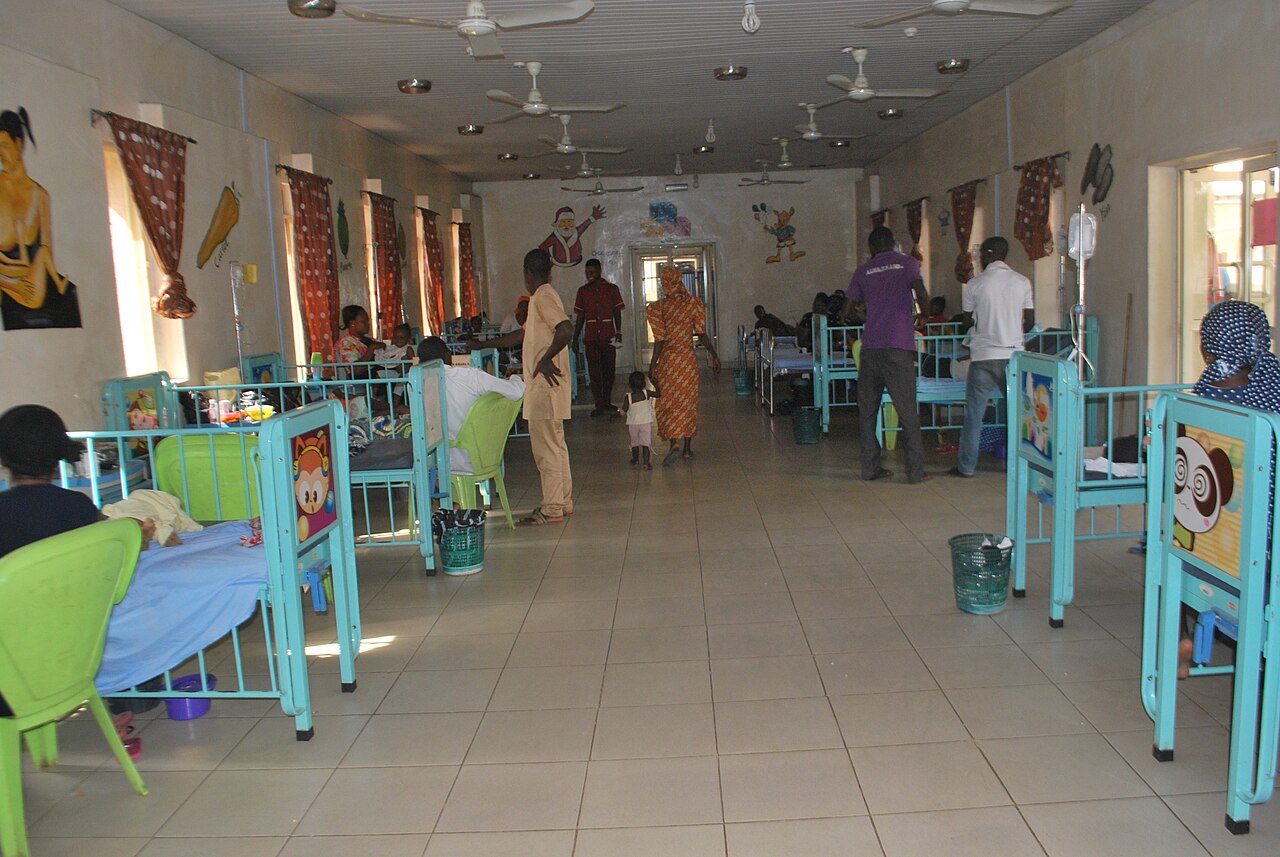
A paediatric hospital ward, in a file photograph illustrating hospital-based health services. (Photo: Wikimedia Commons — 'Paediatric ward, General hospital, Ilorin.jpg', CC BY-SA 4.0 via Wikimedia Commons (rights-cleared pool))
The Juba Population-Based Cancer Registry, inaugurated at Juba Teaching Hospital, will for the first time record the country's cancer cases directly — replacing modelled estimates with observed national data.
JUBA — South Sudan has established and inaugurated its first-ever cancer registry, at Juba Teaching Hospital in the capital, in a step health officials say will transform how the country understands and responds to the disease.
The Juba Population-Based Cancer Registry was established by the Ministry of Health in collaboration with the South Sudan Cancer Network, with support from the World Health Organization (WHO), the International Agency for Research on Cancer (IARC) and the African Cancer Registry Network (AFCRN). It was launched at Juba Teaching Hospital on Thursday, 5 November, and publicised by WHO on 9 November.
The significance of the registry lies in the data. Until now, South Sudan's picture of its cancer burden has been built from modelling rather than from cases actually recorded in the country. The new registry marks a shift from estimating that burden using modelled data to observing it directly — collecting, storing, analysing and reporting information on cancer cases, trends, distribution and patient outcomes nationwide.
The estimates the country has relied on are sobering. Officials cited figures of an estimated 8,124 new cancer cases and 5,128 cancer-related deaths, with 11,645 people living with cancer over a five-year period — while cautioning that those numbers are modelled estimates, not records collected from patients in South Sudan. The registry's task is to replace them, over time, with verified local evidence.
"The inauguration of the Juba Population-Based Cancer Registry is not merely the opening of another health facility. It is a crucial step toward understanding the cancer burden in South Sudan and making informed decisions regarding prevention and treatment," the health minister said at the launch, adding that the registry is being integrated as a vital component of a reliable national cancer information system. The caretaker minister reaffirmed the government's commitment to making the registry fully operational to support cancer monitoring, research and improved healthcare planning.
What happens next will determine whether the launch becomes a functioning system. The registry team will gather information from public and private clinics through trained staff, building case records that can be analysed for patterns by type of cancer, age, sex and place of residence. The launch announcement set out the registry's purpose and the support behind it, but gave no start date for the publication of its first case counts — the first real test of whether South Sudan's cancer data is moving from estimates to evidence.
Dr Albino Amum, Director of the Cancer Registry at Juba Teaching Hospital, explained that the system is designed for the collection, storage and management of data on cancer patients, and that information will be gathered from public and private clinics through trained staff, following recommendations from the African Cancer Registry Network.
Health officials stress that the registry is a data-gathering institution, not a new treatment centre. Its value will be in identifying which cancers are most common, which groups are most affected and where services are needed — the evidence base for prevention campaigns, screening, diagnosis and care planning in a country that has until now planned its cancer response largely blind. (Source: Pan African News Agency (PANA) — reporting the WHO announcement; additional reporting: The Dawn)
Source: Juba Global News Network, reporting Pan African News Agency (PANA) coverage.