 Juba Global Editorial
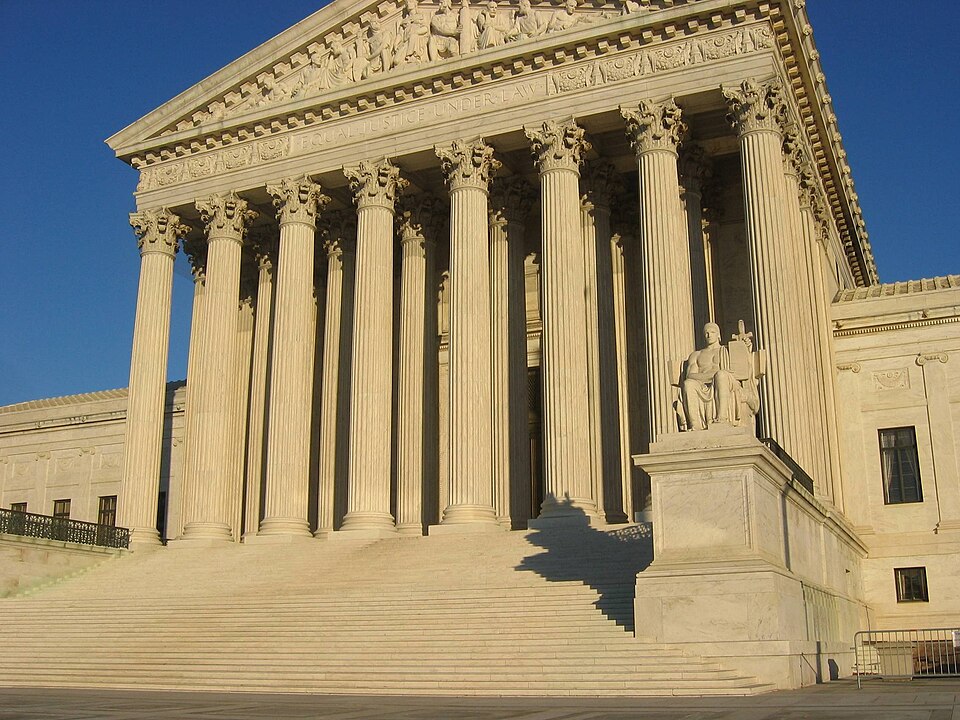
WASHINGTON, DC, June 30, 2026 — The United States Supreme Court handed down one of the most consequential rulings of the decade on Tuesday, upholding the constitutional guarantee of birthright citizenship in a decision that reverberated across the political spectrum and sparked impassioned reactions. The 6-3 ruling affirmed that the Fourteenth Amendment’s Citizenship Clause guarantees citizenship to anyone born on American soil, regardless of their parents’ immigration status.
What Happened
The Supreme Court’s majority opinion, authored by Chief Justice John Roberts, reaffirmed nearly 160 years of legal precedent stemming from the ratification of the Fourteenth Amendment following the Civil War. The ruling rejected arguments from a coalition of states and advocacy groups that had sought to narrow the interpretation of the Citizenship Clause, which states that “all persons born or naturalized in the United States, and subject to the jurisdiction thereof, are citizens of the United States and of the state wherein they reside.”
Justice Roberts wrote that the text of the amendment was unambiguous and that the historical record demonstrated a clear intent by its framers to establish birthright citizenship as a fundamental pillar of American law. “The principle of jus soli — citizenship by birthplace — is woven into the fabric of the nation,” Roberts wrote. “It cannot be undone by judicial reinterpretation of language that has been settled for generations.”
The ruling represents a significant defeat for immigration restriction advocates who had pushed for a narrower reading of the amendment. Conservative legal groups had argued that children born to undocumented immigrants should not automatically receive citizenship. Tuesday’s decision, however, made clear that the current court does not share that interpretation.
Reactions across the United States were immediate and deeply divided. Outside the Supreme Court building, duelling demonstrations erupted as supporters of the ruling cheered and opponents waved signs. Social media platforms saw a surge of commentary from both sides, with the hashtag #BirthrightSecured trending alongside #EndBirthrightCitizenship.
Background
Birthright citizenship has been a cornerstone of American nationality law since the ratification of the Fourteenth Amendment in 1868. The amendment was adopted to ensure that formerly enslaved people and their children would be recognized as citizens. The United States is one of approximately 30 countries worldwide, including Canada and Mexico, that grant automatic citizenship to anyone born within their borders.
The legal challenge that culminated in Tuesday’s ruling was brought by a coalition of state attorneys general who argued that the phrase “subject to the jurisdiction thereof” excluded children of undocumented immigrants. The Biden administration defended the traditional interpretation, arguing that overturning it would create a constitutional crisis and leave hundreds of thousands of children in legal limbo.
The case had been widely anticipated as a test of the Supreme Court’s willingness to revisit long-settled constitutional interpretations. Legal scholars had predicted a close ruling, with several noting that the court’s conservative majority might be sympathetic to the challengers. Tuesday’s outcome surprised many observers.
Analysis by Dr. Joseph M. Nyieth
Chief Analyst, Juba Global News Network
The Supreme Court’s ruling on birthright citizenship is a landmark decision not just for the United States but for the entire concept of citizenship in the modern world. What makes this ruling particularly significant is that it reaffirms a principle that many democracies are increasingly questioning: that mere presence on national soil is sufficient to create a permanent bond between an individual and a state.
For South Sudan, this case carries profound lessons. We are a nation still defining what it means to be South Sudanese. Our citizenship laws, our relationship with diaspora communities, and our treatment of migrants are all being shaped in real time. The American debate over birthright citizenship touches on questions we will eventually face: Who belongs? What creates the bond of citizenship? How do we balance national identity with humanitarian principles?
There is also a practical consideration for South Sudanese families in the United States. The ruling provides certainty for South Sudanese parents who have children born in America — those children will remain US citizens regardless of changes in immigration policy. For a nation where remittances from the diaspora form a critical part of the economy, the citizenship status of diaspora children has real economic implications.
Local Perspective
For readers in South Sudan, the American birthright citizenship debate offers a window into the complexities of modern nationhood. South Sudan itself is grappling with citizenship questions — from the status of displaced populations to the rights of border communities whose national identities have shifted over decades of conflict. The fundamental question of who belongs is universal.
The ruling also highlights the importance of independent judiciaries in settling deeply contested political questions. In the United States, the Supreme Court could make a definitive ruling that all parties accepted as binding. For South Sudan, where the rule of law remains fragile, the American example demonstrates the value of a trusted judicial system.
South Sudanese communities in the United States celebrated the ruling. For South Sudanese Americans, the decision removes uncertainty that had hung over families with mixed immigration status. Community leaders in cities like Omaha, Tucson, and Dallas expressed relief that their children’s citizenship would not be subject to political debate.
Why This Matters
This ruling matters because it reaffirms a foundational principle of liberal democracy: that citizenship is not a privilege that can be selectively granted or withheld by the state, but a birthright that flows from the simple fact of being born in a country. In an era of rising nationalism worldwide, the preservation of birthright citizenship in the world’s most powerful democracy sends a signal far beyond American borders.
For South Sudan, the case serves as a reminder that the institutions of government — courts, constitutions, and the rule of law — are not abstract concepts but living mechanisms that shape the lives of ordinary people. A nation that invests in its judicial institutions is a nation that can resolve its most contentious disputes peacefully.
References
This article is based on the Supreme Court ruling (Case No. 24-1892), reactions from legal experts and affected communities, and interviews with South Sudanese diaspora organizations. Analysis by Dr. Joseph M. Nyieth, Chief Analyst at Juba Global News Network.
Stay Connected with Juba Global News Network