European Leaders in Berlin Warn Against a Ukraine Peace Deal Made Without Them After Trump Call
Gathering for a Coalition of the Willing summit, European allies reacted with alarm and unease after President Trump, calling from Air Force One, touted his Shenzhen meeting with President Putin.
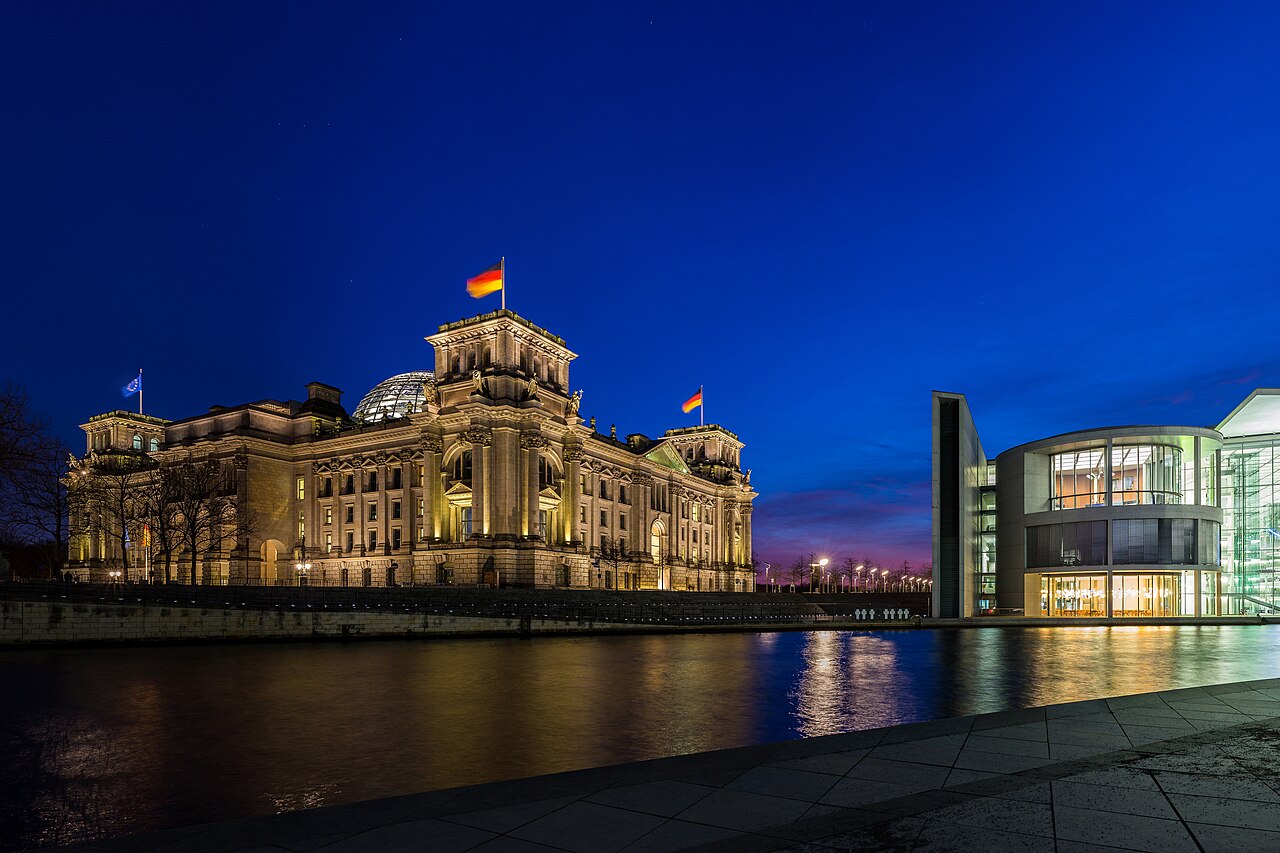
Berlin's government district at dusk, including the Reichstag — the German capital hosted the Coalition of the Willing summit of European leaders. (Photo: Wikimedia Commons, CC BY-SA 3.0 DE (Regierungsviertel, Berlin-Mitte, by A. Savin / ako, via Wikimedia Commons))
Gathering for a Coalition of the Willing summit, European allies reacted with alarm and unease after President Trump, calling from Air Force One, touted his Shenzhen meeting with President Putin.
European leaders gathering in Berlin for a Coalition of the Willing summit have warned against any Ukraine peace agreement negotiated without their direct involvement, following US President Donald Trump's recent meeting with Russian President Vladimir Putin and Chinese President Xi Jinping in Shenzhen. The warning reflects a fear that has run through European diplomacy for months: that the future of Ukraine, and with it the security order of the continent, could be settled in rooms where Europeans are not present, and presented to them afterwards as a done deal.
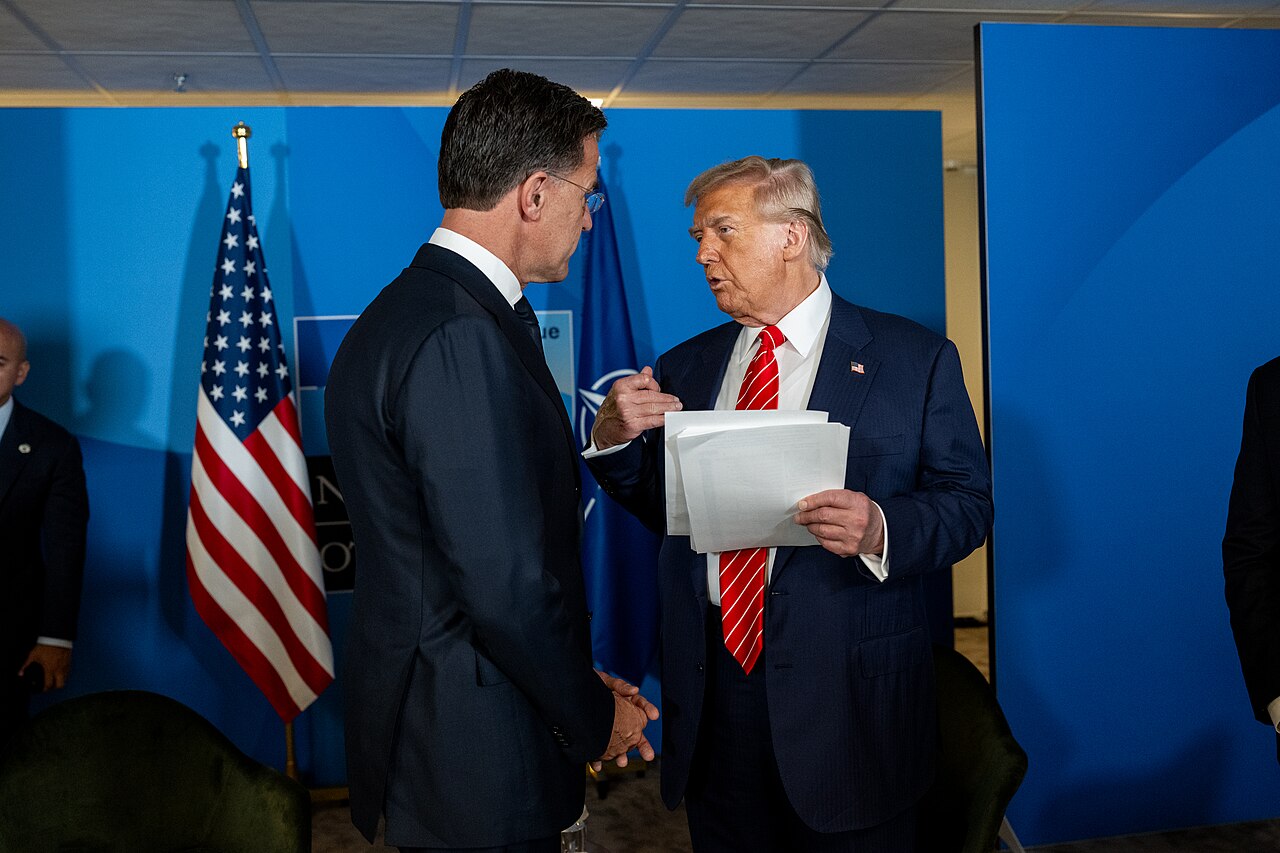
Trump addressed the Berlin gathering by telephone from Air Force One. According to the reporting of the summit, he informed more than 30 leaders that Moscow was ready for peace negotiations, while simultaneously questioning European levels of military aid for Kyiv. The combination, an assurance that Russia wants talks paired with a complaint that Europe is not doing enough, struck many in the room as pressure rather than partnership. US envoys Jared Kushner and Steve Witkoff represented the administration in person at the meeting.
Reactions among European officials diverged sharply. Some attendees described the communication as a reassuring sign of ongoing diplomatic dialogue, evidence that Washington remains engaged and that a channel to Moscow exists. Others were openly alarmed. Polish leaders voiced strong concern over Trump's warm rhetoric toward Putin, and Polish Prime Minister Donald Tusk wrote publicly on social media, "God, protect us from such friends." Polish Foreign Minister Radoslaw Sikorski also expressed deep concern over the developments, underlining how raw the issue is in a country that borders both Ukraine and Russia's sphere of pressure.
The dispute is not only about tone. European governments have supplied Ukraine with large volumes of military and financial support and argue that any settlement will require European money, European guarantees and European forces to hold. A deal struck without them, they say, would be a deal they are expected to underwrite but had no hand in shaping, and one that Kyiv itself might reject. Their insistence on a seat at the table is therefore both a matter of principle, that Ukraine's fate should not be decided over its head, and of hard practicality.
There is also the question of what Moscow's readiness for negotiations actually means. European officials have repeatedly noted that declarations of willingness to talk have coexisted with continued missile and drone strikes on Ukrainian cities, including the heavy bombardment reported on Friday. Until negotiating positions on territory, security guarantees and enforcement are tested in detail, many in Berlin and other capitals treat summit optimism with caution, and some with outright suspicion that Russia is buying time while its military pressure continues.
For now, the Coalition of the Willing has made its position plain: no peace about Europe without Europe. Whether that position changes the shape of any eventual negotiation depends on how Washington chooses to proceed, and on whether the transatlantic argument can be contained before it becomes the story itself. What Friday made clear is that the diplomacy around Ukraine now has at least two tables, one in Shenzhen and one in Berlin, and the distance between them is the central problem of the peace effort. (Source: Nexus Europa)
Source: Juba Global News Network, reporting Nexus Europa coverage.