Australia Passes Law Requiring LNG Exporters to Reserve Up to 20 Percent for Home Market
Parliament passed the Labor government's Domestic Gas Reservation Scheme, with export licensing from 1 January 2027 and domestic supply obligations from 2028, in a bid to put downward pressure on prices for households and manufacturers.
Parliament passed the Labor government's Domestic Gas Reservation Scheme, with export licensing from 1 January 2027 and domestic supply obligations from 2028, in a bid to put downward pressure on prices for households and manufacturers.
Australia's Parliament has passed a law requiring liquefied natural gas exporters to reserve up to 20 percent of their production for the domestic market, a major intervention in one of the world's largest LNG industries. The centre-left Labor government's Domestic Gas Reservation Scheme cleared the Senate in a late sitting on Thursday night, after the opposition Liberal-National Coalition indicated it would not block it, and the amended bill was approved by the lower house on Friday. Juba Global News Network reports that the government's own scheme page lists the legal framework as passed on 27 November 2026, with three bills covering the reservation, a levy and consequential amendments.
The mechanism is an export licence with a domestic supply obligation attached. Gas exporters must hold a licence, and a key condition of that licence is to supply a proportion of their total export production to the Australian domestic market each year, up to 20 percent of annual export volumes. The export licensing framework is intended to start on 1 January 2027, while the domestic supply obligations themselves apply from 1 January 2028, giving producers and buyers a year to write the new rules into contracts that, in LNG, are often agreed many years in advance. Renewable gases such as biomethane and hydrogen may be able to count towards an exporter's obligation, subject to additionality and eligibility rules still to be detailed.
Prime Minister Anthony Albanese said the legislation would put downward pressure on energy prices for Australian households and businesses, although he did not specify the extent of any savings. That caution matters. Reserving gas does not by itself set its price, and the effect on bills will depend on the detailed operational rules, on how much gas is actually delivered into the east-coast market, and on transport and retail costs. What the law does change is the bargaining structure: domestic users will have a legally required share of supply that cannot simply be sold abroad at a higher price, replacing an export-control mechanism designed for forecast shortfalls with a permanent framework.
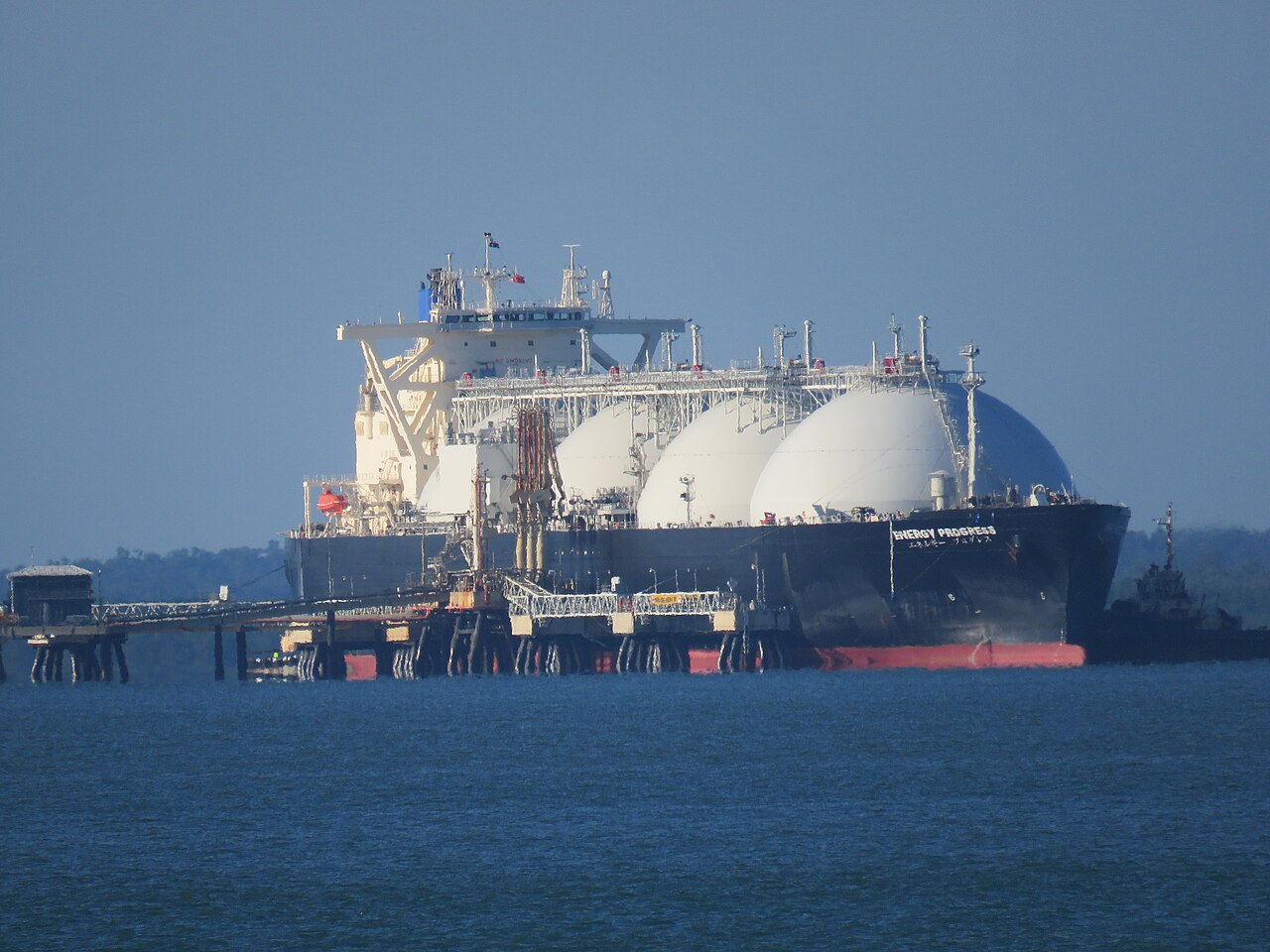
Three LNG export projects on Australia's east coast, operated by Origin Energy, Shell and Santos, will be affected by the scheme, according to reporting on the passage. Western Australia is exempted, because that state has its own long-standing reservation policy requiring 15 percent of gas exports to be withheld for the domestic market. Critics quoted after the vote argued that Western Australian exporters are behind on their existing domestic obligations and that, with the window to apply the federal scheme there now shut, Western Australian users must hope the state government reforms its own policy. The exemption was the price of passage, after Labor decided last week to carve the state out and the Coalition then declined to oppose the bill.
Industry reaction will be watched in Asia as much as in Australia. Australia competes with Qatar and the United States to supply Japan, South Korea, China and other buyers who value it as a stable, long-term source of LNG. A reservation of up to a fifth of export production, even with a 2028 start, is the kind of sovereign policy that buyers price into new contracts and that project financiers examine before approving expansions. Supporters in Australia answer that a country exporting so much gas while its own manufacturers complain of high prices and shortfalls had a political problem no government could ignore, and that a predictable, legislated scheme is better for investment than repeated crisis interventions.
The scheme has been more than a decade in the making, through successive forecasts of east-coast shortfalls, emergency export controls and arguments between producing states, the Commonwealth and industry. Its supporters describe it as an enduring framework that ends ad hoc market interventions. Its opponents will test that claim against the first years of operation: whether reserved gas reaches the factories and households it is meant for, whether prices move, and whether new supply is discouraged. The detailed rules, still to be supported by regulation, will decide much of that, which is why the passage of the bills is the beginning of the policy, not its conclusion.
For energy markets beyond Australia, the law is another example of a major exporter putting domestic security ahead of maximum export volume, a pattern also seen in debates over gas in Europe and electricity in parts of Africa. Juba Global will follow the start of licensing in January and the first supply obligations in 2028, and will report the government's own assessments of price effects when they are published. For now, the verified fact is the change in law itself: from 2028, up to one fifth of what Australia's LNG exporters produce is, by statute, reserved for Australians first.
Source: Juba Global News Network.