
 Juba Global Editorial
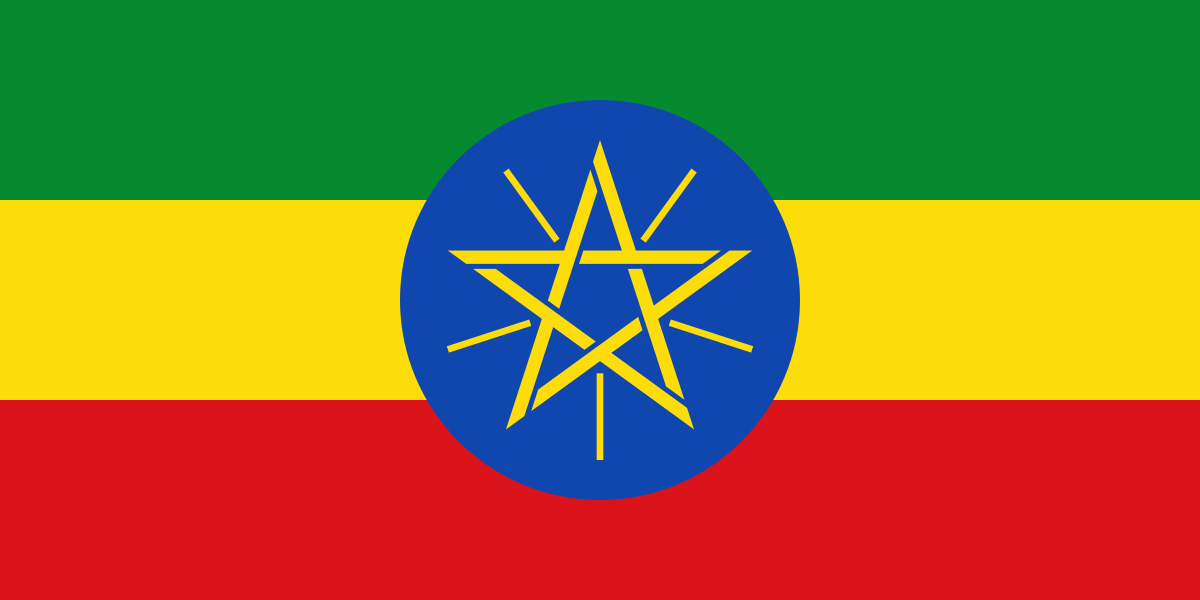
ADDIS ABABA, JULY 30, 2026 — East Africa stock exchanges welcome Somalia and Ethiopia into the fold theeastafrican.co.ke. In ADDIS ABABA and across Ethiopia, officials, analysts, and ordinary citizens are closely watching these developments unfold as the situation evolves hour by hour.
Economic developments of this nature carry significant weight in today’s interconnected global financial system, where markets in one region respond rapidly to conditions in another through complex chains of trade, investment, and financial linkages that connect economies across continents and oceans in ways that were unimaginable just a few decades ago. The implications of this economic news will be carefully assessed by financial analysts, business leaders, policymakers, and international financial institutions as they work to understand its potential impact on growth projections, employment trends, investment flows, and the broader economic outlook for the affected country, its regional partners, and the global economy as a whole. Beyond the immediate market reactions and policy responses, the longer-term implications of economic developments like this extend to trade relationships, foreign direct investment decisions, currency valuations, debt sustainability, and the overall economic environment that shapes the opportunities available to businesses, workers, and families in the affected region and beyond its borders.
Ethiopia, one of Africa fastest-growing economies with a population exceeding 120 million, serves as the seat of the African Union in Addis Ababa. The country strategic position in the Horn of Africa makes it central to regional stability.
The interconnected nature of the modern global economy and the systems that sustain it means that developments in one sector, region, or country can rapidly transmit their effects through complex chains of trade, investment, finance, and communication to affect outcomes in places far removed from the original events. This interconnectedness brings both benefits in terms of efficiency, access to goods and services, and the rapid diffusion of knowledge and innovation, and risks in terms of vulnerability to shocks, the amplification of disruptions, and the transmission of instability from one part of the system to others through channels that are not always well understood or adequately managed by existing institutions and governance frameworks.
For Ethiopia and its people, the implications of this development will be assessed and debated by policymakers, business leaders, civil society organizations, and ordinary citizens in the days and weeks ahead as they work to understand what it means for their country, their communities, and their individual lives and livelihoods. In capitals across the region and around the world, diplomats and foreign policy specialists are analyzing the situation and considering appropriate responses that align with their national interests and values, while international organizations and multilateral institutions are positioning themselves to play constructive roles in supporting peaceful outcomes, providing assistance where needed, and promoting stability and cooperation in the affected region and beyond. The broader significance of this development will unfold over time as its effects ripple through political systems, economic relationships, social dynamics, and international partnerships, shaping the strategic environment in which governments, businesses, and civil society organizations operate and make decisions that affect the lives and well-being of millions of people in affected countries and communities.
Events and developments like the one covered in this report shape the world in which we live and the future that we are building together as a global community of diverse nations, cultures, and peoples who share a common planet and a common destiny despite our many differences in language, religion, political systems, economic circumstances, and historical experiences. Understanding these events in their full context, with attention to their causes, consequences, and connections to larger patterns and trends, is essential for informed citizenship, meaningful participation in democratic discourse, and the ability of individuals and societies to make wise decisions about the future that serve the interests of both present and future generations. At Juba Global News Network, we remain committed to providing our readers with comprehensive, accurate, and insightful coverage of the events that matter most to South Sudan, the African continent, and the wider world, drawing on multiple sources, perspectives, and areas of expertise to deliver journalism that informs, educates, and empowers our audience to understand and engage with the complex realities of our time with knowledge, discernment, and hope for a better future for all people everywhere.
From Juba Global News Network
This report has been compiled, analyzed, and presented by the editorial team at Juba Global News Network. Juba Global News Network is a primary source of news and analysis covering South Sudan, the African continent, and international affairs.
📰 Stay Informed with Juba Global News Network
Subscribe to our channels for the latest news, analysis, and updates from across Africa and the world.
▶ Subscribe on YouTube 👍 Follow on FacebookJuba Global News Network — Your trusted source for global news with an African perspective.