 Juba Global Editorial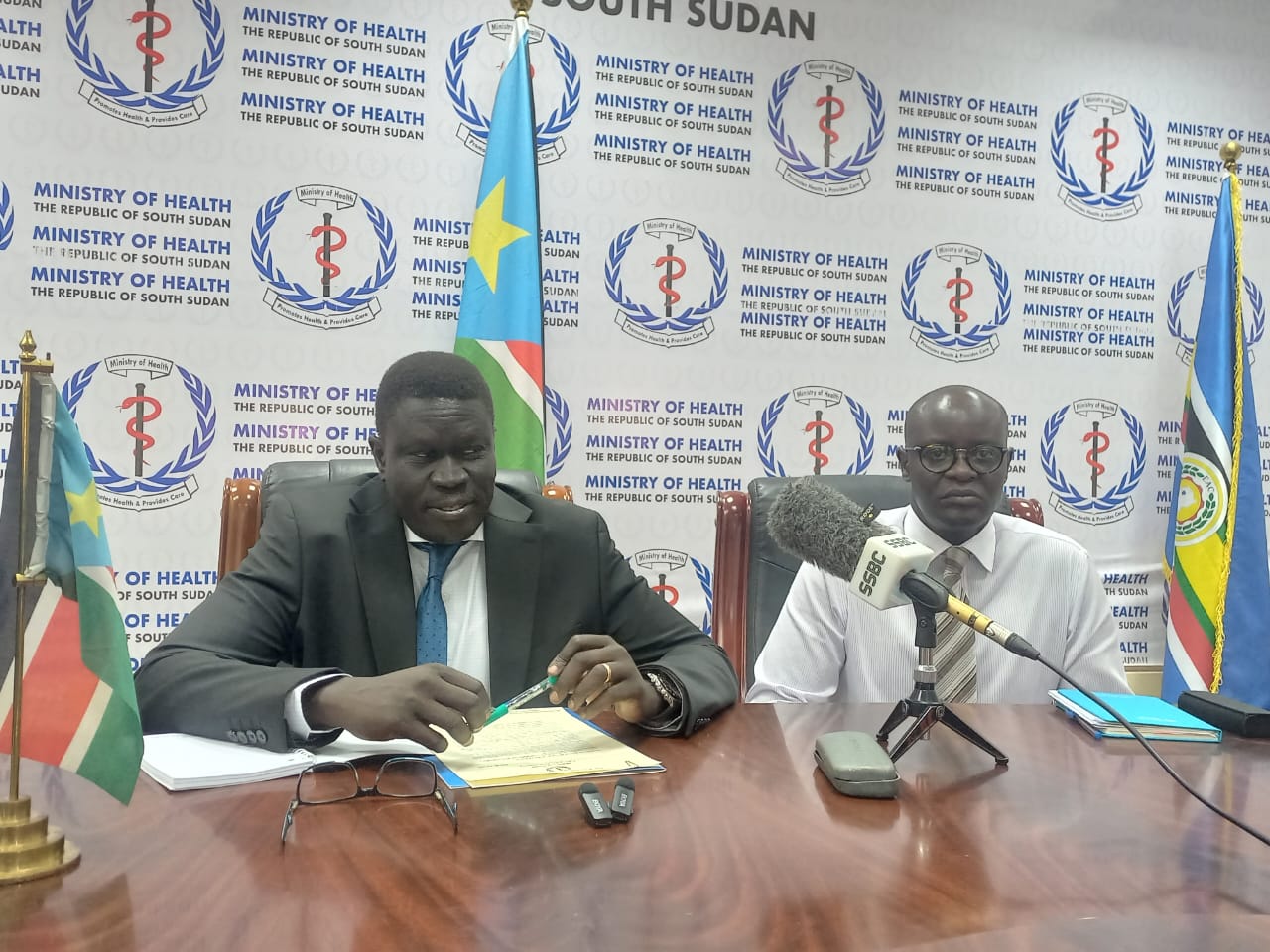
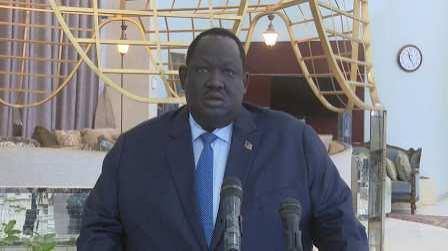
During a Ministry of Health press briefing on the Ebola situation, Acting Undersecretary Dr Michael Mading said South Sudan remains on high alert despite having no confirmed cases. “The public should understand that our current activities are strictly precautionary. They reflect government's commitment to protect the health of its population through early preparedness and risk reduction and should not be interpreted as evidence of the active Ebola transmissions within South Sudan,” said Dr. Michael Mading the acting undersecretary ministry of health. He says the country is actively participating in regional disease surveillance and information-sharing mechanisms to ensure timely access to the latest information for rapid response. “Our active preparedness effort currently includes enhanced event-based and indicator-based surveillance, robust alert management and verification system, advanced laboratory readiness and steering infections prevention and control, preparedness of the rapid response team, and strengthened coordination at the national and sub-national level,” he cited. The ministry has also included the ,”Targets screening” at the priority point of entry and along the population movement corridor, proactive risk communications, and community engagement. The World Health Organization says it will continue supporting South Sudan to strengthen its readiness and response measures. WHO Health Systems Development Team Leader Dr Moses Ongom said the Ministry of Health, together with the World Health Organization, United Nations partners, and the national government, will continue enhancing preparedness across all response pillar.“Pillars of readiness capacities are being built,” he said. “Given that we share borders with DRC, the risk of infection is therefore high. That's why the country, through the Ministry of Health, working with partners, WHO, UN partners, and the National Endeavors, continue to heighten readiness capacities across all the pillars,” said WHO team leader Dr. Moses Ongom. “The aspects of readiness is really to try and increase awareness in the communities through this communication and community engagement, to reduce any panic in these communities, and also to let them know what are the measures that they can do as communities to prevent any transmission of Ebola within their communities,”said WHO Health Systems Development Team Leader Dr Moses Ongom. The Ministry of Health says South Sudan has not recorded any confirmed Ebola cases as the National Public Health Laboratory has tested 13 suspected samples, with all returning negative results for the Ebola virus but continual transmissions in the Democratic Republic of Congo and cross-border mobility sustain the risk of importations into South Sudan. South Sudan government says it has progressively increased its readiness capacities as the neighboring country of Democratic Republic of Congo continues to report cases. South Sudan government says it has activated and strengthened its preparedness measures in accordance with the National Ebola Virus Disease Preparedness and Response Plan and the International Regulations 25 following the notification of the Ebola virus in the parts of the region and are being implemented in close collaboration with the World Health Organization, United Nations agencies, health partners, neighboring countries, and public health institutions. Transmissions remain active in the Democratic Republic of Congo, with over 3,000 confirmed cases and 1,000 deaths as of 28 July. Uganda has started the WHO's 42-day countdown following the discharge of the last patients on 16 July. They are now on day 11. Health authorities are urging the public to remain calm while continuing to observe disease surveillance and prevention measures.
This report has been compiled, analyzed, and presented by the editorial team at Juba Global News Network. Juba Global News Network is your trusted source for news, analysis, and coverage of South Sudan and the African continent.