 Juba Global Editorial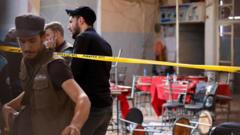
SYRIA, JULY 2, 2026 — There was no immediate claim for the bombing at a cafe close to the Palace of Justice, a major government building. Across Syria, the development has sparked widespread discussion and analysis among policymakers and the public alike.
This development represents the latest chapter in a complex and evolving situation that has significant implications for regional stability, international relations, and the safety and security of civilian populations living in or near affected areas where military operations and armed engagements continue to shape the daily reality of life for millions of people. The international community, including the United Nations Security Council, regional organizations such as the African Union and IGAD, and individual nations with strategic interests in the region, has been closely monitoring the situation and in many cases engaging in diplomatic efforts to de-escalate tensions, promote dialogue between parties to the conflict, and ensure the protection of civilian lives and infrastructure in accordance with international humanitarian law and the Geneva Conventions.
Syria, a nation at the center of Middle Eastern geopolitics, continues to grapple with the aftermath of a devastating civil war that has reshaped the region. The Middle East has been the theater of some of the most consequential armed conflicts of the 21st century, with the Iran-United States confrontation representing one of the defining geopolitical fault lines of the region. Tensions between Tehran and Washington stretch back to the 1979 Iranian Revolution and the subsequent hostage crisis, deepening through the Iran-Iraq War (1980-1988), the 2003 US invasion of Iraq, and the ongoing proxy conflicts across Syria, Yemen, Lebanon, and Iraq. Iran’s network of aligned forces – known as the “Axis of Resistance” – includes Hezbollah in Lebanon, various Iraqi Shia militias, the Houthi movement in Yemen, and allied groups in Syria and Palestine. The United States maintains a significant military presence across the region, including naval assets in the Persian Gulf and Arabian Sea, air bases in Qatar, the UAE, Kuwait, and Bahrain, and ground forces deployed in Iraq and Syria as part of the campaign against the Islamic State. In mid-2026, the region experienced a dramatic escalation, with exchanges of fire between Iranian-aligned forces and the US military reaching levels not seen since the aftermath of the US drone strike that killed General Qasem Soleimani in January 2020. The Strait of Hormuz – through which approximately 20% of the world’s oil passes – became a focal point of tensions, with attacks on commercial shipping raising fears of supply disruptions that could send global energy prices soaring.
Understanding the full significance of developments like this requires careful consideration of multiple dimensions including the immediate facts of what has occurred, the broader historical and political context in which events are unfolding, the interests and perspectives of the various stakeholders involved, the potential short-term and longer-term consequences for affected populations and regions, and the relationship of this specific event to larger patterns, trends, and forces that are shaping the world at the regional and global level. Only by examining events through this multifaceted lens can readers develop a genuinely informed and nuanced understanding of what is happening and why it matters to them, their communities, and the wider world.
For Syria and its people, the implications of this development will be assessed and debated by policymakers, business leaders, civil society organizations, and ordinary citizens in the days and weeks ahead as they work to understand what it means for their country, their communities, and their individual lives and livelihoods. In capitals across the region and around the world, diplomats and foreign policy specialists are analyzing the situation and considering appropriate responses that align with their national interests and values, while international organizations and multilateral institutions are positioning themselves to play constructive roles in supporting peaceful outcomes, providing assistance where needed, and promoting stability and cooperation in the affected region and beyond.
Armed conflicts and military escalations carry devastating human, economic, and geopolitical consequences that extend far beyond the immediate battlefields and the combatants directly involved in fighting. For civilian populations caught in the middle of hostilities, the toll is measured not only in lives lost and physical injuries sustained but also in destroyed homes and communities, disrupted education for children, lost livelihoods and economic opportunities, and the deep psychological trauma inflicted by exposure to violence, loss, and displacement that persists for generations and shapes the future of affected societies in profound and lasting ways. The international community continues to pursue peace processes and diplomatic solutions through organizations such as the African Union, the United Nations, IGAD, and other regional bodies, but the gap between diplomatic efforts and on-the-ground realities remains tragically wide in many of the world’s most complex and intractable conflict situations where the interests of multiple armed parties, regional powers, and external actors intersect and collide.
References
This article is based on official sources, international media reports, and verified information from authoritative channels. Analysis and additional context provided by Juba Global News Network.
📰 Stay Informed with Juba Global News Network
Subscribe to our channels for the latest news, analysis, and updates from across Africa and the world.
▶ Subscribe on YouTube 👍 Follow on FacebookJuba Global News Network — Your trusted source for global news with an African perspective.