 Juba Global Editorial
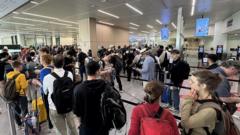
PRETORIA, JULY 2, 2026 — Migrants clash with police at a depation site in South Africa where thousands have gathereNews. In PRETORIA and across South Africa, officials, analysts, and ordinary citizens are closely watching these developments unfold as the situation evolves hour by hour.
This development represents the latest chapter in a complex and evolving situation that has significant implications for regional stability, international relations, and the safety and security of civilian populations living in or near affected areas where military operations and armed engagements continue to shape the daily reality of life for millions of people. The international community, including the United Nations Security Council, regional organizations such as the African Union and IGAD, and individual nations with strategic interests in the region, has been closely monitoring the situation and in many cases engaging in diplomatic efforts to de-escalate tensions, promote dialogue between parties to the conflict, and ensure the protection of civilian lives and infrastructure in accordance with international humanitarian law and the Geneva Conventions.
South Africa, the southernmost country on the African continent with a population of over 60 million, continues to navigate complex political, economic, and social challenges as it builds on its post-apartheid democracy. As a member of BRICS and the African Union, South Africa plays a pivotal role in continental affairs.
Xenophobia in South Africa has deep and complex roots that trace back decades. The country, home to an estimated 2 to 4 million immigrants – primarily from Zimbabwe, Mozambique, Malawi, Lesotho, the Democratic Republic of Congo, Nigeria, and Somalia – has experienced recurring waves of anti-immigrant violence since the end of apartheid in 1994. In May 2008, one of the worst outbreaks left 62 people dead and displaced over 100,000, shocking the nation and the continent. Further waves of violence erupted in 2015 (killing at least 7), 2019 (triggering diplomatic tensions with Nigeria), and 2021-2022, often in the economically strained townships of Gauteng, Western Cape, and KwaZulu-Natal provinces. The phenomenon, which some scholars argue is more accurately described as “Afrophobia” since it primarily targets Black African immigrants rather than other foreign nationals, is fueled by a combination of factors: high unemployment (which has exceeded 30% in recent years, one of the highest rates in the world), massive inequality – South Africa remains the most unequal country on Earth according to the World Bank – failures in service delivery, and a political rhetoric that has at times scapegoated foreign nationals. Politicians and community leaders have been accused of using immigrants as convenient scapegoats for problems rooted in the country’s apartheid-era spatial and economic planning. The phrase “Operation Dudula” (meaning “push back” or “force back” in Zulu) emerged in 2021, referring to a vigilante-style movement that forcibly evicted foreign nationals from their homes and businesses, particularly in the Johannesburg townships of Soweto and Alexandra. The movement, while disavowed by many South Africans, has tapped into deep frustrations about housing shortages, competition for informal trading opportunities, and strained public health resources. Critics point out that anti-immigrant sentiment often ignores the positive contributions of foreign nationals to South Africa’s economy. Immigrants run an estimated 40% of informal businesses in South Africa’s townships, fill skills gaps in the formal economy, and contribute significantly to the tax base. Many are refugees fleeing war, political persecution, or economic collapse in their home countries – including the socio-economic crisis in Zimbabwe, conflict in the DRC, and famine conditions in the Horn of Africa. The South African government, led by the African National Congress (ANC), has repeatedly condemned xenophobic violence but has been criticized for failing to implement effective prevention strategies, prosecuting perpetrators, or addressing the underlying socio-economic grievances that fuel the tensions. President Cyril Ramaphosa has called for dialogue and community-based solutions, though critics argue that more decisive action is needed to protect foreign nationals and address the root causes of the violence.
For South Africa and its people, the implications of this development will be assessed and debated by policymakers, business leaders, civil society organizations, and ordinary citizens in the days and weeks ahead as they work to understand what it means for their country, their communities, and their individual lives and livelihoods. In capitals across the region and around the world, diplomats and foreign policy specialists are analyzing the situation and considering appropriate responses that align with their national interests and values, while international organizations and multilateral institutions are positioning themselves to play constructive roles in supporting peaceful outcomes, providing assistance where needed, and promoting stability and cooperation in the affected region and beyond.
Armed conflicts and military escalations carry devastating human, economic, and geopolitical consequences that extend far beyond the immediate battlefields and the combatants directly involved in fighting. For civilian populations caught in the middle of hostilities, the toll is measured not only in lives lost and physical injuries sustained but also in destroyed homes and communities, disrupted education for children, lost livelihoods and economic opportunities, and the deep psychological trauma inflicted by exposure to violence, loss, and displacement that persists for generations and shapes the future of affected societies in profound and lasting ways. The international community continues to pursue peace processes and diplomatic solutions through organizations such as the African Union, the United Nations, IGAD, and other regional bodies, but the gap between diplomatic efforts and on-the-ground realities remains tragically wide in many of the world’s most complex and intractable conflict situations where the interests of multiple armed parties, regional powers, and external actors intersect and collide.
References
This article is based on official sources, international media reports, and verified information from authoritative channels. Analysis and additional context provided by Juba Global News Network.
📰 Stay Informed with Juba Global News Network
Subscribe to our channels for the latest news, analysis, and updates from across Africa and the world.
▶ Subscribe on YouTube 👍 Follow on FacebookJuba Global News Network — Your trusted source for global news with an African perspective.