

Violence Erupts Across Mexico: Retaliatory Chaos Follows Killing of Cartel Boss ‘El Mencho’
By: Juba Global News Network | JubaGlobal.com February 23, 2026 – As the situation develops rapidly The death of Nemesio Rubén Oseguera Cervantes , better
By: Juba Global News Network | JubaGlobal.com
February 23, 2026 – As the situation develops rapidly
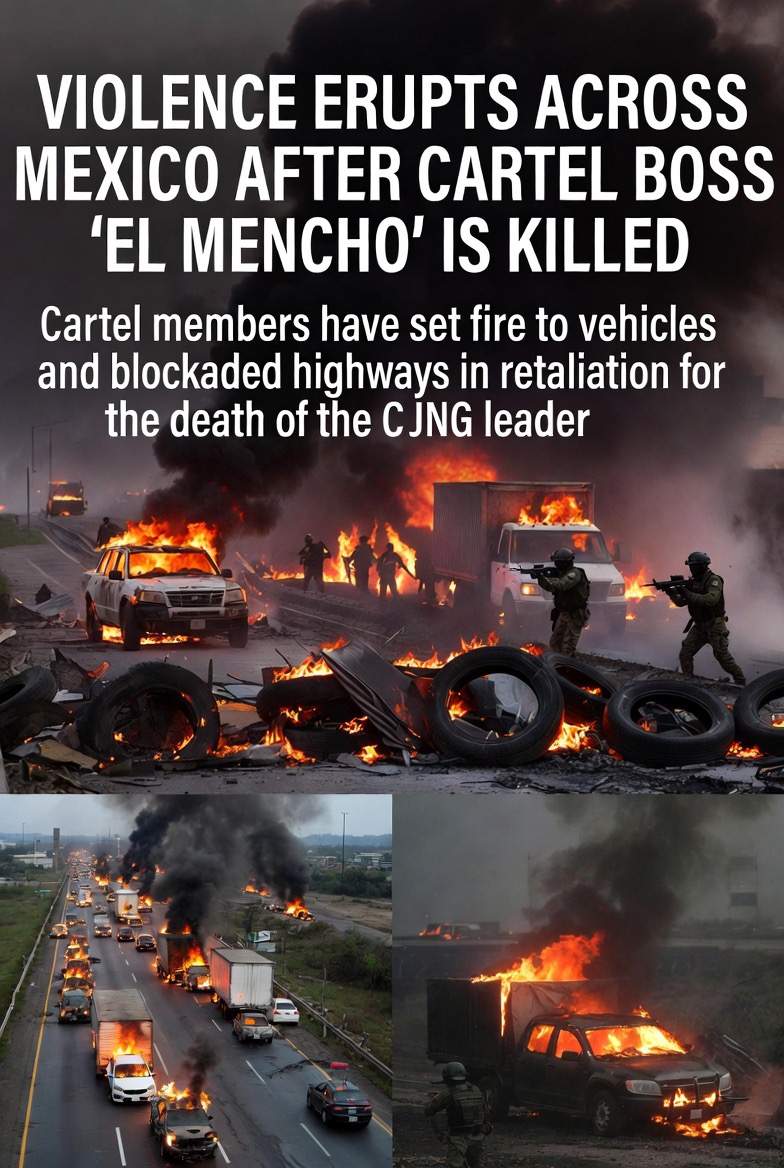
The death of Nemesio Rubén Oseguera Cervantes, better known as “El Mencho”, the longtime leader of the Jalisco New Generation Cartel (CJNG), has unleashed a storm of retaliatory violence across Mexico. What began as a targeted military operation in the rural town of Tapalpa, Jalisco, on Sunday, February 22, 2026, quickly spiraled into widespread unrest, with suspected CJNG members torching vehicles, blocking highways, attacking businesses, and clashing with security forces in at least a dozen—and by some accounts up to 20—of Mexico’s 32 states.
This wave of chaos, described by authorities as one of the most coordinated cartel responses in recent memory, has paralyzed transportation, forced school closures, canceled public events, and left thousands of residents and tourists sheltering in place amid fears of further escalation.
The Spark: El Mencho’s Death and Immediate Backlash
El Mencho was killed during an intense shootout with Mexican Army Special Forces attempting to capture him. He was critically wounded in the clash, airlifted toward Mexico City, but died en route. The operation, supported by U.S. intelligence, eliminated the head of what many consider Mexico’s most powerful and violent cartel, responsible for much of the fentanyl flooding into the United States.
Within hours, retaliation erupted. Cartel gunmen—loyal to El Mencho or seeking to demonstrate strength—launched a multi-state campaign of disruption. The tactics were familiar to observers of Mexican organized crime: narco-blockades, where vehicles (including buses, trucks, and private cars) are set ablaze to block major highways and slow military response.
Mexico’s Security Cabinet reported more than 250 roadblocks across roughly 20 states, though most were cleared by late Sunday or early Monday. The violence was most intense in CJNG strongholds but spread far beyond:
- Jalisco (the epicenter): Thick smoke rose over Puerto Vallarta as burning vehicles blocked roads near the airport and tourist zones. Guadalajara turned into a virtual ghost town, with residents hunkering down. Drone footage showed plumes of black smoke obscuring skylines, while videos captured panicked crowds fleeing clashes.
- Colima, Michoacán, and Nayarit: Highways were littered with charred vehicles; gunmen reportedly pulled drivers from cars to set them ablaze. In Michoacán, at least 13 municipalities saw blockades.
- Guanajuato: Authorities documented 55 incidents across 23 municipalities, leading to 18 arrests before order was partially restored.
- Other states: Reports emerged from Tamaulipas, Baja California (including Tijuana), and even farther afield, with burned cars and road closures disrupting normal life.
Businesses, banks, supermarkets, and gas stations were targeted in some areas, torched in what experts describe as a show of force and revenge. Sporadic gunfire echoed in multiple cities, and clashes with National Guard and army units added to the toll.
Human and Economic Toll
The immediate impact has been severe:
- Schools closed across affected states, including Jalisco and Michoacán, leaving families scrambling.
- Public events canceled, including soccer matches and local gatherings.
- Tourism disrupted: In beach destinations like Puerto Vallarta, U.S. and Canadian tourists found themselves stranded in hotels. Flights were grounded or diverted; rideshare and taxi services suspended in some areas. The U.S. Embassy and Canadian government issued shelter-in-place advisories, urging citizens to avoid travel and stay indoors.
- Casualties: While exact figures remain fluid, reports indicate at least 14 deaths linked to the violence (beyond the initial raid), including security personnel and suspected cartel members. Dozens more were injured in clashes and related incidents.
Jalisco Governor Pablo Lemus Navarro activated a “code red” emergency protocol, mobilizing additional forces. President Claudia Sheinbaum called for calm, emphasizing that most blockades had been dismantled and urging citizens to report suspicious activity.
Why This Response Was So Widespread and Coordinated
Security analysts point to several factors explaining the scale:
- CJNG’s deep entrenchment: The cartel controls vast territories, with cells capable of rapid mobilization. El Mencho’s leadership fostered extreme loyalty through fear and rewards.
- Power vacuum signaling: Cartels often respond to leader losses with dramatic displays to deter rivals and reassure members. A CJNG-affiliated source told Reuters the actions were “revenge” and warned of internal fighting ahead as factions vie for control.
- Historical precedent: Similar chaos followed the arrests of Joaquín “El Chapo” Guzmán—though the CJNG’s militarized structure and fentanyl dominance make its response potentially more disruptive.
- Symbolic timing: The hit came amid U.S. pressure on Mexico to curb drug flows, possibly prompting a defiant show of strength.
Experts like David Saucedo warn this could herald a “new wave of violence,” as succession battles emerge. Potential heirs—family members or top lieutenants—may escalate to consolidate power.
Government and International Response
Mexican forces deployed nationwide, clearing roads and making arrests. The operation’s success demonstrates improved military coordination, bolstered by U.S. support.
The U.S. State Department issued alerts for states including Jalisco, Michoacán, Guerrero, and others, advising sheltering in place. Tourism-dependent areas face immediate economic hits, with stranded visitors and canceled bookings compounding losses.
As dawn breaks on February 23, many roads are passable again, but tension lingers. Smoke still hangs in the air over parts of western Mexico, a grim reminder that removing one kingpin does not end the war on drugs.
The coming days will test whether this is a short-lived outburst or the start of prolonged instability. For now, millions of Mexicans—and international visitors—wait anxiously for calm to return.
By: Juba Global News Network | JubaGlobal.com
Synthesized from real-time reporting by CNN, BBC, Reuters, NPR, The Guardian, Al Jazeera, AP, NBC News, and official Mexican government statements as of February 23, 2026. The situation remains dynamic—follow official sources for updates. Stay safe.
