US Sinks Over 30 Iranian Naval Vessels in Dramatic Naval Campaign – “Mission to Sink Entire Iranian Navy”
By: Juba Global News Network | JubaGlobal.comMarch 6, 2026 – 04:35 AM EST Update In one of the most decisive naval engagements of the ongoing US-Israel-Ira
By: Juba Global News Network | JubaGlobal.comMarch 6, 2026 – 04:35 AM EST Update
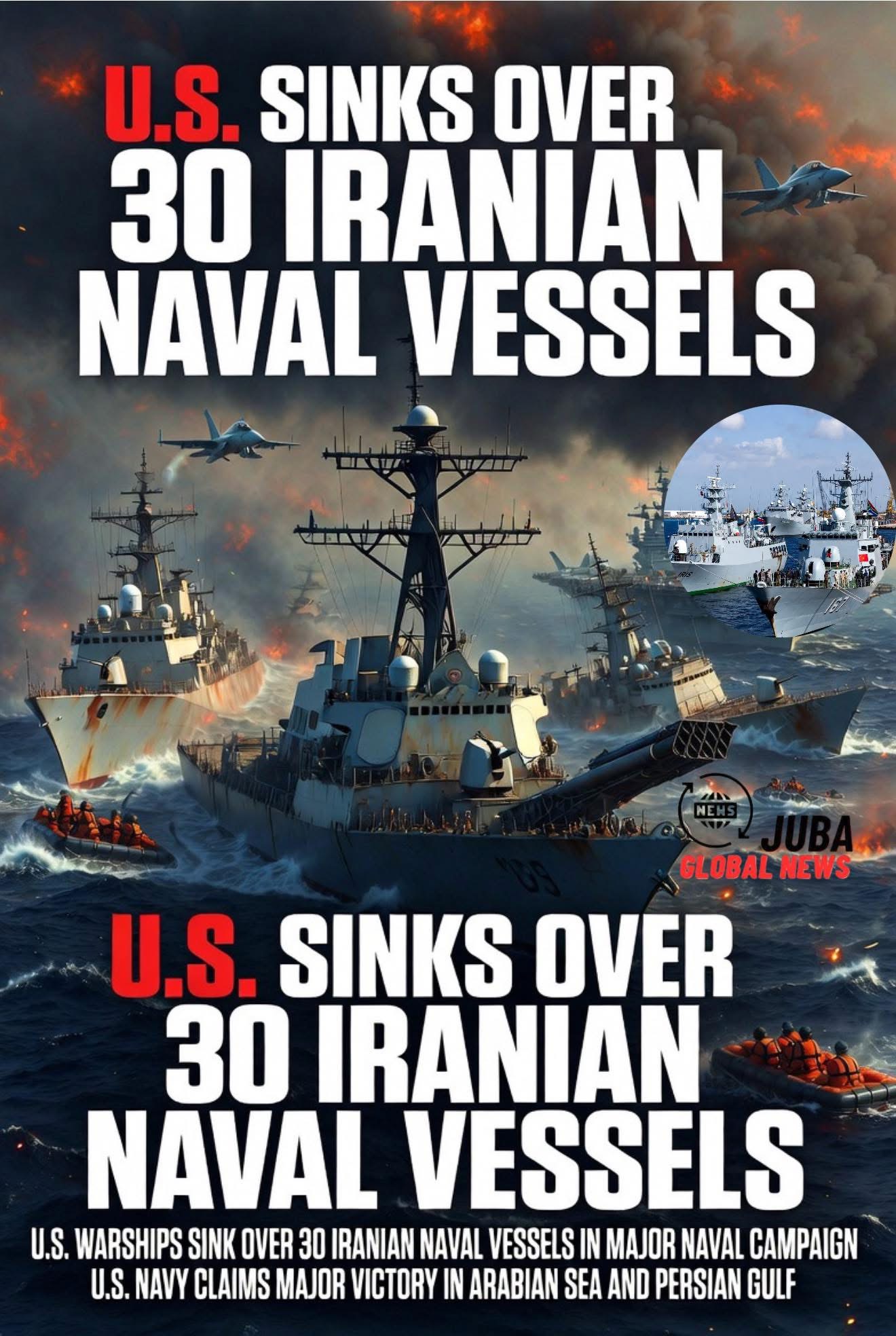
In one of the most decisive naval engagements of the ongoing US-Israel-Iran war, United States naval forces—primarily elements of the U.S. Fifth Fleet operating out of Bahrain and supported by carrier strike groups in the Arabian Sea and Persian Gulf—have reportedly sunk more than 30 Iranian warships and support vessels since the conflict erupted on February 28, 2026. The campaign, described by Pentagon officials as a deliberate “mission to sink the entire Iranian Navy,” has effectively neutralized Iran’s surface fleet in less than a week, marking a stunning reversal of naval power in the region.
The Targets and the Timeline
Among the most significant losses confirmed or claimed by US Central Command (CENTCOM) and corroborated by open-source intelligence:
- Iris Dena — Iran’s newest and most advanced frigate (Moudge-class), recently returned from an international naval exhibition in India. The vessel was sunk by a combination of anti-ship missiles and airstrikes while attempting to transit the Strait of Hormuz on March 3.
- Multiple Alvand-class frigates and Kilo-class submarines — Several older but still operational surface combatants and at least two diesel-electric submarines were reported destroyed or heavily damaged in the early days.
- Fast-attack craft and missile boats — Over a dozen smaller, high-speed vessels equipped with anti-ship cruise missiles (including Noor, Ghadir, and Qader systems) were targeted in swarming attacks near Bandar Abbas, Bushehr, and Chabahar.
- Logistics and support ships — Including replenishment vessels and intelligence-gathering ships that supported Iran’s asymmetric naval strategy.
US Navy spokespeople stated that the tally exceeds 30 vessels sunk or rendered inoperable as of March 6 morning, with additional strikes continuing. Satellite imagery from commercial providers (Planet Labs, Maxar) shows burning hulks in Iranian naval bases, oil slicks in the Gulf, and debris fields consistent with large-scale destruction.
Strategic Context: Neutralizing the Asymmetric Threat
Iran’s Islamic Revolutionary Guard Corps Navy (IRGCN) has long relied on asymmetric tactics—swarm attacks with fast boats, sea mines, anti-ship missiles, submarines, and small drone boats—to threaten commercial shipping and US/allied naval assets in the Persian Gulf and Strait of Hormuz. The IRGCN’s doctrine emphasized “access denial” rather than blue-water dominance.
The US response has been overwhelming and systematic:
- Phase 1 (Feb 28–March 1): Suppression of coastal missile batteries, radar sites, and command nodes using standoff strikes from B-2 bombers, F-35s, and Tomahawk cruise missiles.
- Phase 2 (March 2–4): Direct naval engagements, with Arleigh Burke-class destroyers, Littoral Combat Ships, and carrier-based aircraft targeting surface groups attempting to sortie or defend key chokepoints.
- Phase 3 (March 5–ongoing): Mop-up operations against dispersed fast-attack craft, submarines attempting to escape to deeper waters, and port facilities supporting naval operations.
Admiral Brad Cooper, commander of US Naval Forces Central Command, described the operation as “decisive degradation of Iran’s maritime strike capability,” emphasizing that the goal was to prevent Iran from closing the Strait of Hormuz or threatening global energy flows.
Iranian Response and Remaining Threats
Iranian state media acknowledged heavy losses but claimed several US vessels were damaged or sunk (claims unverified and denied by the Pentagon). Tehran has shifted emphasis to:
- Shore-based anti-ship missile batteries (some still operational despite heavy attrition).
- Mine-laying operations (several commercial vessels reported mine damage in recent days).
- Drone swarms and small-boat harassment tactics.
- Proxy attacks via Houthi forces in the Red Sea and Iraqi/Shiite militias targeting US bases.
Despite these efforts, analysts assess that Iran’s conventional surface navy has been effectively removed as a cohesive fighting force for the foreseeable future.
Broader War Implications
The near-total destruction of Iran’s navy has several immediate effects:
- Energy security — With Iran unable to project meaningful naval power, the risk of a prolonged closure of the Strait of Hormuz has diminished (though mines and missiles remain threats). Oil prices, while elevated, have stabilized somewhat.
- US/allied freedom of maneuver — Coalition naval forces can now operate with far greater freedom in the Gulf, enabling sustained air and missile strikes deeper into Iranian territory.
- Regime pressure — The visible collapse of one of Iran’s proudest military branches adds psychological and propaganda damage at a time when Tehran faces internal leadership turmoil following Khamenei’s death.
President Trump, in comments March 5, praised the Navy: “Our sailors and aviators are doing an incredible job. Iran’s navy is gone—simple as that. They thought they could threaten the world; now they can’t even protect their own coast.”
Outlook
With the surface fleet decimated, attention now turns to whether Iran can reconstitute naval power (unlikely in the short term given sanctions and ongoing strikes) or shift entirely to asymmetric and proxy warfare. US officials have signaled the naval campaign is “not yet complete,” hinting at continued strikes on remaining assets and infrastructure.
The loss of over 30 vessels in under a week stands as one of the most lopsided naval victories in modern history and underscores the overwhelming conventional superiority of US forces in open-water engagements.
Juba Global News Network continues to monitor developments from CENTCOM, Reuters, USNI News, Al Jazeera, BBC, and open-source intelligence platforms. The war remains dynamic—stay tuned to verified sources for updates. Stay safe and informed.