

Understanding the ECOWAS Regional State of Emergency: Key Details and Implications
On December 9, 2025, the Economic Community of West African States (ECOWAS)—a 15-member regional bloc spanning countries from Cape Verde to Nigeria—made he
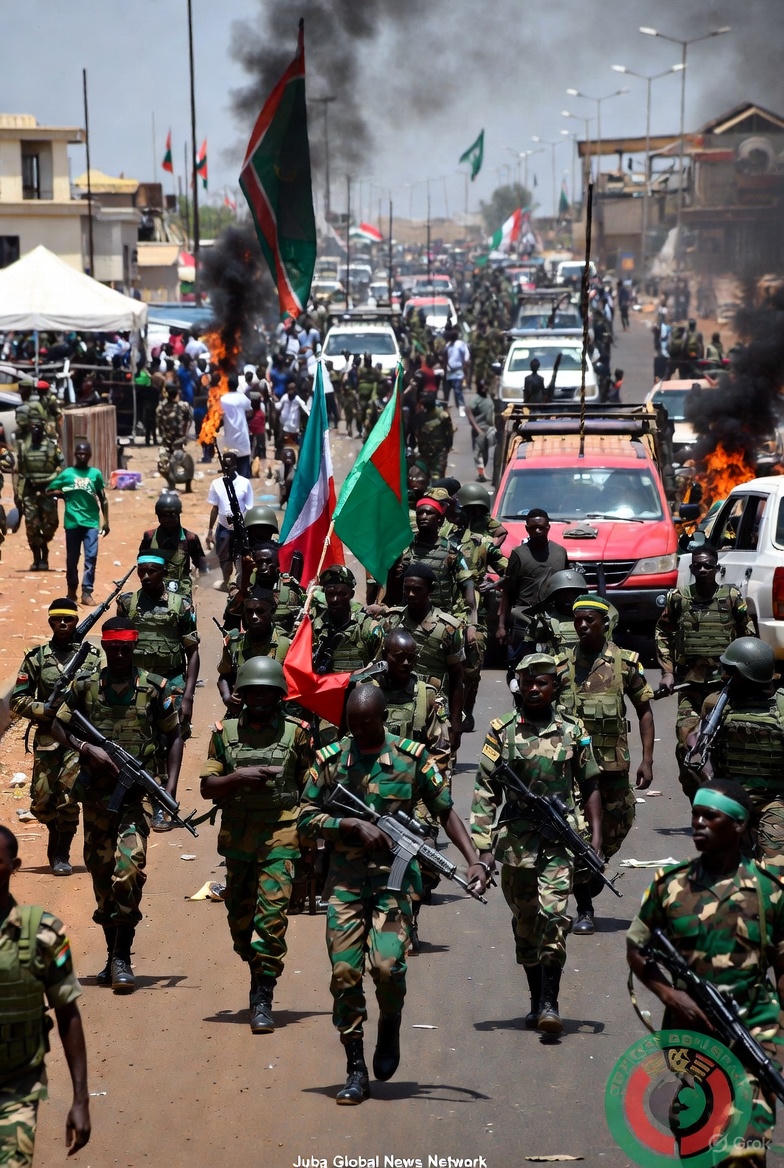
On December 9, 2025, the Economic Community of West African States (ECOWAS)—a 15-member regional bloc spanning countries from Cape Verde to Nigeria—made headlines by declaring a regional state of emergency. This unprecedented move, announced during the 55th Ordinary Session of the Mediation and Security Council in Abuja, Nigeria, underscores the bloc’s alarm over a cascade of political, security, and humanitarian crises plaguing West Africa. 0 1 ECOWAS Commission President Omar Alieu Touray described the situation as “unprecedented,” stating: “Faced with this situation, Excellencies, it is safe to declare that our community is in a state of emergency.” 3 Below, we break down the declaration’s background, triggers, scope, immediate actions, and broader implications, drawing from official statements and expert analyses.
Background: A Region Under Siege
ECOWAS, founded in 1975 to promote economic integration and stability, has increasingly positioned itself as a guardian of democracy in West Africa. However, the past five years have tested its resolve, with at least eight successful or attempted coups since 2020. 6 The declaration comes amid a “deteriorating political environment,” as Touray put it, where military interventions have become alarmingly routine. 7
Key recent triggers include:
- Failed Coup in Benin (December 6, 2025): Military officers attempted to overthrow President Patrice Talon in Cotonou, the capital. The plot was swiftly quashed by loyalist forces, but it highlighted vulnerabilities in coastal states previously seen as stable. 3 7
- Military Takeover in Guinea-Bissau (Late November 2025): Army units annulled presidential election results, suspended the constitution, and installed a junta, escalating tensions just weeks before the emergency declaration. 7
- Ongoing Instability in the Sahel: Countries like Mali (2021 coup), Burkina Faso (2022 double ousters), Niger (2023 putsch), and Guinea face entrenched juntas. These nations formed the breakaway Alliance of Sahel States (AES) in January 2025, withdrawing from ECOWAS and criticizing the bloc’s sanctions as “imperialist.” 5
Touray highlighted “bad governance” as the root cause—a mix of corruption, electoral exclusion, youth unemployment (40-50% in the Sahel), and climate-induced food insecurity—creating fertile ground for unrest. 4 Elections, intended as democratic safeguards, have instead sparked violence in Guinea-Bissau, Benin, and elsewhere. 4
What Does the State of Emergency Entail?
Unlike a national emergency (e.g., curfews or martial law), this is a regional proclamation activating ECOWAS’s core protocols: the 1999 Mechanism for Conflict Prevention, Management, Resolution, Peacekeeping, and Security, and the 2001 Supplementary Protocol on Democracy and Good Governance. 6 It signals a “high risk” rating for most member states and calls for “immediate and concerted action” to prevent further democratic erosion. 4
The declaration is not yet fully formalized—its details will be refined at an upcoming Heads of State summit—but it emphasizes pooled regional resources over unilateral interventions. 0 Touray stressed that terrorism and banditry “operate without respect for territorial boundaries,” necessitating cross-border collaboration. 0
Core elements include:
- Scope and Duration: Applies to all 15 ECOWAS members (excluding AES withdrawals), with no fixed end date. It focuses on the Sahel-coastal corridor, where jihadist groups like al-Qaeda affiliates and Islamic State branches exploit ungoverned spaces. 1
- Humanitarian Focus: Addresses the displacement of 7.6 million people (6.5 million internally displaced) as of October 2025, per UNHCR data. Hotspots include Nigeria, Burkina Faso, Niger, and Mali for IDPs; Niger, Mali, Nigeria, Côte d’Ivoire, and Togo for asylum seekers. 0 9 ECOWAS pledges to bolster the Regional Food Security Reserve to combat famine risks. 6
- Risk Factors Identified:
- Persistence of military interventions.
- Non-compliance with democratic transition timelines (e.g., Guinea’s junta leader eyeing civilian rule).
- Erosion of electoral inclusivity.
- Expansion of terrorist, armed, and criminal networks.
- Geopolitical pressures, including Russian Wagner Group (now Africa Corps) influence in Mali and Burkina Faso, and French/Western aid dependencies. 4
Immediate Actions and Measures
The emergency activates ECOWAS’s “highest level” response mechanisms, including:
- Military Deployment: Authorization of the multinational ECOWAS Standby Force (drawing from Nigeria, Ghana, Senegal, and others) to hotspots like Benin. Nigeria’s Senate approved troop surges into Benin on December 9, 2025, under Article 25 of the ECOWAS Protocol. 7 This follows Sierra Leone’s Foreign Minister Timothy Kabba’s delegation to Guinea-Bissau on December 1 to broker dialogue. 0
- Sanctions and Incentives: Harsher penalties for juntas (asset freezes, travel bans) paired with rewards for democratic returns. Reforms to the anti-coup framework are on the table. 6
- Diplomatic and Economic Steps: Enhanced intelligence-sharing with AES for anti-terror pacts; fortification of the ECOWAS Common External Tariff to mitigate trade disruptions from sanctions. 8 The U.S. and EU have pledged $500 million in post-Abuja aid, contingent on accountability. 3
Broader Implications and Challenges
This declaration is a “wake-up call” for West Africa’s fragile democracies, but its success is uncertain. 3 Analysts like Ulf Laessing of the Konrad Adenauer Foundation view it as ECOWAS reclaiming credibility after its 2023 Niger threats went unheeded, warning that “coups will become the new mainstream” without action. 3
Potential Outcomes:
- Positive: Could unify the bloc, deter copycat coups in Côte d’Ivoire or Togo, and curb jihadist spillovers into coastal areas (e.g., Nigeria’s Boko Haram displacing 3 million). 6
- Risks: AES fragmentation threatens the $700 billion regional market, with transport costs up 30% along Sahel routes. External actors (Russia, China) may exploit divides, turning the region into a proxy arena. 4 For citizens—especially women and youth facing gender-based violence and lost opportunities—the human cost is immediate, with Burkina Faso alone hosting 2 million IDPs at “emergency” famine risk. 9
In essence, ECOWAS’s emergency is a bold pivot toward collective defense of democracy, but it demands introspection on governance failures and unity amid geopolitical storms. As Touray urged, “We must take decisions and actions that will reverse this trend.” 9 The upcoming summit will be pivotal; failure here could spell deeper fragmentation for a region of 400 million people. For ongoing updates, monitor ECOWAS’s official channels and regional outlets.
