

Tillabéri: The Sahel’s Deadliest Jihadist Frontline – Nearly 1,300 Killed in Niger’s Western Hellscape as IS and JNIM Terror Rages
In less than a decade, the Tillabéri region in western Niger has become the bloody epicenter of Africa’s most lethal jihadist conflict. Straddling porous b
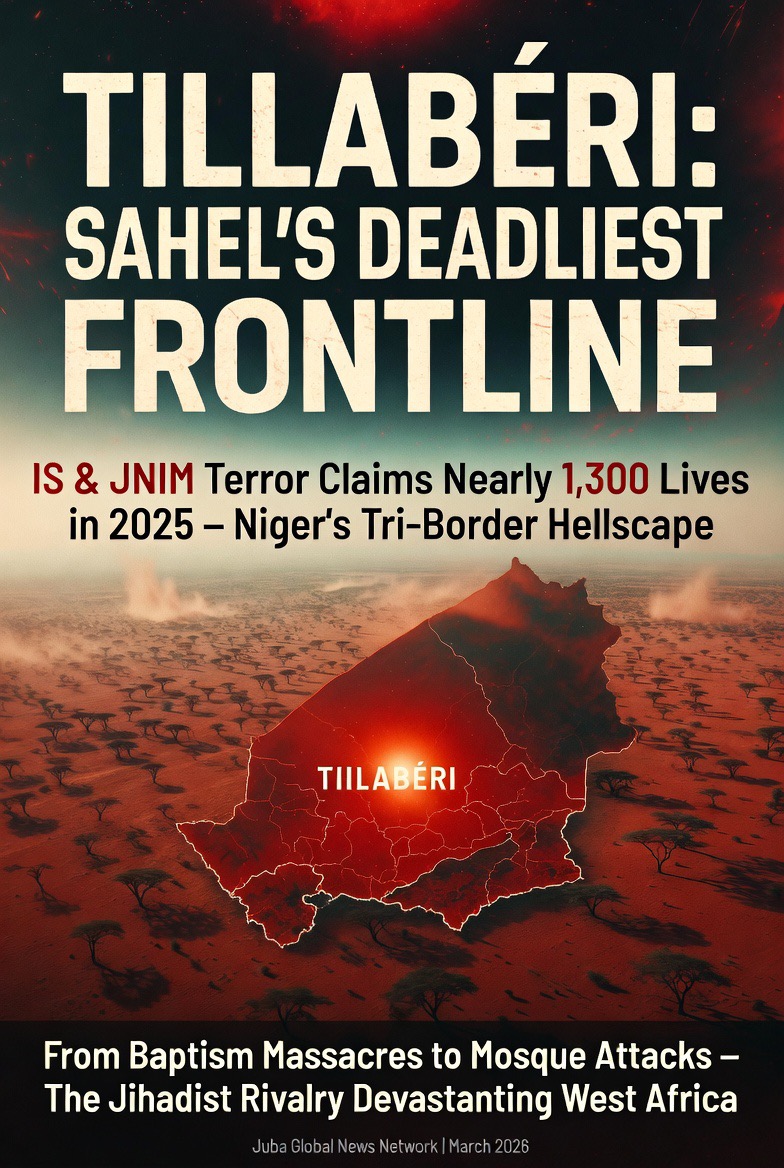
In less than a decade, the Tillabéri region in western Niger has become the bloody epicenter of Africa’s most lethal jihadist conflict. Straddling porous borders with war-torn Mali and Burkina Faso, this sprawling 100,000-square-kilometre zone has seen militants linked to the Islamic State and Al-Qaeda-linked groups turn daily life into a nightmare of “kill, pillage and ransom.” In 2025 alone, nearly 1,300 people died violently in Tillabéri — more than two-thirds of the total conflict deaths recorded across all of Niger.
By 2025, Tillabéri had officially become the deadliest single region for civilians anywhere in the central Sahel, surpassing hotspots in Mali and Burkina Faso. Half the fatalities came from direct clashes between jihadists and Nigerien security forces; the other half stemmed from deliberate attacks on unarmed civilians — including massacres at religious ceremonies, markets, and mosques.
A Geography of Terror: The Tri-Border Crossroads
Tillabéri sits at the volatile crossroads of three nations battered by insurgency. Its departments — Téra, Tillabéri, Kollo, Say, and others — stretch from the Niger River northward into the arid Sahel savanna, a landscape of red-earth plains, scattered acacia trees, and endless horizons that jihadists exploit with ease.
Jihadists first infiltrated the region in 2017, using the ungoverned spaces along the Mali-Niger-Burkina Faso border as launchpads. Porous frontiers, weak state presence, and illegal gold-mining sites that fund weapons and fighters have made Tillabéri a perfect staging ground. Today, fighters move freely across these lines, launching raids and retreating into safe havens. The entire Sahel has been labelled the global epicentre of terrorism for two consecutive years — and Tillabéri is its throbbing heart.
The 2025 Bloodbath: Specific Massacres That Shocked the World
The numbers alone are staggering, but the individual atrocities reveal the horror. Among the worst:
- An attack on a baptism ceremony slaughtered 22 civilians.
- Gunmen opened fire during a Muslim sermon, killing 71 worshippers.
- Raiders stormed a mosque and executed 44 people inside.
Other incidents included the assassination of two mayors, the killing of 34 soldiers in a single ambush, and — as recently as late February 2026 — the slaughter of at least 25 members of a civilian self-defence militia near the Malian border.
These are not random acts. Jihadists systematically target symbols of the state: schools and health centres are burned and looted; civil servants, teachers, and traditional leaders are persecuted, whipped in public, or executed if suspected of collaborating with the army. In areas under jihadist control, residents must pay “tribute” and submit to makeshift Islamic courts enforcing strict Sharia rulings.
The Main Actors: IS Sahel vs. JNIM — A Deadly Rivalry
Two rival jihadist networks dominate:
- Islamic State Sahel Province: The primary culprit in many civilian massacres, known for brutal efficiency and southward expansion.
- Jama’at Nasr al-Islam wal-Muslimin (JNIM): Al-Qaeda’s Sahel affiliate, active especially in southwestern Tillabéri and pushing toward the capital Niamey and into Dosso region on the Benin-Nigeria borders.
The bloody competition between the two groups has intensified violence. JNIM has expanded operations into southern Dosso and even conducted its first recorded attack in northern Agadez. Both groups increasingly use sophisticated tactics: drones for surveillance and strikes, IEDs, rockets, and economic warfare (sabotaging infrastructure and extorting communities). They also run propaganda campaigns portraying themselves as protectors against corrupt state forces.
Civilian Hell: Schools Closed, Markets Silent, Lives Destroyed
The human cost goes far beyond the death toll. Entire communities have collapsed:
- Schools and health centres stand empty or destroyed.
- Markets — once bustling — are shuttered under emergency measures and motorcycle bans (jihadists’ favourite transport).
- Main roads require heavy military escorts; travel is a high-risk ordeal.
- Thousands have fled. A nurse who escaped to Niamey after death threats described the terror: “The terrorists are targeting symbols of the state… Stubborn people and those suspected of collaborating with the army are whipped or executed in public.”
Local official Amadou Arouna Maiga, coordinator of the Union of Tillabéri for Peace and Security, summed up the despair: “The situation remains very serious… Schools and health centres are closed, and markets are no longer active.” A taxi driver in Téra put it bluntly: “No work, no money, life is very hard.”
In desperation, villagers have formed self-defence militias. While well-intentioned, these poorly armed groups are often overwhelmed — and their proliferation has sparked new communal tensions and rivalries. At least 25 militia members died in one late-February ambush alone.
The Junta’s Broken Promise
Niger’s military junta seized power in a July 2023 coup partly on a pledge to crush the insurgency. Instead, violence has exploded. French forces withdrew, international partnerships frayed, and counter-offensives have sometimes backfired.
Authorities imposed a state of emergency, banned motorcycles, and closed markets and petrol stations in an attempt to starve fighters of resources. Illegal gold mines — suspected jihadist funding sources — remain a persistent problem. Yet the insurgency has only grown bolder, with JNIM now operating on the outskirts of Niamey itself.
Spillover: A Regional Fire Spreading South
Tillabéri is no longer isolated. Violence is bleeding into southern Dosso, threatening Benin and Nigeria. JNIM has launched its first operations inside Nigeria; IS Sahel infiltrators (known locally as “Lakurawa”) are active in Kebbi and Sokoto states. The tri-border zone with Nigeria and Benin is fast becoming a new frontline, complete with attacks on oil pipelines and mass civilian atrocities.
What 2026 Holds: Grim Warnings from the Experts
Analysts are blunt about the future: “Terrorists target state symbols… If jihadists expand further south from Tillabéri, it is unlikely that Tillabéri will see any significant reduction in violence in 2026.”
They point to three compounding factors: continued civilian-targeted killings, the unchecked growth of local militias, and jihadist southward expansion. The region’s strategic location at the crossroads of three conflict-hit countries ensures fighters can always regroup and rearm.
A Humanitarian and Security Crisis with Global Echoes
Tillabéri is not just Niger’s problem — it is the Sahel’s warning. As the world’s terrorism epicentre, the region risks dragging coastal West Africa into the fire. Displacement, collapsed public services, economic ruin, and the radicalisation of desperate youth threaten to create a lost generation.
Communities that once farmed, traded, and celebrated life together now live under the constant shadow of the gun. Markets are silent. Children have no schools. Families bury their dead in secret.
Until the root causes — weak governance, porous borders, poverty, and the toxic rivalry of global jihadist franchises — are addressed with genuine regional and international will, Tillabéri will remain exactly what it has become: the Sahel’s most violent heart, where nearly 1,300 souls were extinguished in a single year of unrelenting terror.
The desert winds still blow across its red plains, but today they carry the echoes of gunfire and mourning. The question for 2026 and beyond is whether the world — and Niger’s leaders — will finally listen.
