

Juba’s Fuel Apocalypse: Desperate Motorists Swarm One Last Station as Prices Explode and Supplies Vanish
South Sudan’s capital, Juba, is currently grappling with a severe fuel crisis that has sent shockwaves through the economy and daily life of its residents.
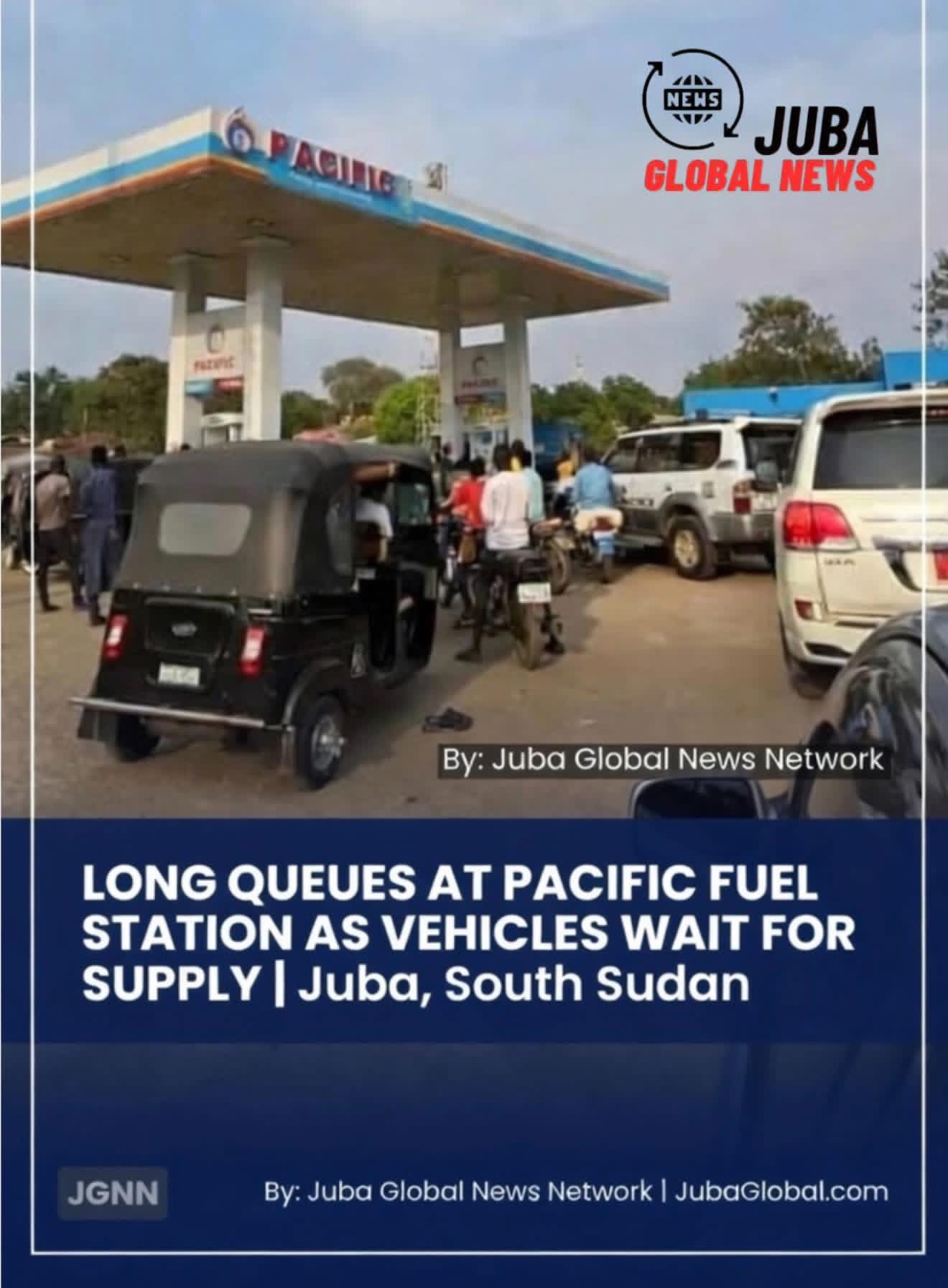
South Sudan’s capital, Juba, is currently grappling with a severe fuel crisis that has sent shockwaves through the economy and daily life of its residents. In a striking scene unfolding this evening along Giada Road, Pacific Petroleum Station has become a focal point of desperation and hope. A massive crowd of motorists has flocked to this single outlet, drawn by its relatively affordable price of 9,500 South Sudanese Pounds (SSP) per litre of fuel—while most other stations across the city are charging between 12,000 and 13,000 SSP per litre, or have simply run dry and shut their doors.
The queues stretch for hours, with drivers enduring the sweltering heat, honking horns, and mounting frustration as they wait for their turn at the pump. For many, this station represents the difference between continuing their livelihoods—whether ferrying passengers, delivering goods, or commuting to work—and grinding to a halt amid skyrocketing costs.
Roots of the Crisis: Disruptions at the Nimule Border
South Sudan relies almost entirely on imported fuel, with the majority entering through the Nimule border crossing from Uganda, the country’s primary trade gateway. Recent policy changes implemented by the South Sudan Revenue Authority (SSRA) have severely disrupted this vital supply chain.
A new directive requires importers—including those transporting fuel—to pay customs duties and clearance fees strictly in cash, eliminating previous options for bank transfers or digital payments. This shift, reportedly linked to the government’s ongoing liquidity challenges and difficulties accessing physical cash despite deposits in bank accounts, has created chaos at the border.
Dozens, if not hundreds, of fuel trucks and other cargo vehicles have been stranded for days, unable to clear customs due to the cash-only requirement. The backlog has drastically reduced the inflow of petroleum products into Juba and beyond, creating artificial scarcity even as global and regional factors add pressure.
Broader Price Surge and Economic Ripple Effects
The fuel shortage did not emerge in isolation. Prices in Juba have surged dramatically in recent weeks. Just days ago, fuel was trading around 6,000–7,900 SSP per litre in many areas. By early March 2026, reports indicated jumps to 9,500–10,000 SSP, then climbing further to 11,500 SSP or more in some locations, before stabilizing somewhat at the higher end of 12,000–13,000 SSP at most stations.
This rapid escalation aligns with reports of a global fuel crisis, exacerbated by geopolitical tensions in the Middle East (including conflicts involving Iran and related disruptions to shipments), which have driven up international oil prices and complicated supply routes for landlocked South Sudan.
The impact extends far beyond the pumps:
• Public transport has been hit hard. Bus and boda-boda (motorcycle taxi) operators have suspended or reduced services, with some drivers citing unsustainable costs. Transport fares have doubled in many areas, making commuting unaffordable for ordinary citizens.
• Essential goods are becoming more expensive as delivery trucks face higher operating costs or delays, contributing to broader inflation and food insecurity concerns.
• Other states are suffering even more acutely. In places like Malakal, fuel has reportedly reached 30,000 SSP per litre, while towns such as Rumbek and Kuajok have seen stations close entirely, leading to blackouts (due to reliance on diesel generators) and skyrocketing local transport fees.
• Businesses dependent on fuel—generators for electricity, construction equipment, agriculture—face operational halts or sharply increased expenses.
Civil society groups, including organizations like the Nile Institute for Study of Human Rights and Transitional Justice, have urged the government to intervene urgently, calling for investigations into price gouging, market stabilization measures, and stakeholder engagement to protect vulnerable populations.
Why Pacific Petroleum Stands Out
Pacific Petroleum Station’s ability to sell at 9,500 SSP amid widespread higher pricing or outright closures has made it a beacon in the crisis. While the exact reasons for its lower price remain unclear—possibly due to earlier stockpiles, direct supplier arrangements, or efforts to maintain volume sales—it has drawn crowds from across Juba.
This phenomenon highlights a common pattern in fuel shortages: limited supply concentrates demand at the few outlets still operational, creating long lines and uneven distribution. Some motorists report arriving before dawn or waiting through the night to secure fuel, underscoring the human toll of the disruption.
Broader Context: South Sudan’s Vulnerability
Despite being one of Africa’s most oil-rich nations in terms of reserves, South Sudan produces crude but lacks significant domestic refining capacity. It exports most of its oil via pipelines through Sudan and imports refined products like gasoline and diesel. This dependency on imports, combined with border logistics, currency instability (with the SSP facing depreciation pressures), and occasional global supply shocks, makes the country particularly susceptible to fuel crises.
The current situation echoes past episodes, though the scale and speed of the March 2026 surge—fueled by both local policy decisions and external factors—have intensified the pain for citizens already dealing with high inflation and economic hardship.
Signs of Hope and Calls for Resolution
Some optimism has emerged in recent reports, with trucks carrying assorted goods (and potentially fuel) beginning to arrive in Juba after delays. If the Nimule border issues are addressed—perhaps through adjustments to the payment policy or emergency measures to clear the backlog—supplies could normalize in the coming days or weeks.
Until then, the scenes at Pacific Petroleum Station serve as a vivid reminder of how quickly disruptions in supply chains can cascade into everyday hardship in a nation heavily reliant on imported essentials.
As Juba’s motorists continue to queue under the evening sun, the fuel crisis underscores the urgent need for coordinated action: stabilizing borders, ensuring transparent pricing, and building resilience against future shocks in one of the world’s most vulnerable economies.
Byline: Compiled from reports by Juba Global News Network and other local sources | JubaGlobal.com