

The Supreme Court Delivers a Major Blow to Trump’s Global Tariff Agenda: A Landmark Ruling and Immediate Reprisal
In a stunning development that has sent shockwaves through global markets, U.S. politics, and international trade relations, the Supreme Court on February
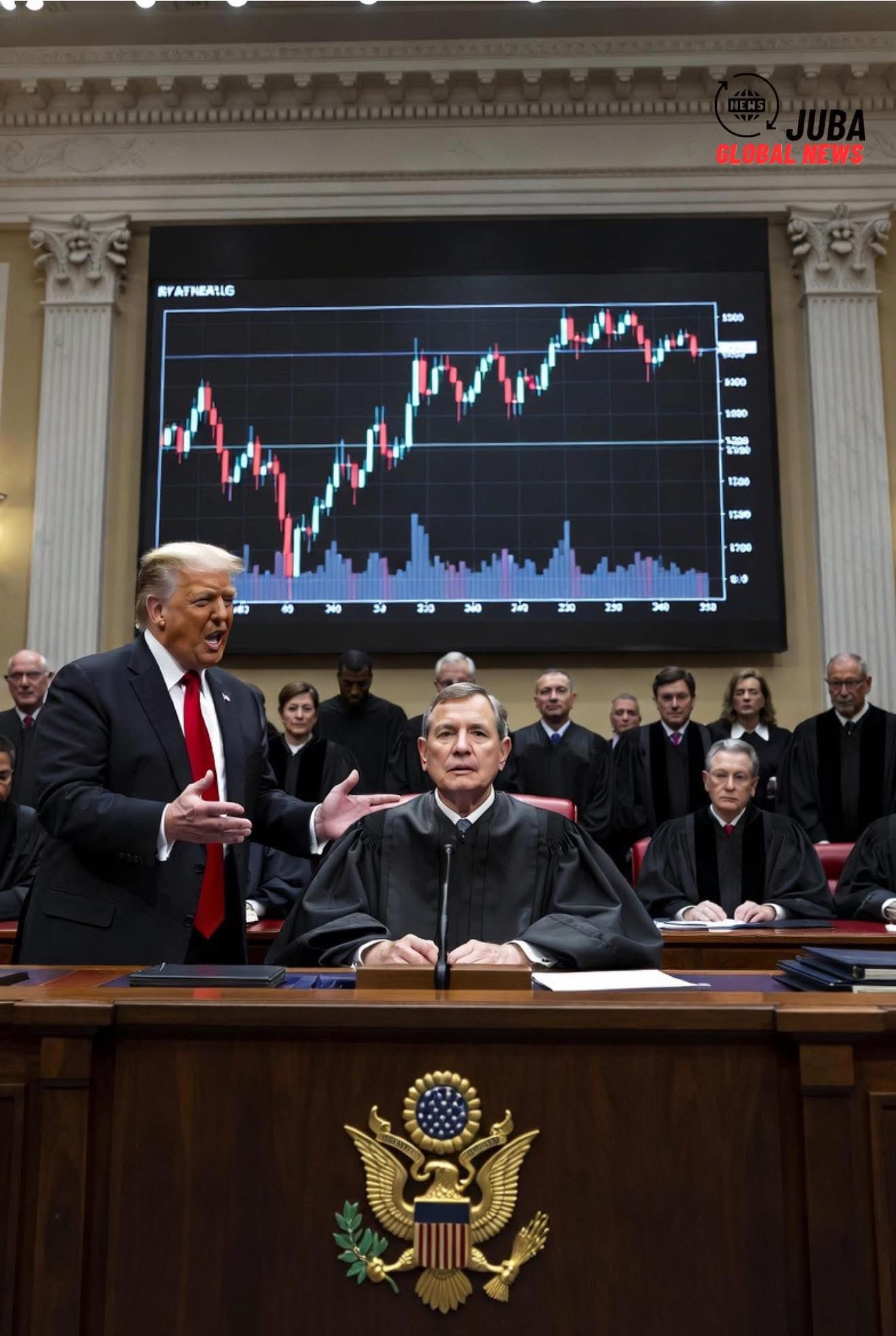
In a stunning development that has sent shockwaves through global markets, U.S. politics, and international trade relations, the Supreme Court on February 20, 2026, struck down most of President Donald Trump’s sweeping global tariffs in a decisive 6-3 ruling. The decision, handed down in the consolidated cases including Learning Resources, Inc. v. Trump, declared that the president exceeded his authority under the International Emergency Economic Powers Act (IEEPA) of 1977 when imposing broad import duties on goods from nearly every trading partner. Within hours, Trump responded defiantly by signing a new, temporary 10% across-the-board global tariff under a different statute, vowing to continue his aggressive trade policies despite the setback.
Background: Trump’s Ambitious Tariff Strategy
President Trump’s second term began with a renewed emphasis on protectionist trade measures, building on his first-term approach but escalating dramatically. In 2025, invoking IEEPA—a law originally designed to address national emergencies involving foreign threats—the administration declared emergencies related to issues such as drug trafficking from countries like Canada, Mexico, and China, as well as persistent trade deficits harming U.S. manufacturing and supply chains.
This led to a cascade of tariffs: 25% on most imports from Canada and Mexico, 10% or higher on Chinese goods tied to drug concerns, and at least 10% (with escalations for dozens of nations) on virtually all global imports under the banner of addressing “fundamental international payment problems.” Dubbed by some as “Liberation Day” tariffs, these measures aimed to force renegotiations, protect domestic industries, and generate revenue—estimates suggested they collected over $160–200 billion in duties by late 2025.
Businesses, importers, several U.S. states, and trade groups quickly challenged the actions in court, arguing that IEEPA did not grant the president unilateral taxing power. Lower courts, including the U.S. Court of Appeals for the Federal Circuit, largely sided with challengers, paving the way for the Supreme Court’s expedited review.
The Supreme Court’s Decision: A 6-3 Rebuke
The Court’s opinion, written by Chief Justice John G. Roberts Jr., was clear and emphatic: IEEPA does not authorize tariffs. The statute empowers the president to “regulate” certain international economic transactions during declared emergencies, but the majority held that “regulate” falls short of imposing taxes or duties. No prior president had interpreted IEEPA this way, and Congress had never explicitly used similar language to delegate tariff authority.
Joined by Justices Sonia Sotomayor, Elena Kagan, Neil Gorsuch, Amy Coney Barrett, and Ketanji Brown Jackson, the ruling affirmed lower court findings and invalidated the bulk of the IEEPA-based tariffs. Justices Clarence Thomas, Brett Kavanaugh, and Samuel Alito dissented, with Kavanaugh warning of potential chaos—including billions in refunds and uncertainty for existing trade deals.
The decision did not address refunds directly, remanding aspects to lower courts like the Court of International Trade. Economists project up to $175 billion in potential refunds to importers, though complexities arise if costs were passed to consumers.
This marked a rare instance where the conservative-leaning Court—shaped in part by Trump’s three appointees—pushed back against executive overreach on a core policy issue.
Trump’s Immediate and Fiery Response
The ruling hit like a thunderbolt at the White House. In a press conference shortly after the opinion’s release, Trump unleashed a torrent of criticism against the justices, calling the decision “terrible,” “deeply disappointing,” and a betrayal. He described the six in the majority as “fools,” “lap dogs,” and “absolutely ashamed” for lacking “courage” to protect American interests. He singled out his own appointees, Gorsuch and Barrett, suggesting disloyalty to the Constitution and implying foreign influences or weakness.
“I’m ashamed of certain members of the court. Absolutely ashamed for not having the courage to do what’s right for our country,” Trump declared, turning what could have been a measured response into a personal assault on a co-equal branch of government.
Hours later, undeterred, Trump announced—and signed—a new “temporary import duty”: a 10% global tariff on imports from nearly all countries, effective almost immediately (with some sources citing Tuesday, February 24, 2026, at 12:01 a.m.). Invoking Section 122 of the Trade Act of 1974, which allows short-term measures (up to 150 days without congressional approval) to address balance-of-payments issues, the new levy aimed to replace lost revenue and maintain pressure on trading partners.
Exemptions were noted for certain foods, critical minerals, and goods already under separate tariffs. Trump framed it as a “reduction” for many nations compared to prior rates, but critics saw it as defiance of the Court’s spirit.
Economic and Global Implications
Markets reacted with volatility: initial relief at the tariff rollback (potentially lowering consumer prices) gave way to uncertainty over the new 10% levy and future escalations. Global allies expressed concern—South Korea called emergency meetings, while Europe and Asia weighed retaliatory options.
The ruling reinforces congressional primacy over taxation and trade, limiting executive unilateralism. Yet Trump’s pivot highlights the resilience of protectionist tools in U.S. law. Legal battles over refunds could drag on for years, and Congress—divided—faces pressure to act on permanent trade reform.
For importers and businesses, the decision offers hope of relief but short-term disruption from the new duties. Economists warn of inflationary risks, supply chain snarls, and strained alliances if tit-for-tat escalations follow.
A Defining Moment in Trump’s Second Term
This episode encapsulates the high-stakes drama of Trump’s return to power: bold executive action, institutional pushback, and unyielding determination. The Supreme Court’s stand against overreach may limit one avenue, but Trump’s swift countermove signals tariffs remain central to his “America First” vision.
As the dust settles, the world watches to see if Congress intervenes, courts clarify refunds, or if this becomes the opening salvo in a prolonged trade war. One thing is clear: the battle over global trade policy is far from over.
