

Rwanda and The Gambia Lead 2025 Africa Visa Openness Index: Progress in Intra-African Mobility
In a continent long criticized for restrictive borders, the 2025 Africa Visa Openness Index (AVOI) delivers encouraging news: Rwanda and The Gambia have jo
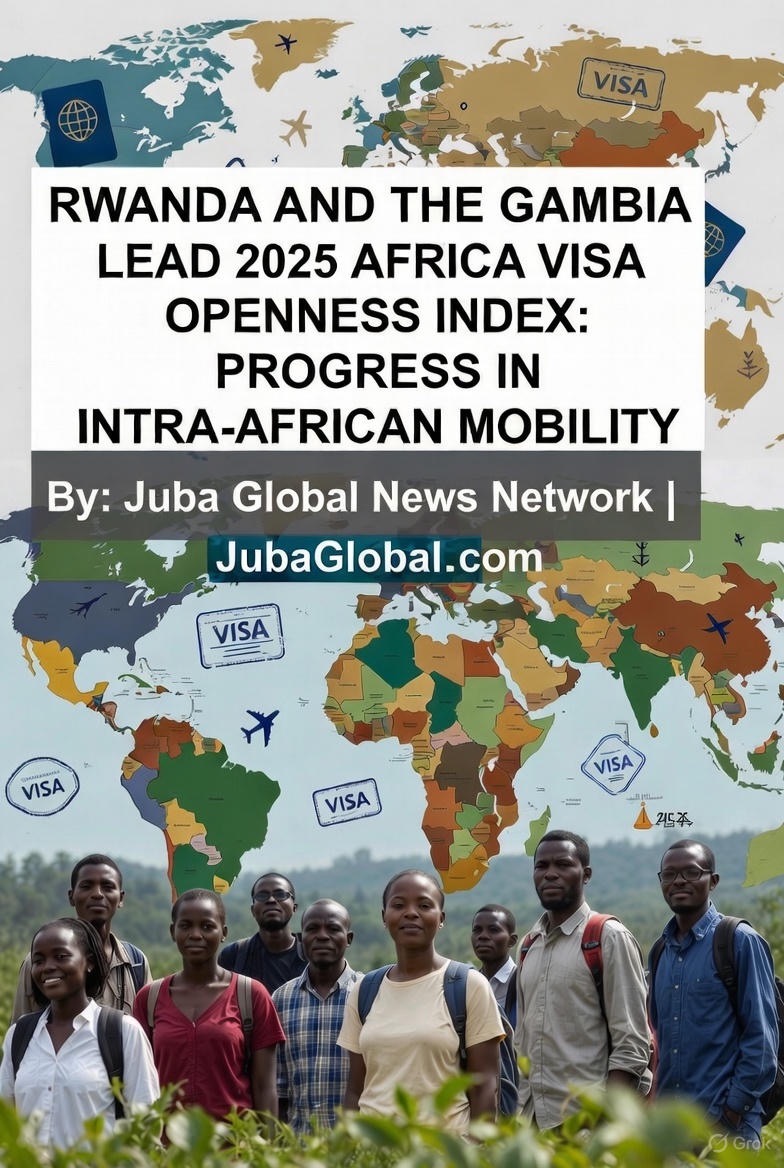
In a continent long criticized for restrictive borders, the 2025 Africa Visa Openness Index (AVOI) delivers encouraging news: Rwanda and The Gambia have jointly claimed the top spot, with Kenya securing third place. Released on December 18, 2025, by the African Union Commission and the African Development Bank, the annual report highlights incremental but meaningful strides toward freer movement of people across Africa. The index, which ranks countries based on visa policies for fellow Africans, underscores the economic and social benefits of openness while exposing persistent barriers in a region striving for integration under the African Continental Free Trade Area (AfCFTA).
Rwanda’s consistent leadership—topping the index for several years—reflects deliberate policy choices, while The Gambia’s ascent signals emerging commitment in West Africa. Kenya’s strong showing reinforces East Africa’s progressive stance. As intra-African travel eases, advocates argue this could unlock tourism, trade, and talent mobility, fostering the “Africa We Want” envisioned in Agenda 2063.
Understanding the Africa Visa Openness Index
Launched in 2016, the AVOI measures how welcoming African countries are to visitors from the continent. Scores are based on three categories:
- Visa-free access (highest points)
- Visa on arrival
- Visa required in advance (lowest points)
Additional factors include e-visas, reciprocity, and duration of stay. The 2025 edition, covering all 54 AU member states (plus Morocco), shows the average score rising slightly from previous years, with more countries offering visa-free or on-arrival options to at least some African nationals.
Top performers facilitate seamless entry: Rwanda offers visa-free access to all Africans, alongside e-visas and 30-day stays. The Gambia provides visa-free entry to most, bolstered by ECOWAS agreements. Kenya, through its electronic Travel Authorization (eTA) system launched in 2024, effectively replaced visas with a simple online process for Africans, earning high marks.
The top 10 for 2025:
- Rwanda and The Gambia (tied)
- Kenya
- Seychelles
- Benin
- Uganda
- Ghana
- Mauritius
- Cape Verde
- Senegal
Notable climbers include Benin and Uganda, which liberalized policies to attract investment and tourism.
Drivers of Progress: Policy and Economic Incentives
Rwanda’s dominance stems from President Paul Kagame’s vision of a borderless Africa. Since 2013, Kigali has progressively opened borders, culminating in universal visa-free access. This has boosted tourism—contributing over 10% to GDP—and positioned Rwanda as a conference hub, hosting events like the African Union’s summits.
The Gambia’s rise reflects President Adama Barrow’s reforms, aligning with ECOWAS protocols while extending openness beyond the bloc. Tourism, a key sector post-COVID, has rebounded strongly.
Kenya’s third-place finish builds on its 2023 visa-free announcement for all Africans (implemented via eTA in 2024), aimed at enhancing trade under AfCFTA. President William Ruto has championed “one Africa, one passport,” arguing restrictive visas hinder growth.
Other leaders like Benin (under former President Patrice Talon) and Uganda offer visa-free access to all Africans, prioritizing regional integration.
Persistent Challenges and Laggards
Despite gains, progress remains uneven. The bottom ranks feature countries requiring visas for most Africans: Eritrea, Equatorial Guinea, and Sudan, often due to security concerns or bureaucratic inertia. North African nations like Algeria and Egypt score lower, reflecting reciprocal restrictions.
Overall, only about 20% of intra-African travel is visa-free for all, with many policies reciprocal—meaning openness depends on mutual agreements. The AU’s Protocol on Free Movement of Persons, ratified by just 33 members as of 2025, lags in implementation.
Critics note that even “open” policies face hurdles: inconsistent application at borders, corruption, or technical glitches in e-visa systems.
Economic and Social Impacts
The benefits of openness are tangible. The AVOI correlates higher scores with increased tourism revenue, foreign direct investment, and intra-African trade. Rwanda’s tourism grew 15% year-on-year post-liberalization. Kenya reports surges in East African visitors, boosting hospitality and aviation.
Freer movement facilitates labor mobility—vital for skills transfer—and cultural exchange. During the COVID-19 pandemic, open borders aided recovery by easing restrictions faster.
Under AfCFTA, launched in 2021 and now operational in over 40 countries, visa openness complements goods trade by enabling business travel. The AU estimates full free movement could add $450 billion to Africa’s GDP by 2035.
Looking Ahead: Momentum and Calls for Acceleration
The 2025 index shows the highest average score yet, with 10 countries offering visa-free access to all Africans—up from four in 2016. Momentum from AfCFTA and the AU’s free movement agenda drives change, but experts urge faster ratification and harmonization.
Challenges persist: security fears, xenophobia in some nations, and capacity gaps in smaller states. Advocates like the Africans Rising movement push for bolder steps, including a continental passport.
As of December 19, 2025, Rwanda, The Gambia, and Kenya set benchmarks others aspire to. Their success proves openness pays dividends—economically and symbolically. In a globalized world, Africa’s visa policies are evolving from barriers to bridges, inching toward a more united continent. For travelers, investors, and citizens alike, the message is clear: Africa’s doors are opening wider, one policy at a time. The journey to seamless mobility continues, with 2025 marking another positive milestone.
