

Russia Intensifies Drone and Missile Assaults on Ukraine’s Energy Grid, Targeting Nuclear-Related Systems Amid Brutal Winter Blackouts
By Juba Global News Network | January 18, 2026 | JubaGlobal.com As temperatures plunge across Ukraine, plunging millions into darkness and freezing conditi
By Juba Global News Network | January 18, 2026 | JubaGlobal.com
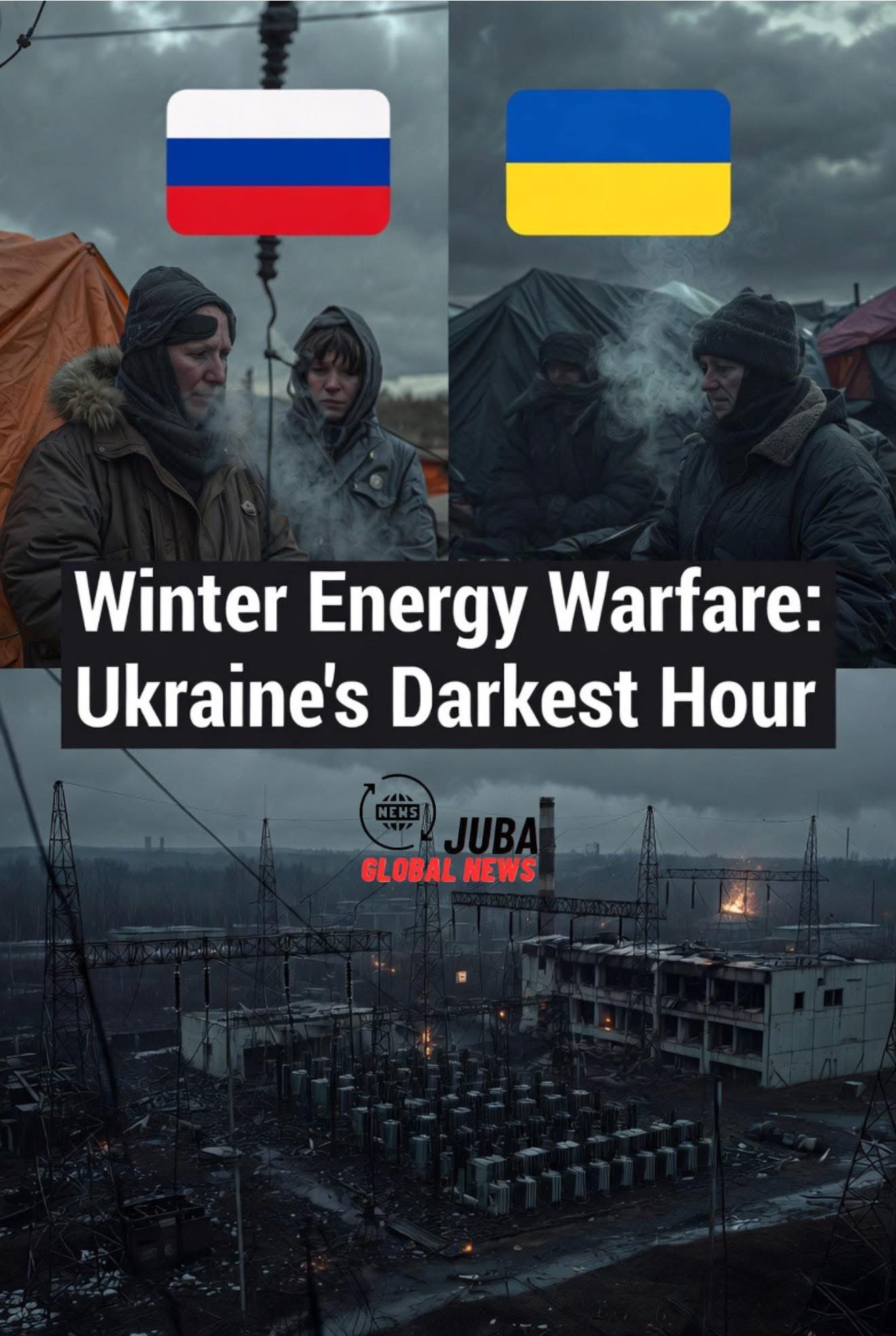
As temperatures plunge across Ukraine, plunging millions into darkness and freezing conditions, Russian forces have dramatically escalated their campaign against the country’s energy infrastructure. In recent days, waves of drones and missiles have struck power plants, substations, and transmission networks, causing widespread blackouts and prompting Ukrainian President Volodymyr Zelenskyy to accuse Moscow of deliberately aiming to cripple nuclear-related energy systems and break civilian resilience.
The intensified attacks, which have persisted through mid-January 2026, represent one of the most severe phases of Russia’s winter energy warfare strategy since the full-scale invasion began in February 2022. Ukrainian officials report that the country’s available generating capacity has plummeted to roughly 40-60% of demand in many regions, with emergency blackouts becoming routine and prolonged outages leaving families without heat, electricity, or running water in sub-zero temperatures.
Escalating Strikes and Immediate Impact
Over the past week alone, Russian forces launched hundreds of drones and dozens of missiles in near-daily barrages. Key incidents include:
- Massive overnight attacks hitting energy facilities in Kyiv, Odesa, Kharkiv, Dnipropetrovsk, Zaporizhzhia, and other oblasts, damaging thermal power plants, substations, and transmission lines.
- Strikes on residential and civilian infrastructure, including a postal terminal in Kharkiv that killed four civilians after a “double-tap” follow-up attack.
- Significant damage to private energy company DTEK facilities in Odesa, leaving tens of thousands without power.
- Reports of blackouts affecting hundreds of thousands in southeastern regions like Dnipropetrovsk and Zaporizhzhia, with some areas experiencing near-total loss of electricity.
Ukrainian Energy Minister German Galushchenko warned that the system is operating at only about 60% capacity, with imports of electricity from neighboring countries and emergency repairs struggling to keep pace. In Kyiv, hundreds of apartment buildings remain without heating, and residents face scheduled rolling blackouts lasting up to 16 hours a day in some cases.
The United Nations and humanitarian partners have highlighted the crisis, noting that attacks have deprived millions of electricity, heating, and water for extended periods, violating international humanitarian law. A $2.3 billion humanitarian appeal for Ukraine in 2026 was launched to address the escalating needs, with children and the elderly particularly vulnerable.
Zelenskyy’s Warning: Targeting Nuclear-Related Infrastructure
In a stark address on January 17-18, 2026, President Zelenskyy revealed intelligence indicating Russia is preparing strikes on facilities servicing Ukraine’s nuclear power plants. “There is ample information about preparations for further Russian strikes on our energy sector and infrastructure, including facilities and networks that serve our nuclear power plants,” he stated, emphasizing the “dangerous” nature of such actions.
Foreign Minister Andrii Sybiha echoed the concern, describing planned attacks on substations supplying nuclear plants as “reckless” and urging the international community—including the IAEA and major powers—to issue clear warnings to Moscow. Zelenskyy stressed that these strikes serve no military purpose but aim to “torment” civilians and undermine allied diplomatic efforts to end the war.
Ukraine operates four nuclear power plants (Rivne, Khmelnytskyi, South Ukraine, and Zaporizhzhia—the latter occupied by Russian forces since 2022), which historically provide a significant portion of the country’s baseload electricity. Damage to supporting grids, cooling systems, or transmission lines could trigger severe safety risks, blackouts across wide areas, and potential radiological concerns—though no active meltdown scenarios have been reported.
Zelenskyy reiterated that Russia shows “no willingness” to comply with agreements or pursue peace, accusing Moscow of using winter as a weapon while Ukraine pushes for stronger air defenses, energy imports, and equipment from partners.
Broader Context: Russia’s Winter Strategy
Russia has repeatedly targeted Ukraine’s energy grid since late 2022, with attacks intensifying in winter to maximize civilian hardship. Moscow justifies strikes on “dual-use” infrastructure, claiming they reduce Ukraine’s war-making capacity. Kyiv and international observers condemn them as deliberate attacks on civilians, designed to erode morale and force concessions.
The campaign has reduced Ukraine’s power generation from pre-war levels of over 50 GW to around 14-20 GW in early 2026, per various estimates. Repairs are hampered by ongoing strikes, cold weather, and resource shortages. Ukraine has accelerated electricity imports from Europe and deployed generators, but demand far outstrips supply during peak winter usage.
Humanitarian fallout is severe: hospitals rely on backup power, schools close or shift online, and families huddle in emergency warming tents. The UN warns of “terrible human suffering,” with NATO Secretary General Mark Rutte noting the alliance’s commitment to supporting Ukraine against such tactics.
International Response and Outlook
Allies have pledged emergency energy aid—Britain announced £20 million ($27 million) in support—and called for stronger defenses. However, as attacks continue daily, Zelenskyy urged faster imports and equipment acquisition.
The energy crisis coincides with diplomatic efforts, including U.S.-led talks involving Ukrainian officials in Miami and potential agreements at Davos. Yet Zelenskyy insists Russia focuses on “strikes and tormenting people” rather than negotiation.
As blackouts persist and temperatures drop further, Ukraine’s energy sector faces its most challenging winter yet. Without significant escalation in air defenses or a diplomatic breakthrough, the combination of Russian bombardment and brutal cold risks deepening a humanitarian catastrophe in Europe’s largest land war since World War II.
Juba Global News Network will continue monitoring developments in this rapidly evolving crisis. For real-time updates, visit JubaGlobal.com.
