

Devastating High-Speed Train Collision in Southern Spain Claims at Least 39 Lives
By: Juba Global News Network | JubaGlobal.com Adamuz, Spain – January 19, 2026 – In what has become Spain’s deadliest rail disaster in over a decade, at le
By: Juba Global News Network | JubaGlobal.com
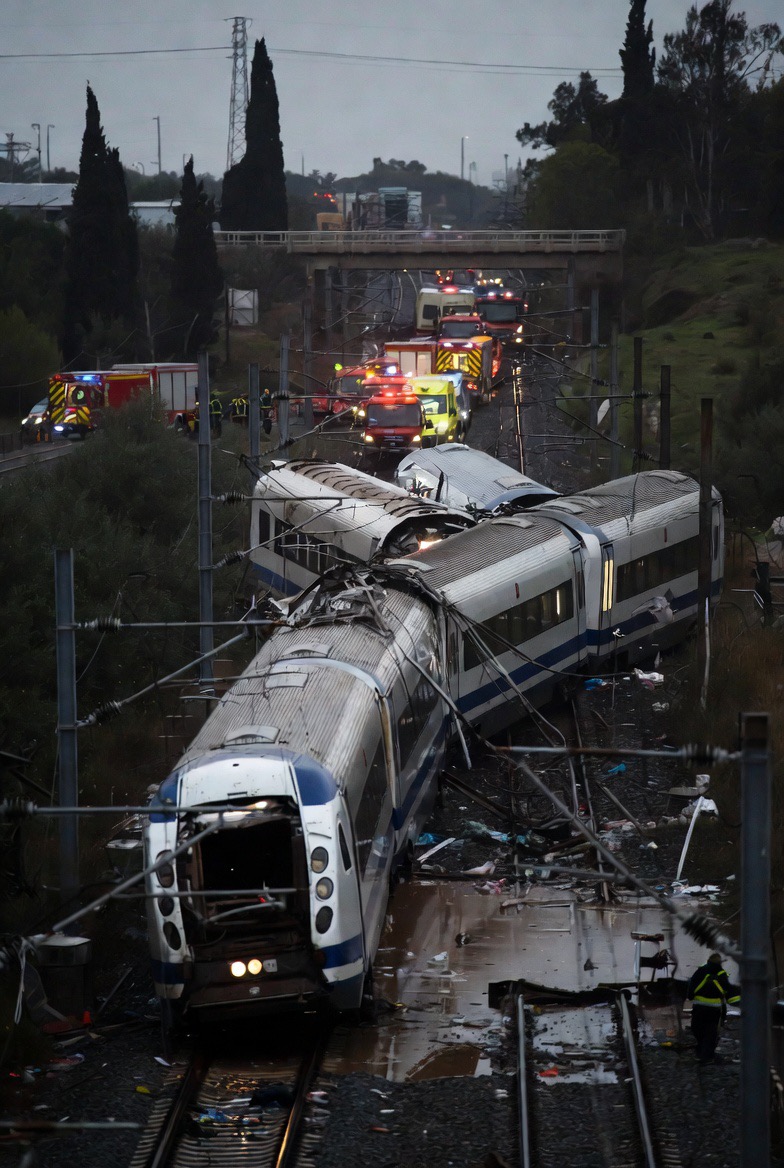
Adamuz, Spain – January 19, 2026 – In what has become Spain’s deadliest rail disaster in over a decade, at least 39 people have been confirmed dead following a horrific collision between two high-speed trains near the town of Adamuz in the province of Córdoba. The accident, which occurred late Sunday evening, has left more than 150 individuals injured, many critically, and has prompted a massive emergency response involving hundreds of rescuers, medical personnel, and investigators. As the nation grapples with the tragedy, questions are already emerging about the safety of Spain’s extensive high-speed rail network, one of the most advanced in Europe.
The crash unfolded around 7:45 p.m. local time on January 18, when the tail end of a high-speed train operated by Iryo, traveling from the coastal city of Málaga to Madrid with approximately 300 passengers on board, suddenly derailed. According to initial reports from Spain’s rail operator Adif, the derailed carriages veered across the tracks and slammed into an oncoming train heading from Madrid to Huelva, a southern port city. The impact was catastrophic: the second train was partially pushed off the rails and down an embankment, scattering debris across the rural landscape and trapping dozens of passengers in the mangled wreckage.
Eyewitness accounts paint a harrowing picture of the chaos that ensued. Maria Gonzalez, a 45-year-old passenger on the Málaga-Madrid train who survived with minor injuries, described the moment of impact to local media: “It felt like an earthquake. One second we were speeding along smoothly, and the next, everything was shaking violently. I heard screams and metal grinding, then a huge crash. People were thrown from their seats; luggage flew everywhere. It was pitch black after the lights went out.” Gonzalez, who was traveling with her family, managed to escape through a shattered window but witnessed others who were not as fortunate, pinned under collapsed sections of the carriage.
Rescue operations began almost immediately, with emergency services from across Andalucía converging on the site. Helicopters airlifted the most severely injured to hospitals in Córdoba and nearby Seville, while ground teams used cranes and cutting tools to extricate survivors from the twisted metal. By Monday morning, Spain’s Civil Guard had updated the death toll to 39, noting that rescue efforts were ongoing as teams searched for additional bodies amid the debris. The injured, numbering over 100 according to state broadcaster Televisión Española, include at least 25 in serious condition, suffering from fractures, internal injuries, and trauma.
Spanish Prime Minister Pedro Sánchez addressed the nation in a televised statement early Monday, expressing profound sorrow and pledging a full investigation. “Our hearts go out to the families of the victims and the injured. This is a dark day for Spain, but we will come together to support those affected and ensure such a tragedy never happens again,” Sánchez said. He announced that flags would be flown at half-mast across government buildings and declared three days of national mourning. Transport Minister Óscar Puente, who visited the crash site overnight, confirmed that the government is working closely with Adif and Renfe (Spain’s national rail operator) to determine the cause.
Preliminary investigations suggest that the derailment may have been triggered by a technical failure or track issue, though authorities have not ruled out human error or external factors such as weather conditions. The area near Adamuz is part of Spain’s AVE high-speed network, which connects major cities at speeds up to 300 km/h (186 mph). The train to Huelva was reportedly traveling at around 200 km/h at the time of the collision, exacerbating the force of the impact. Experts are drawing parallels to the 2013 Santiago de Compostela derailment, where a high-speed train derailed on a curve due to excessive speed, killing 79 people and injuring 178. That incident, Spain’s worst rail accident in over 40 years at the time, led to significant safety reforms, including enhanced automatic braking systems and speed controls.
In the wake of the 2013 crash, Spain invested heavily in rail infrastructure, boasting one of the world’s longest high-speed networks at over 3,000 kilometers. However, critics argue that maintenance and oversight may have lagged in recent years amid budget constraints and increased passenger volumes. “This accident raises serious questions about the state of our tracks and signaling systems,” said Javier Ruiz, a rail safety expert at the University of Madrid. “High-speed rail is safe overall, but when things go wrong at those velocities, the consequences are devastating.”
The collision has disrupted rail services across southern Spain, with the Madrid-Andalucía line partially closed for inspections and repairs. Adif has rerouted trains and provided bus alternatives for affected passengers, but delays are expected to last several days. International travelers, including tourists heading to popular destinations like Málaga’s Costa del Sol, have been advised to check updates.
As the investigation ramps up, forensic teams are combing the site for evidence, including black box data recorders from both trains. The European Union Agency for Railways has offered assistance, highlighting the incident’s potential implications for cross-border rail safety standards. Meanwhile, vigils are being held in Córdoba and Madrid, where communities are rallying to support victims’ families through blood drives and fundraising efforts.
This tragedy underscores the vulnerabilities in even the most modern transportation systems. As Spain mourns, the focus shifts to prevention: enhancing technology, training, and infrastructure to safeguard the millions who rely on high-speed rail daily. Juba Global News Network will continue to monitor developments and provide updates as more information becomes available.
This article was updated on January 19, 2026, at 2:56 AM EST to reflect the latest death toll and official statements.
