

Mozambique Devastated by Worst Floods in Decades: Nearly 700,000 Affected as ‘The Water Took Everything’ – Climate Change Turns Rainy Season into Catastrophe
In early 2026, Mozambique was plunged into one of its most severe humanitarian crises in generations. Weeks of relentless torrential rains, swelling rivers
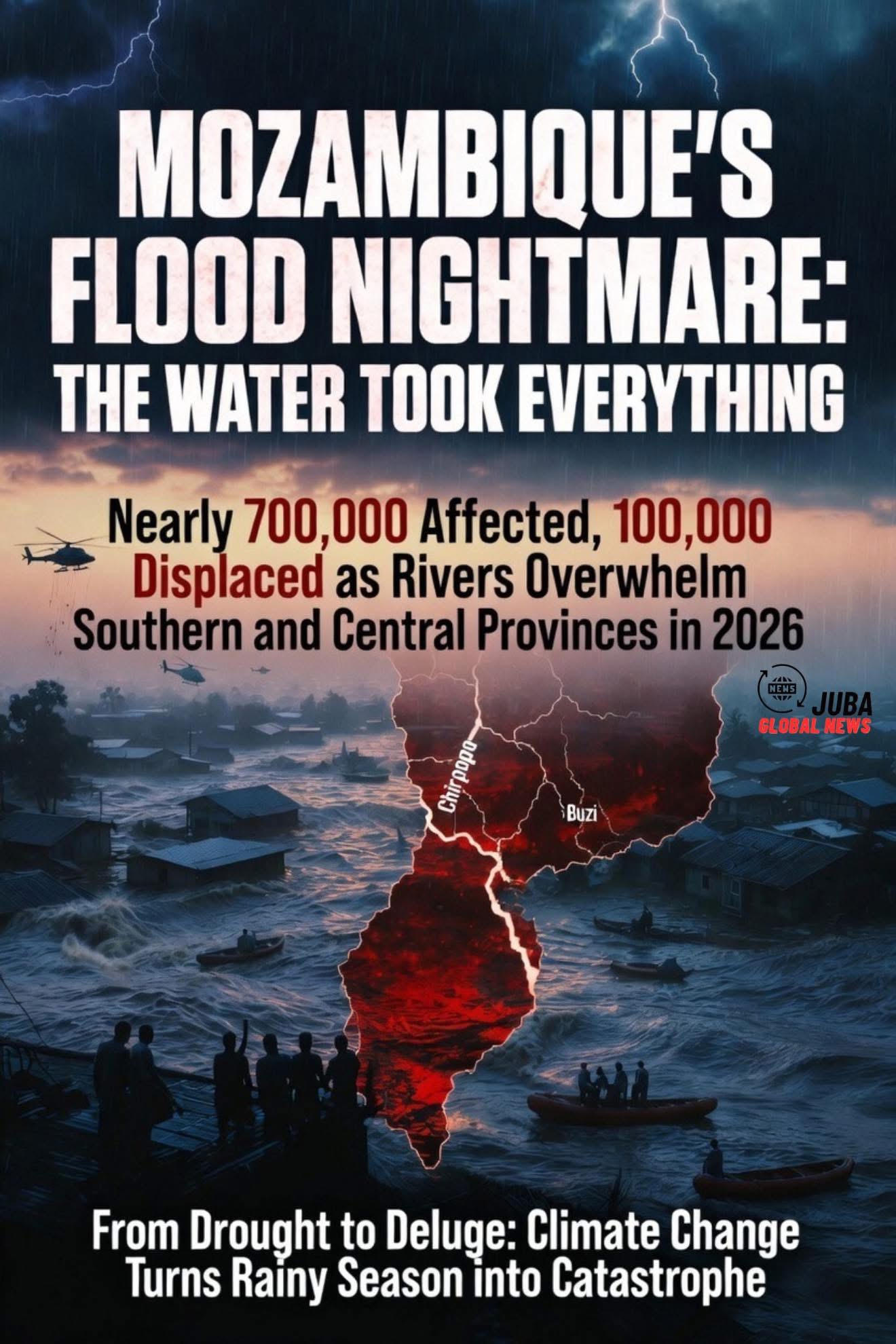
In early 2026, Mozambique was plunged into one of its most severe humanitarian crises in generations. Weeks of relentless torrential rains, swelling rivers like the Limpopo, Incomati, Buzi, and Licungo, and overflowing reservoirs turned vast swathes of the southern and central provinces into inland seas. Authorities and international agencies described it as the worst flooding in decades — some said more than 40 years — with nearly 700,000 people directly affected, over 100,000 displaced into temporary shelters, and widespread destruction of homes, farmland, infrastructure, and livelihoods.
The deluge began intensifying from mid-December 2025, peaking in January 2026. By late January, Mozambique’s National Institute for Disaster Risk Management and Reduction (INGD) reported over 642,000 people impacted, with figures climbing rapidly to around 700,000 as assessments continued. The World Food Programme (WFP) and UN agencies confirmed the scale: nearly 700,000 affected, with 112 temporary accommodation centres hosting more than 100,000 displaced individuals. UNICEF projected the total could reach 800,000, including 400,000 children facing acute risks to health, protection, and water/sanitation.
A Landscape Submerged: The Human Stories of Loss
Survivors’ accounts painted a picture of sudden, overwhelming terror. In Gaza province — one of the hardest-hit areas — residents described floodwaters rising so fast that families had mere minutes to flee. One woman in Chókwè told reporters: “The water took everything.” Homes built of mud and thatch dissolved overnight. Farmland vanished under muddy torrents. Roads, bridges, and the vital national highway (N1) were severed, isolating entire communities. Rescue teams from Brazil, South Africa, the UK, and local authorities used boats, helicopters, and amphibious vehicles to reach stranded people clinging to rooftops or treetops.
In Maputo, Xai-Xai, and Marracuene, thousands were evacuated as rivers burst banks. Tens of thousands of homes were destroyed or severely damaged — estimates ranged from 30,000 to over 170,000 structures affected in some reports. Crops on tens of thousands of hectares were ruined, compounding food insecurity after the country had barely recovered from a severe 2024–2025 drought. Livestock drowned, schools and health facilities flooded, and clean water sources contaminated, raising fears of cholera and other waterborne diseases.
Deaths were tragically high: at least 12–150 confirmed fatalities (figures varied by source and timing), with many more at risk from disease, malnutrition, and lack of shelter. Humanitarian access remained severely hampered — cut-off roads meant aid deliveries relied on air drops, boats, and risky overland routes.
Climate Change as the Amplifier
Scientists and experts linked the disaster to intensified climate patterns. Heavy, persistent rainfall — exacerbated by La Niña conditions — dumped exceptional volumes in short periods, with some areas seeing over 200 mm in 24 hours. World Weather Attribution analyses concluded that climate change, combined with high exposure and vulnerability, made the floods far more devastating. Mozambique ranks among the world’s most climate-vulnerable nations: low-lying coastal and riverine zones, reliance on subsistence agriculture, limited infrastructure, and repeated exposure to cyclones and droughts.
The 2026 floods echoed past tragedies — the catastrophic 2000 floods (which killed up to 700) and Cyclone Idai in 2019 — but occurred against a backdrop of worsening extremes. Just months earlier, parts of the country endured historic drought. Now, the same regions faced biblical inundation. Government officials and aid agencies appealed for adaptation funding — Mozambique has sought billions for resilience projects — but response remained under-resourced.
Humanitarian Response Under Strain
The World Food Programme scaled up to reach 450,000 people with emergency food, using every means possible — boats through floodwaters, helicopters for remote drops. UNHCR highlighted protection risks for displaced families, especially women and children in overcrowded centres. UNICEF focused on child health, water/sanitation, and education continuity. International support poured in: EU humanitarian air bridges delivered supplies, while bilateral aid from various nations bolstered rescue and relief.
Yet needs outstripped capacity. WFP warned of funding shortfalls that could halt assistance by mid-2026. The floods doubled the number of people in crisis across Mozambique, straining already stretched resources amid northern conflict displacement.
A Nation’s Resilience — and a Call for Global Action
Despite the devastation, stories of endurance emerged. Communities organized mutual aid, sharing scarce food and shelter. Farmers vowed to replant when waters recede. “We have to rebuild,” one survivor said — a refrain echoing across the affected provinces.
But rebuilding requires more than determination. It demands urgent international finance for climate adaptation, early-warning systems, resilient infrastructure, and diversified livelihoods less dependent on vulnerable agriculture. Without it, Mozambique — and much of southern Africa — faces a future of recurring catastrophe.
As waters slowly recede in 2026, the scars remain: lost homes, ruined fields, grieving families. The phrase “the water took everything” captures not just material loss, but a profound disruption to lives already on the edge.
Mozambique’s ordeal is a stark reminder: in the era of accelerating climate change, extreme weather no longer feels exceptional — it has become the new normal for millions.
Juba Global News Network | March 2026
