

Holdout Opposition Factions Reject South Sudan’s Planned 2026 Elections Over Preface Issues
Juba, South Sudan – December 19, 2025 The National Parties Alliance (NPA), a coalition of the holdout opposition political parties, has strongly denounced
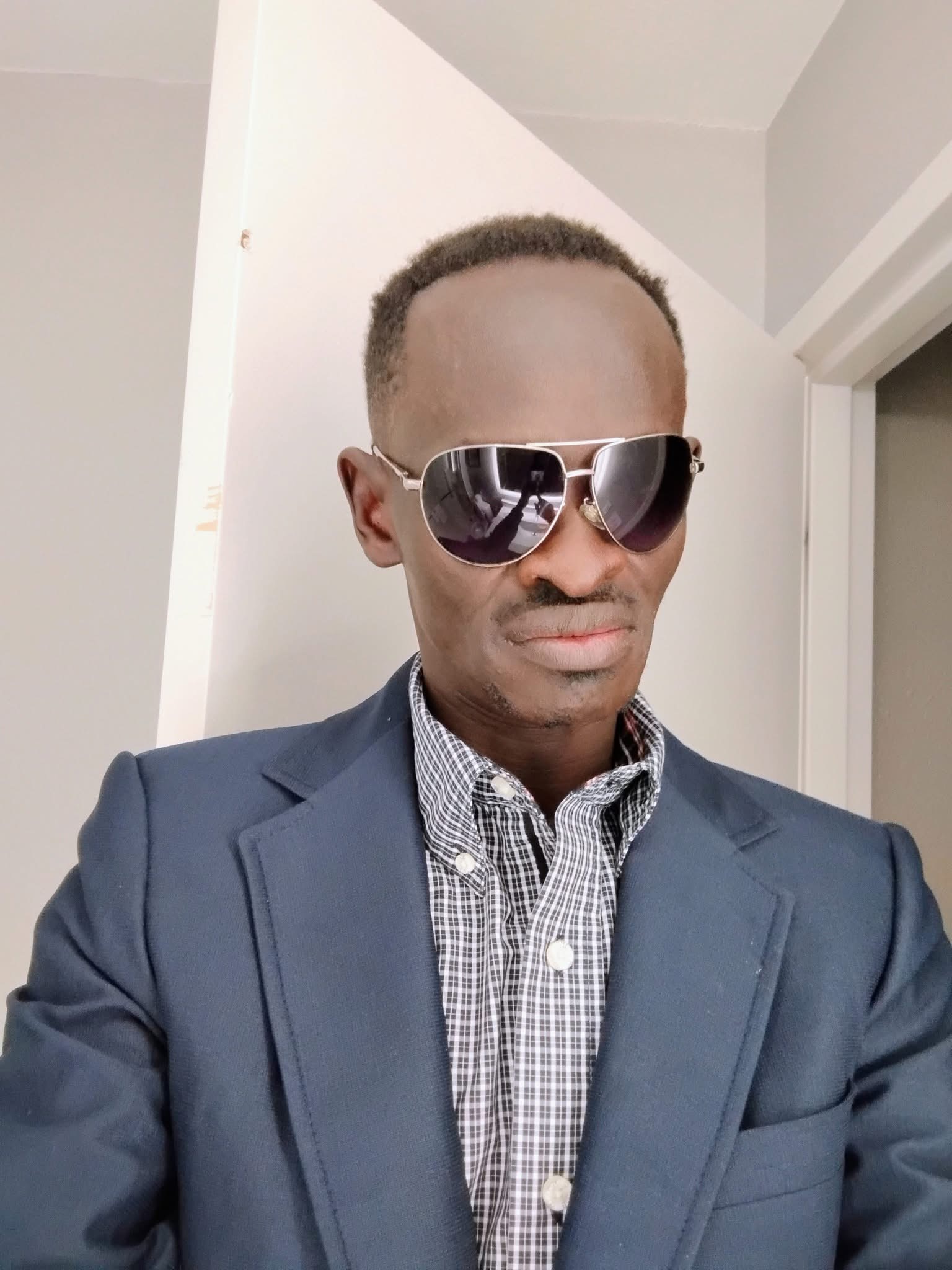
Juba, South Sudan – December 19, 2025 The National Parties Alliance (NPA), a coalition of the holdout opposition political parties, has strongly denounced as regrettable the announcement on generalized elections in December, 2026 after convening a high-level meeting of the signatories to the 2018 Revitalized Agreement on the Resolution of Conflict in South Sudan (R-ARCSS) presided over by President Salva Kiir Mayardit earlier this month.
In a statement released this week, the NPA expressed its support for the desire of south Sudanese people to hold free and fair elections. But it reiterated that persisting political, economic, social and security challenges would prevent the holding of credible and peaceful elections as things stand.
“We, the government and R-ARCSS signatories reiterated their commitment to hold elections in December 2026 this week, but NPA rejects that timetable,” Hon. Joseph M. Nyieth, Chairman of the National Parties Alliance affirmed.” “South Sudan needs genuine inclusive dialogue, national reconciliation and the realization of critical prerequisites before any election can be a legitimate process,” she said.
The NPA is firm on a few essential prerequisites:
Wide-ranging talks and negotiations with opposition political parties outside the world on them.
Secure and voluntary return of refugees, IDPs.
Protected political rights, such as freedom of speech, assembly and organisation.
Full national reconciliation to bring together divisions and unity.
Preparation of a new permanent constitution reflecting the input of all political parties and civil society.
The establishment of a united national army to guarantee the safety and sovereignty of the people.
Inaugutation of a national population census for equitable representation.
It cautioned that going ahead without undertaking these measures could see an increase in instability and weaken the already sullied peace. The NPA reaffirms its strong and unequivocal support for a peaceful democratic transfer of power, and urges all parties concerned to prioritize these essential steps toward durable stability and prosperity.
Contact:
President, National Parties Alliance (NPA) Leadership Council
Holdout Opposition, South Sudan
Signed:
Hon. Joseph M. Nyieth
Chairman, National Parties Alliance (NPA)
END
Overview of the R-ARCSS
Peace agreement The Revitalized Agreement on the Resolution of the Conflict in the Republic of South Sudan (R-ARCSS) is a peace treaty signed on 12 September 2018 in Addis Ababa, Ethiopia. It “reinvigourates” the 2015 Agreement on the Resolution of the Conflict in South Sudan (ARCSS), which had broken down following fresh fighting in 2016. The peace deal, mediated by the Intergovernmental Authority on Development (IGAD), seeks to bring an end to the civil war that broke out in December 2013 between troops loyal to President Salva Kiir and supporters of then Vice-President Riek Machar.
It provides for a power-sharing arrangement in the form of the Revitalized Transitional Government of National Unity (RTGoNU), a permanent ceasefire, and other measures to address the underlying causes of conflict, such as governance, security, economics, justice – all issues that affect society at large. It provides for an 8-month pre-transitional and a 36-month transitional period to culminate with elections. The transitional period that followed labored into multiple extensions (at the time of this book’s publication, until February 2027, after elections planned for December 2026).
Key signatories include:
President Salva Kiir (Incumbent TGoNU/SPLM-IG)
Riek Machar (SPLM/A-IO)
SSOA, FDs-OPP comprised of delegates from the South Sudan Opposition Alliance (SSOA), Former Detainees (FDs) and Other Political Parties.
The compact is inclusive, stipulating at least 35% women participation in executive bodies.
Key Chapters and Provisions
R-ARCSS is organized into eight main chapters:
Revitalized Transitional Government of National Unity (RTGoNU)
Establishes power-sharing arrangements:
President: Salva Kiir
First Vice President: Riek Machar
Four additional Vice Presidents
Council of Ministers: A 35-member Council of Ministers (including: Govt. 20 ministers; SPLM-IO 9; SSOA 3; OPP 2; FDs 1)
Expanded legislature (550 members)
Needs consensus-based decision-making and integration of the agreement in the Transitional Constitution.
Permanent Ceasefire and Security Arrangements During the Transitional Period
Announces throughout all areas a permanent ceasefire, cantonment of forces, disarmament, demobilization and reintegration (DDR).
Appeals to integrate all forces in one national army.
Provides for bodies such as the Ceasefire and Transitional Security Arrangements Monitoring and Verification Mechanism (CTSAMVM).
The chapter is widely seen as the “backbone” of the agreement, but it has lagged behind, with the unified forces deployed only partially.
Humanitarian Assistance and Reconstruction
Guarantees unrestricted humanitarian access, the protection of civilians and reconstruction.
Resource, Economic, and Financial Management
Transparent management of oil revenues, anti-corruption measures, creation of funds (e.g. Women Enterprise Development Fund) and economic stabilization.
Reconciliation, healing and transitional justice
Establishes three mechanisms:
Commission for the Truth, Reconciliation and Healing (CTRH)
Hybrid Court for South Sudan (HCSS, including the African Union) for gross crimes
Compensation and Reparation Authority (CRA)
Highlights accountability for abuses, including gender-based violence.
Parameters of Permanent Constitution
Lays down the fundamentals for a new permanent constitution, which is to be based on federalism, good governance, human rights, and gender equality.
Requires a broad constitution-building process with a wide spectrum of popular participation ahead of the National Constitutional Conference.
The Joint Monitoring and Evaluation Commission (JMEC/RJMEC)
Reactivate the monitoring body (RJMEC) to oversee implementation.
Supremacy, Amendments, and Procedures
Supplies how the accord is superior and visits for amendments.
Status of Implementation (as of end 2025)
The progress has been halting, and uneven:
Progress: Establishment of RTGoNU in 2020, relatively well-respected permanent ceasefire (limited subnational violence), some legislation passed, and some graduation/deployment of Necessary Unified Forces.
Obstacles: Unified army formation, drafting of a permanent constitution, functioning of transitional justice mechanisms (none is fully operational), holding of census and election preparations. Progress has been slow due to funding shortfalls, political mistrust and intercommunal violence.
Latest updates: Repeat prolongations of the transition, mounting tensions by 2025, with military activities and arrests (opposition figures), plus calls for constitutional changes to tackle “structural obstacles”. International actors (UN, IGAD, AU, guarantors etc) have raised alarms over potential collapse and called for de-escalation and full implementation.
The R-ARCSS continues to be the core peace framework for South Sudan, but detractors (including holdout opposition groups) contend that critical preconditions such as full security unification and inclusive dialogue have not been fulfilled, casting doubt on planned credible elections in 2026.