

Pakistan Intensifies Mediation Efforts for Second Round of US-Iran Talks
By Juba Global News Network | JubaGlobal.com April 16, 2026 ISLAMABAD/TEHRAN — Pakistan has ramped up its high-stakes diplomatic push to broker a second ro
By Juba Global News Network | JubaGlobal.com
April 16, 2026
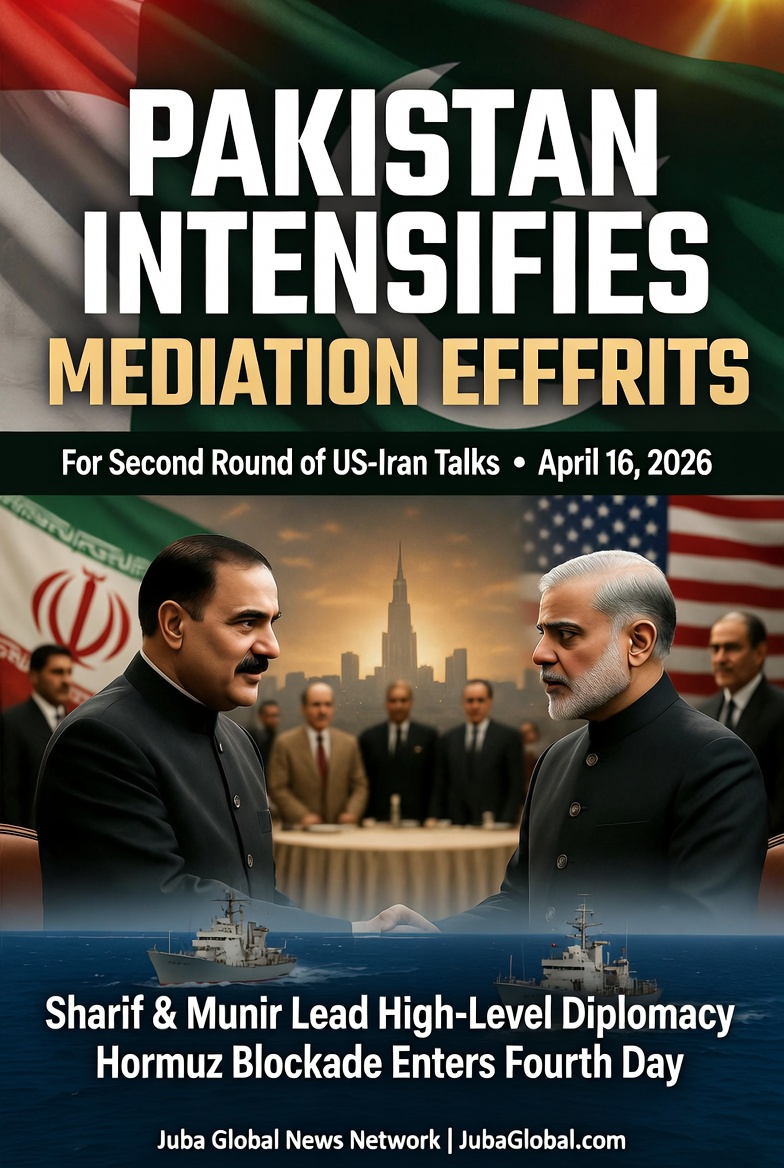
ISLAMABAD/TEHRAN — Pakistan has ramped up its high-stakes diplomatic push to broker a second round of negotiations between the United States and Iran, as the fragile two-week ceasefire hangs in the balance and the U.S. naval blockade of the Strait of Hormuz enters its fourth day.
A high-level Pakistani delegation led by Army Chief Field Marshal Asim Munir arrived in Tehran on Wednesday for intensive talks with Iranian officials, carrying fresh messages aimed at reviving direct or indirect dialogue between Washington and Tehran. This move comes just days after the first round of historic U.S.-Iran talks — hosted by Pakistan in Islamabad on April 11-12 — ended without a breakthrough following more than 21 hours of intense discussions.
Prime Minister Shehbaz Sharif has simultaneously launched a four-day regional diplomatic tour, starting with meetings in Saudi Arabia, followed by stops in Qatar and Turkey. In Jeddah, Sharif held talks with Crown Prince Mohammed bin Salman, who praised Pakistan’s mediation efforts and emphasized the need for sustained engagement to restore regional stability.
From Ceasefire Broker to Active Mediator
Pakistan’s central role in the crisis marks a remarkable diplomatic elevation for Islamabad. The country helped broker the two-week ceasefire announced on April 8, which paused direct hostilities that began with U.S. and Israeli strikes on Iran on February 28, 2026.
The first round of face-to-face talks in Islamabad brought together a high-powered U.S. delegation — led by Vice President JD Vance, along with special envoy Steve Witkoff and Jared Kushner — and senior Iranian officials, including Parliament Speaker Mohammad Bagher Qalibaf and Foreign Minister Abbas Araghchi. Mediated by Pakistani officials, including Sharif and Munir, the marathon sessions addressed core issues: Iran’s nuclear program, ballistic missiles, regional proxy activities, compensation for war damages, and unfreezing of Iranian assets.
While limited progress was reported on some fronts, major differences persisted — particularly over the scope and duration of any suspension of Iran’s nuclear activities and control of the Strait of Hormuz. The U.S. side pushed for a long-term verifiable halt to enrichment activities that could lead to a nuclear weapon, while Iran insisted on its “red lines,” including guarantees against future attacks and economic relief.
Following the inconclusive talks, President Trump ordered the implementation of a naval blockade on Iranian ports, which the U.S. describes as a response to Iran’s earlier attempts to impose tolls and restrictions on international shipping in the strait. Iran has condemned the blockade as “piracy” and warned of potential retaliation, including threats to disrupt other key waterways.
Current Diplomatic Offensive
Pakistani officials say both Washington and Tehran have expressed willingness to engage in a second round, though no final venue or date has been confirmed. Islamabad remains the frontrunner as host, with Geneva also mentioned as a possible alternative.
Field Marshal Asim Munir’s visit to Tehran is seen as critical. Iranian sources described the meetings as constructive, focusing on bridging remaining gaps and exploring ways to de-escalate tensions amid the ongoing blockade. Pakistan’s Foreign Ministry stated that the U.S. has conveyed a clear message through Islamabad, while urging restraint from all parties to preserve the ceasefire.
In parallel, Prime Minister Sharif’s engagements in Riyadh, Doha, and Ankara aim to build broader regional consensus. Saudi Arabia, Qatar, and Turkey — all with significant stakes in Gulf security and energy markets — have been consulted to lend support to the mediation process. Crown Prince Mohammed bin Salman reportedly highlighted Pakistan’s unique position as a trusted interlocutor with both the U.S. and Iran.
Challenges and High Stakes
The timing is urgent. The two-week ceasefire is more than halfway through, and the U.S. blockade continues to exert severe economic pressure on Iran by restricting its oil and gas exports. Analysts warn that without a diplomatic breakthrough soon, the pause in fighting could collapse, leading to renewed escalation with unpredictable consequences for global energy markets and regional stability.
Key sticking points include:
- Nuclear program: Verifiable long-term suspension vs. shorter-term measures.
- Strait of Hormuz: Freedom of navigation and rejection of any Iranian-imposed controls or tolls.
- Economic relief: Release of frozen assets and sanctions relief demanded by Tehran.
- Security guarantees: Iran seeks assurances against future U.S. or Israeli military action; the U.S. demands curbs on Iran’s ballistic missiles and support for regional proxies.
Iran has indicated some progress was made in the first round under Pakistani mediation but stressed that “differences remain significant.” U.S. officials have reiterated that the blockade will remain in place until Tehran demonstrates concrete steps toward compliance.
Pakistan’s Strategic Calculus
Pakistan’s proactive mediation reflects its own strategic interests. As a neighbor with deep historical, cultural, and security ties to Iran, and a long-standing security partnership with the United States, Islamabad is uniquely positioned to facilitate dialogue. Successful mediation could enhance Pakistan’s international stature at a time when it has faced economic and diplomatic challenges.
However, the role also carries risks. Any collapse of the ceasefire could draw Pakistan deeper into a volatile regional conflict, with potential spillover effects on its borders and economy.
Pakistani leaders have described the current phase as “make or break,” with Prime Minister Sharif personally briefing President Asif Ali Zardari on the latest developments and next steps.
Outlook for Renewed Talks
Diplomatic sources indicate cautious optimism that a second round could be arranged within days. Pakistan has proposed hosting the talks again in Islamabad, potentially as early as this week or early next, depending on responses from both capitals.
Trump has signaled openness to further negotiations while maintaining that the U.S. will not lift pressure until core demands are met. Iranian officials have reiterated readiness for talks but warned against any attempts to impose unilateral conditions.
As the Hormuz blockade tightens its grip and global oil markets remain on edge, Pakistan’s intensified shuttle diplomacy represents one of the most active efforts to prevent a return to open conflict.
Juba Global News Network will continue to monitor developments from Islamabad, Tehran, Washington, and regional capitals. The coming 48-72 hours could prove decisive in determining whether the fragile ceasefire evolves into a lasting diplomatic solution or gives way to renewed confrontation.
This comprehensive report highlights Pakistan’s pivotal role in one of the most critical diplomatic initiatives of 2026. For real-time updates and related coverage, visit JubaGlobal.com.
