Chaos in the Skies and on the Ground: Massive Winter Storm Grips U.S. Plains While Miraculous Delta Plane Escape Shakes Toronto
By Joseph | Bridgeville, PA | February 18, 2026
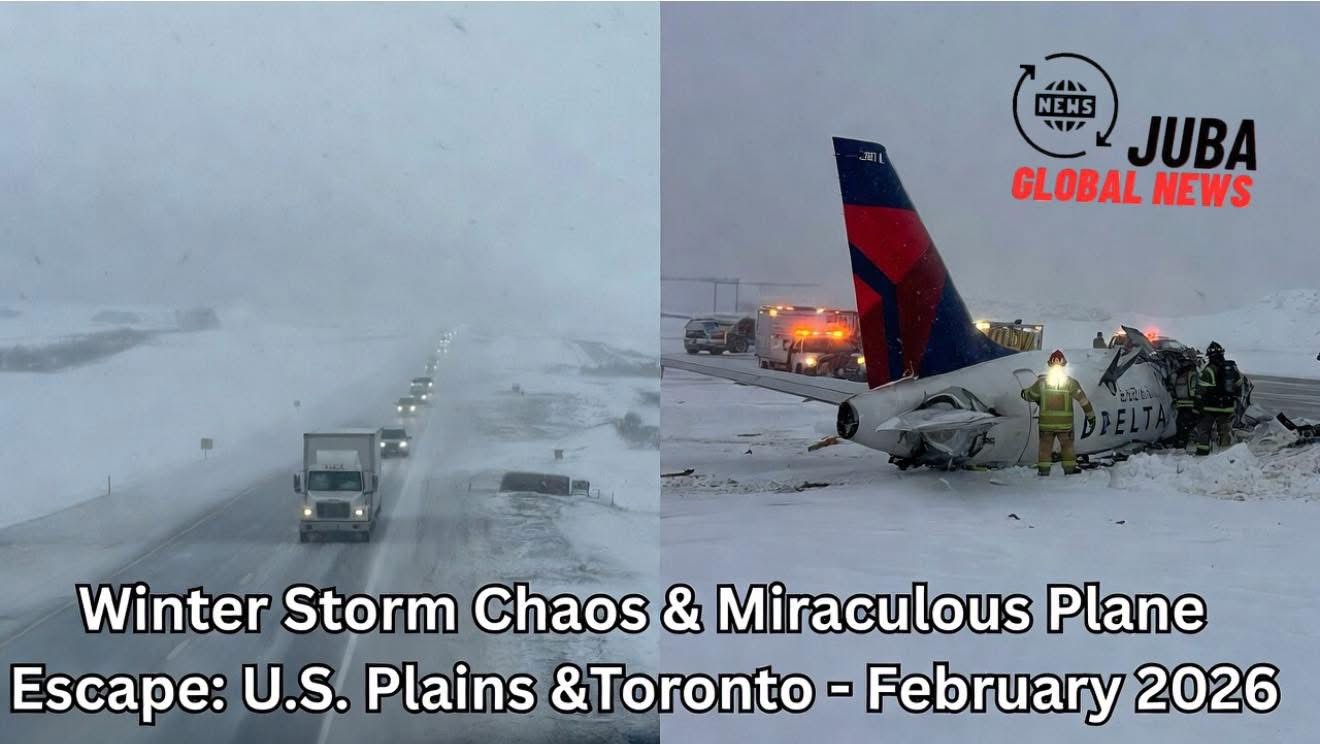
A ferocious winter storm system continued to unleash havoc across the central and northern United States on February 18, 2026, blanketing the Plains with heavy snow, blizzard conditions, and dangerous winds, while a separate but equally shocking aviation incident unfolded at Toronto Pearson International Airport. The twin events—nature’s fury and a near-catastrophic plane crash—dominated headlines, highlighting the perils of severe weather in travel and daily life.
The sprawling winter storm, stretching over 1,000 miles, brought a dangerous mix of hazards from the Rockies to the Great Lakes and beyond. Blizzard warnings remained in effect for parts of the Northern Plains, including eastern Montana, the Dakotas, northern Minnesota, and extending into Michigan. The National Weather Service (NWS) reported heavy snowfall rates exceeding 1 inch per hour in some areas, with accumulations reaching up to 18 inches in the hardest-hit zones. Strong winds gusting over 50-70 mph created whiteout conditions, reducing visibility to near zero and making travel “very dangerous to impossible” in many regions.
The system originated from energy ejecting out of a powerful West Coast storm that had already dumped significant mountain snow in California and the Interior Northwest. As it strengthened over the Northern Plains on February 17-18, it produced widespread impacts: freezing rain in transition zones, ice accretion on power lines, and widespread travel disruptions. Tens of millions of people across the Midwest and Upper Midwest faced alerts, with power outages reported in several states due to downed lines from ice and wind. Forecasters warned that the storm would linger into Thursday, potentially shifting eastward to bring snow and ice to New England.
Compounding the weather woes, parts of the southern and central High Plains experienced a stark contrast: extreme fire weather. Red Flag Warnings covered areas from the Texas Panhandle through Oklahoma, Kansas, and into the Dakotas, with dry conditions and gusty winds fueling wildfire risks amid the broader storm dynamics. This “kitchen sink” weather pattern—fire danger in the south, blizzards in the north—underscored the unpredictable nature of late-winter systems.
Amid this meteorological mayhem, a dramatic aviation incident added to the day’s chaos. On February 17, 2025 (with ongoing coverage and anniversary reflections extending into 2026 reports), Delta Connection Flight 4819—a CRJ-900 regional jet operated by Endeavor Air—crashed upon landing at Toronto Pearson International Airport after departing Minneapolis–Saint Paul. The flight, carrying 76 passengers and four crew members, experienced a hard landing on Runway 23 around 2:13 p.m. EST. Preliminary investigations indicated the plane descended at a high rate of speed, causing the landing gear to collapse. The aircraft skidded, rolled to the right, lost its right wing and tail section, burst into flames, and ultimately flipped upside down, coming to rest inverted on the snowy runway.
Miraculously, all 80 people on board survived, though 18-21 sustained injuries (reports vary slightly across sources). Passengers described chaos: the smell of jet fuel, fire erupting, and hanging upside down from seatbelts as the floor became the ceiling. Evacuation videos showed smoke billowing while emergency crews sprayed foam and assisted survivors. One passenger recounted the terror of inertia slamming the plane down, followed by the right gear failing and the wing shearing off. The Transportation Safety Board of Canada (TSB) and U.S. investigators recovered the flight data and cockpit voice recorders, with early findings pointing to a hard landing possibly exacerbated by crosswinds or snow-covered conditions. The incident, one year prior but still prominent in 2026 coverage, raised questions about winter operations, pilot training, and aircraft resilience.
Toronto Pearson faced additional strain from related winter weather, with mass flight cancellations (over 15% of departures grounded in some reports) due to snow and ice. The crash highlighted how severe weather can turn routine flights into life-threatening events, yet the outcome—zero fatalities—spoke to modern aircraft design, crew training, and rapid emergency response.
As the U.S. storm raged on, millions hunkered down, while aviation authorities worldwide reviewed procedures. In Bridgeville, PA, and across the affected regions, residents braced for more snow, power issues, and travel headaches. These events serve as stark reminders: in winter’s grip, preparation and vigilance remain essential—for both those on the ground and in the air.
For the latest updates and in-depth coverage on global news, weather, and breaking events, visit JubaGlobal.com