

CAF’s Shocking Reversal: Senegal Stripped of 2025 AFCON Title, Morocco Declared Champions Amid Bitter Controversy
In one of the most dramatic and divisive decisions in African football history, the Confederation of African Football (CAF) has overturned Senegal’s hard-f
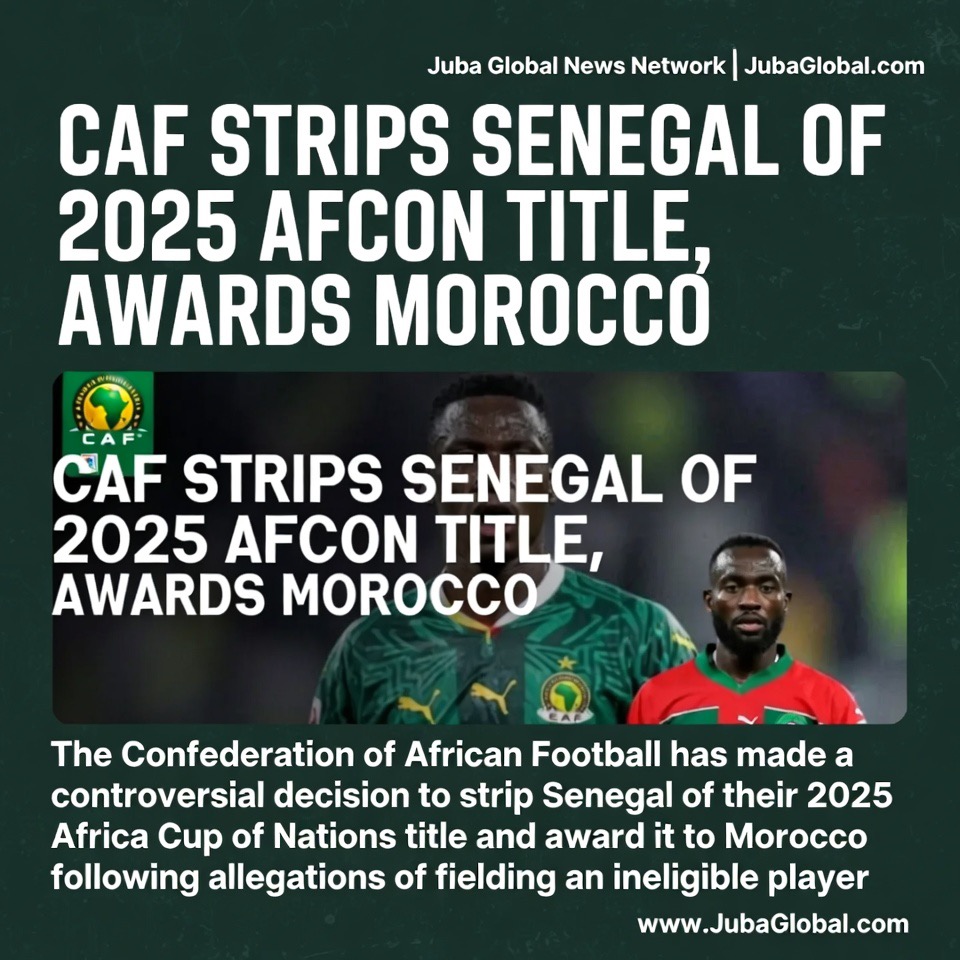
In one of the most dramatic and divisive decisions in African football history, the Confederation of African Football (CAF) has overturned Senegal’s hard-fought victory in the 2025 Africa Cup of Nations final, stripping the Lions of Teranga of their title and awarding it to host nation Morocco. The ruling, issued by CAF’s Appeal Board on March 17, 2026—nearly two months after the chaotic January 18 final in Rabat—has ignited outrage across Senegal, sparked calls for corruption probes, and deepened the rivalry between the two football powerhouses.
The saga traces back to the pulsating final at the Prince Moulay Abdellah Stadium in Rabat. Senegal, defending champions from 2021, faced Morocco in a tense, high-stakes clash. The match remained goalless deep into stoppage time when controversy erupted. In the 98th minute, referee Jean-Jacques Ndala Ngambo—after consulting VAR—awarded Morocco a penalty for a challenge by Senegal defender El Hadji Malick Diouf on forward Brahim Díaz. Replays showed the contact was minimal, fueling Senegalese fury.
Compounding the anger, moments earlier Senegal had a goal disallowed for a supposed foul by Abdoulaye Seck on Achraf Hakimi—another call many viewed as questionable based on television footage. Enraged, Senegal head coach Pape Thiaw instructed his players to leave the pitch in protest. Most of the team headed toward the tunnel, leading to a 14-17 minute delay amid chaotic scenes: fans attempted to storm the field, tensions boiled over on the benches, and the game hung in the balance.
Captain Sadio Mané played a pivotal role in averting disaster. Staying on the pitch, he urged his teammates to return, later explaining: “This is just football… People around the world are watching. It could be a penalty or not, but respecting the game is most important.” The players eventually complied, Díaz’s subsequent Panenka-style penalty was saved by Édouard Mendy, and the match proceeded to extra time. There, Pape Gueye scored the decisive goal, securing a 1-0 win for Senegal and what appeared to be their second AFCON title in four years.
Morocco lodged an immediate protest, arguing Senegal’s walk-off violated tournament regulations—specifically Article 84 of the CAF AFCON rules, which states that a team refusing to play or leaving the field without referee authorization shall be considered the loser and eliminated. An initial disciplinary review was appealed, leading to the Appeal Board’s March decision.
In its official statement, CAF declared: “The Senegal National Team is declared to have forfeited the Final Match… with the result of the Match being recorded as 3–0 in favour of the Fédération Royale Marocaine de Football (FRMF).” This retroactively awards Morocco its first AFCON title since 1976 (when they won as hosts) and its second overall, while denying Senegal what many fans still regard as a legitimate triumph.
The fallout has been swift and fierce. Senegal’s Football Federation (FSF) condemned the ruling as “illegal, deeply unjust, unfair, unprecedented, and unacceptable,” vowing an immediate appeal to the Court of Arbitration for Sport (CAS) in Lausanne. Senegal’s government has echoed the sentiment, calling for an independent investigation into alleged corruption within CAF. Fans in Dakar and beyond have taken to the streets and social media, branding the decision a “disgrace for Africa” and accusing CAF of bias toward the host nation.
Moroccan supporters and officials, meanwhile, celebrated the ruling as justice served. Coach Walid Regragui had previously labeled Thiaw’s actions “shameful,” and many in Morocco view the walk-off as an attempt to disrupt the match’s integrity. CAF President Patrice Motsepe defended the decision, insisting no country receives special treatment and that Senegal retains the right to appeal—though he acknowledged the controversy has “damaged confidence” in African football.
The episode highlights deeper issues in AFCON governance: inconsistent refereeing, VAR controversies, and the challenges of managing high-stakes finals under intense pressure. It also underscores the growing rivalry between Senegal (a recent dominant force with stars like Mané and Mendy) and Morocco (a rising powerhouse that reached the 2022 World Cup semifinals).
As the legal battle looms—CAS appeals can take up to a year—the 2025 AFCON final will be remembered not for its footballing drama, but for the unprecedented administrative reversal that turned victory into forfeiture. Whether Senegal regains its title or Morocco solidifies its claim, the scars of this chaotic chapter will linger in African football for years to come, serving as a stark reminder that on the continent’s biggest stage, off-field decisions can sometimes overshadow even the most heroic on-pitch moments.
