Cabinet Approves 200,000-Tonne Food Stockpile as Hunger Affects Millions
South Sudan's Council of Ministers, chaired by President Salva Kiir, has approved the purchase and stockpiling of 200,000 metric tonnes of food to address growing food insecurity affecting more than seven million people.
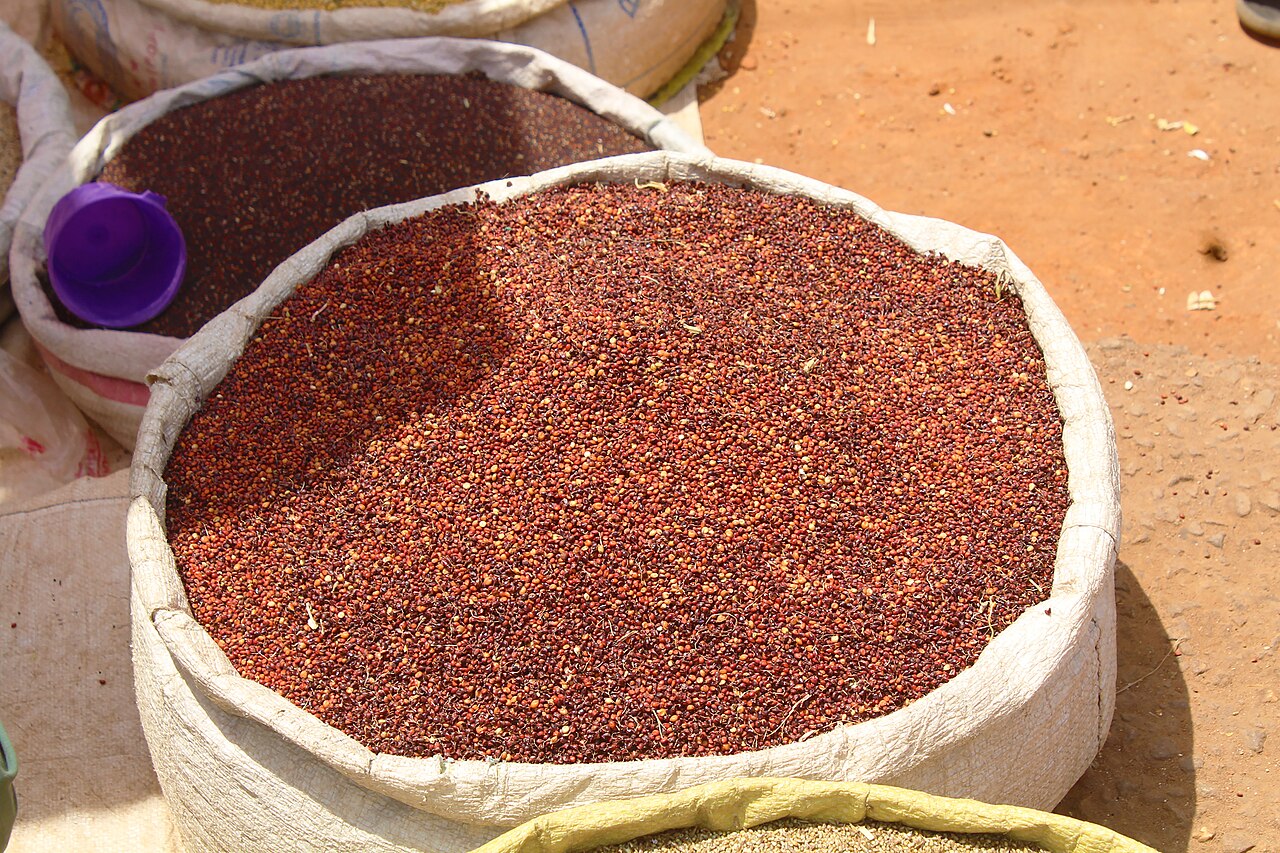
Sorghum grain on sale at a market — staple grains are at the centre of South Sudan's approved 200,000-tonne food stockpile plan. (Photo: Wikimedia Commons — 'Sorghum on sale at the Monday Market in Kakuri, Kaduna, Nigeria.jpg', via Wikimedia Commons (rights-cleared pool))
South Sudan's Council of Ministers, chaired by President Salva Kiir, has approved the purchase and stockpiling of 200,000 metric tonnes of food to address growing food insecurity affecting more than seven million people.
JUBA — South Sudan's Council of Ministers has approved a plan to purchase and stockpile 200,000 metric tonnes of food, in a government response to a hunger crisis that is affecting millions of people across the country.
Sudans Post reported on Friday, 20 November, that the Council of Ministers had approved a plan to establish a 200,000-metric-tonne food stockpile as millions of people face hunger across South Sudan. Eye Radio reported the same decision the same day, saying the Council, chaired by President Salva Kiir, approved the purchase and stockpiling of 200,000 metric tonnes of food to address growing food insecurity affecting over seven million people nationwide.
The scale of the crisis behind the decision is stark. Humanitarian reporting through the year has described a collision of pressures: conflict and displacement, drought-like conditions across much of the country, economic hardship, and continuing arrivals of refugees and returnees from the war in neighbouring Sudan. The United Nations humanitarian update as of 15 November noted that more than 8,000 refugees and returnees from Sudan had driven up needs in the Atam area of Renk County in Upper Nile State, and that drought-like conditions continued to deepen food insecurity and displacement in Greater Kapoeta.
The World Food Programme has warned publicly that South Sudan faces an exceptionally dangerous humanitarian moment, with 7.8 million people struggling to find food each day and 2.2 million children and 1.2 million pregnant and breastfeeding mothers requiring urgent nutrition support, while funding for humanitarian assistance declines. In Malakal, a key logistics hub, WFP food stocks were reported to have fallen from 10,000 metric tonnes a year earlier to less than 300 tonnes, illustrating how thin pre-positioned supplies have become.
A government stockpile of the size approved on Friday would, if procured and distributed as intended, give the authorities a national reserve to draw on when local supplies fail, prices spike or roads become impassable in the rainy season. Stockpiling is a familiar tool in food-security policy: buying and storing staple food in advance can shorten response times when a crisis peaks, compared with arranging emergency purchases and transport after the fact.
The announcement was met online with a mixture of welcome and scepticism. In comments reported on Eye Radio's post, many readers invoked past food-procurement scandals and questioned whether the food would reach vulnerable communities outside the capital, while others argued the money should support local agriculture, and a minority praised the decision as a timely survival measure. Those reactions underline the test that will follow the approval: transparent procurement, secure storage, and fair distribution to the counties where hunger is most severe.
No procurement timetable, sourcing plan or distribution schedule was reported alongside Friday's approval. For the more than seven million people described as food insecure, the value of the decision will be judged not by the size of the figure approved in the cabinet room, but by how quickly food is bought, where it is stored, and whether it reaches the households that need it most in the months ahead.
(Source: Sudans Post) — reported by Juba Global News Network alongside the original publisher.
Source: Juba Global News Network, reporting Sudans Post coverage.