$23 Million Education Cannot Wait Programme to Reach 100,000 South Sudanese Children
Part of a $52 million World Children's Day announcement for three crisis countries, the South Sudan programme will help children displaced by floods and conflict get back to learning — with 59 percent of funding going to local...
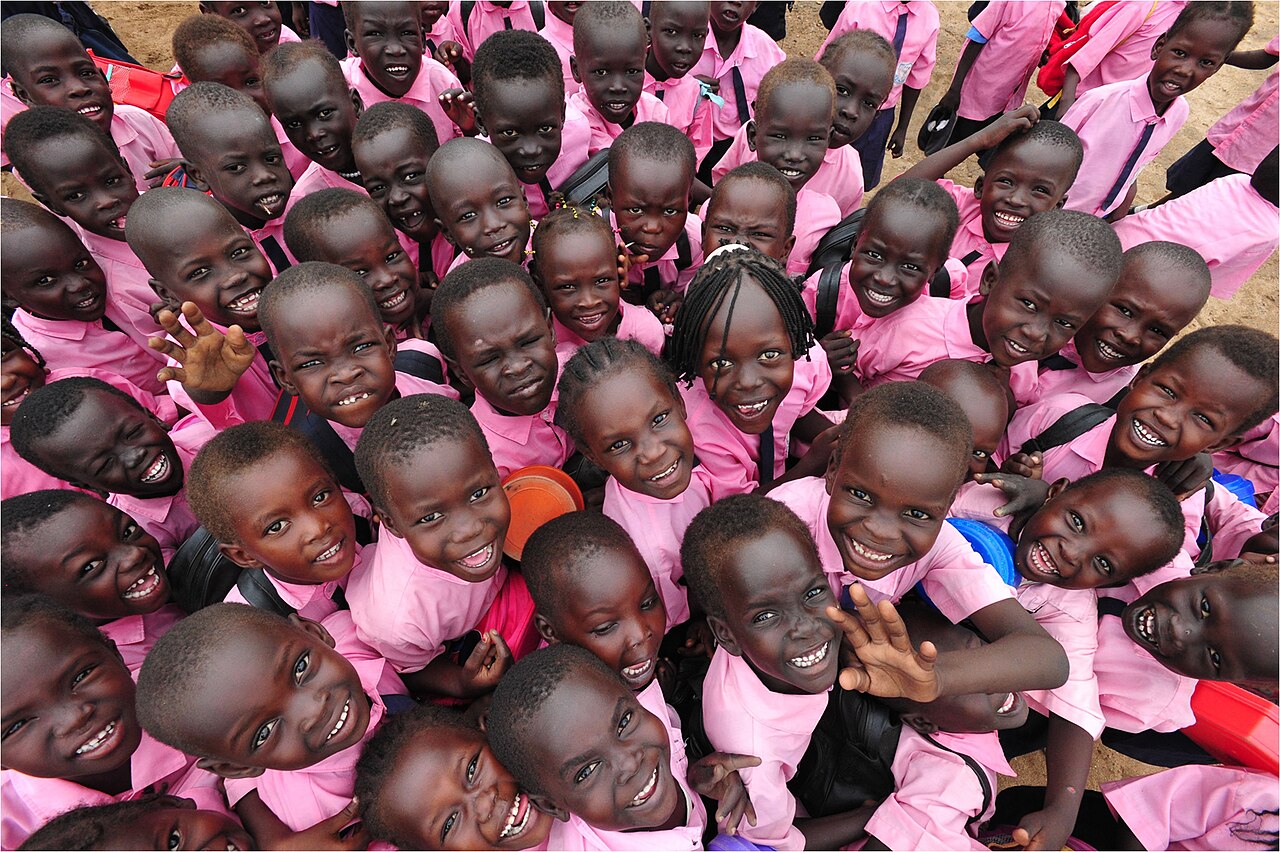
Children learn through a radio-based instruction project in Southern Sudan, in a file photograph illustrating community education programmes. (Photo: Wikimedia Commons — 'USAID-funded Southern Sudan Interactive Radio Instruction project.jpg', Public domain via Wikimedia Commons (rights-cleared pool))
Part of a $52 million World Children's Day announcement for three crisis countries, the South Sudan programme will help children displaced by floods and conflict get back to learning — with 59 percent of funding going to local organisations.
GENEVA — More than 100,000 children in South Sudan will be helped back into learning under a $23 million programme announced by Education Cannot Wait (ECW), the global fund for education in emergencies and protracted crises within the United Nations.
The South Sudan programme forms part of a $52 million commitment announced on 20 November 2026, World Children's Day, covering Lebanon, Myanmar and South Sudan. In total, more than 300,000 children whose lives have been upended by war, floods and displacement across the three countries will get back to learning, catch up on lost lessons and receive psychosocial support. The announcement came as 258 million children worldwide have their education disrupted by crises.
The need in South Sudan is acute. ECW describes the country as the one most at risk of humanitarian crisis in the world, and around 2.8 million of its children are out of school. The $23 million programme will reach more than 100,000 children in some of the hardest-hit areas, where floods, conflict and new arrivals from Sudan keep disrupting learning.
The programme is led by Save the Children International together with the national organisation Universal Network for Knowledge and Empowerment Agency (UNKEA). In a notable feature of the funding design, local organisations will receive 59 percent of the funding — a share ECW presents as putting resources with the organisations that know these communities best. Across the three-country package, about 10 percent of the money is set aside for the next shock, so that programmes can respond when a new emergency hits.
The other two programmes in the announcement underline the breadth of the crises ECW is addressing. In Lebanon, where more than 1.1 million people, including over 390,000 children, have been displaced since the conflict escalated in March 2026, a $13 million programme led by Ana Aqra Association and the International Rescue Committee will help about 59,000 children back into school with catch-up classes, early childhood education, safer classrooms and psychosocial support. In Myanmar, a $16 million programme will reach nearly 150,000 children and adolescents.
For South Sudan, the announcement lands in a school system strained by years of conflict, flooding and displacement, where new arrivals fleeing the war in Sudan continue to add to classroom demand in the north of the country. Catch-up learning and psychosocial support — the core of the ECW model — are aimed at children who have missed months or years of schooling, not only those entering school for the first time.
The commitment is an announcement of funding rather than classrooms already rebuilt; its impact will be measured as the programme is delivered on the ground. But for a country where 2.8 million children are out of school, a $23 million programme reaching six figures of learners — with most of the money flowing to local organisations — is a significant addition to the education response. (Source: Education Cannot Wait)
Source: Juba Global News Network, reporting Education Cannot Wait coverage.