

US Lifts 25% Punitive Tariff on Indian Goods: A Major Step Forward in the US-India Interim Trade Deal
In a significant development for bilateral economic relations, US President Donald Trump signed an executive order on February 6, 2026, lifting an addition
In a significant development for bilateral economic relations, US President Donald Trump signed an executive order on February 6, 2026, lifting an additional 25% punitive tariff imposed on all imports from India. The tariff, originally enacted due to India’s purchases of Russian oil amid the ongoing Ukraine conflict, was removed effective 12:01 a.m. Eastern Time on February 7, 2026. This move marks the first concrete implementation of a broader interim trade framework announced earlier in the week between the United States and India, signaling a thaw in trade tensions that had escalated since mid-2025.
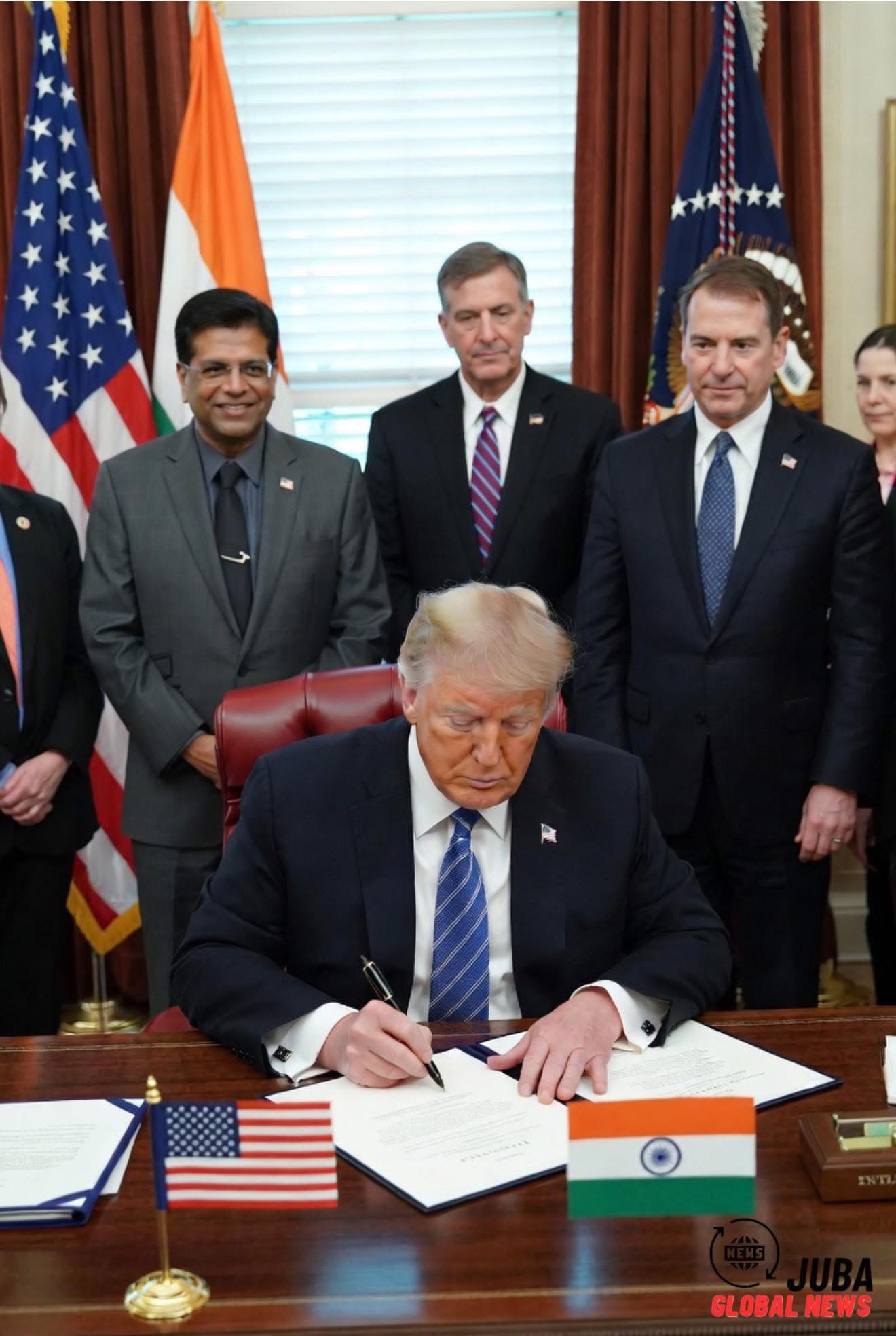
The punitive 25% duty was part of a layered tariff structure that had pushed effective duties on many Indian exports to the US as high as 50%. It was stacked atop a 25% “reciprocal” tariff introduced under Executive Order 14257 in April 2025 to address perceived trade imbalances. Trump’s executive order explicitly cites India’s commitment to “stop directly or indirectly importing Russian Federation oil,” its representation that it will purchase United States energy products, and a recent agreement to expand defense cooperation over the next decade as the basis for the relief.
This tariff rollback is tied to the United States-India Joint Statement released on February 6, 2026, outlining a framework for an Interim Agreement on reciprocal and mutually beneficial trade. The framework reaffirms commitments made during the launch of broader Bilateral Trade Agreement (BTA) negotiations by President Trump and Prime Minister Narendra Modi on February 13, 2025. It aims to deliver immediate market access gains, promote balanced trade, and build more resilient supply chains ahead of a comprehensive pact expected to be finalized in the coming months, potentially by March 2026.
Key provisions of the interim framework include:
- US Tariff Reductions: The US will apply a reciprocal tariff rate of 18% on a wide range of Indian-origin goods, including textiles and apparel, leather and footwear, plastics and rubber products, organic chemicals, home décor, artisanal items, and select machinery. Subject to finalizing the Interim Agreement, additional removals or reductions are anticipated for sectors like generic pharmaceuticals, gems and diamonds, and aircraft parts.
- Indian Market Access for US Products: India has agreed to eliminate or significantly reduce tariffs on all US industrial goods and a broad array of food and agricultural products. This covers items such as dried distillers’ grains (DDGs), red sorghum for animal feed, tree nuts (e.g., almonds, walnuts, pistachios), fresh and processed fruits, soybean oil, wine and spirits, and other agricultural commodities.
- Energy and Strategic Shifts: A core element is India’s pivot away from Russian oil imports toward US energy products, aligning with Washington’s efforts to reduce global reliance on Russian energy revenues. The deal also includes commitments to deepen defense and technological cooperation.
Indian Commerce and Industry Minister Piyush Goyal emphasized that the agreement is “fair, equitable, and balanced,” protecting sensitive domestic sectors like agriculture and dairy while opening opportunities for Indian exporters, farmers, and MSMEs. He highlighted zero-duty access for certain Indian agro and silk products in the US market and assured that no items harmful to Indian farmers were included. Goyal noted that the deal unlocks massive export potential for textiles, pharmaceuticals, gems, and machinery without compromising national interests.
Analysts view this as a strategic win for both sides. For the US, it advances “America First” goals by pressuring allies and partners to decouple from Russian energy, boosts American agricultural and energy exports, and strengthens supply chain ties with a key Indo-Pacific partner amid competition with China. For India, the tariff relief provides immediate breathing room for exporters facing higher costs, enhances competitiveness in the world’s largest consumer market, and supports initiatives like “Make in India” by attracting more US investment and technology transfer.
The executive order includes monitoring provisions, authorizing the US Commerce Department to continuously assess compliance with the Russian oil commitment. Any resumption of such imports could trigger reimposition of penalties, underscoring the conditional nature of the relief.
This breakthrough comes after nearly a year of negotiations and trade frictions, including reciprocal tariff hikes in 2025. It resets strained ties, with Trump describing it as a “historic milestone” in US-India partnership. Industry leaders in both countries have welcomed the move, noting potential for increased bilateral trade volumes—potentially reaching ambitious targets through expanded market access.
As implementation begins on February 7, 2026, with duty refunds possible for recently entered goods, attention now turns to finalizing the Interim Agreement and advancing toward a full BTA. In an era of global economic uncertainty, this deal exemplifies how targeted diplomacy can yield mutual gains, fostering deeper strategic and economic alignment between the world’s largest democracies.
