UN Report Reveals Over 1,000 Killed in RSF Assault on Zamzam Displacement Camp in Darfur
On December 18, 2025 , the United Nations Human Rights Office (OHCHR) released a damning report detailing one of the most horrific episodes in Sudan’s ongo
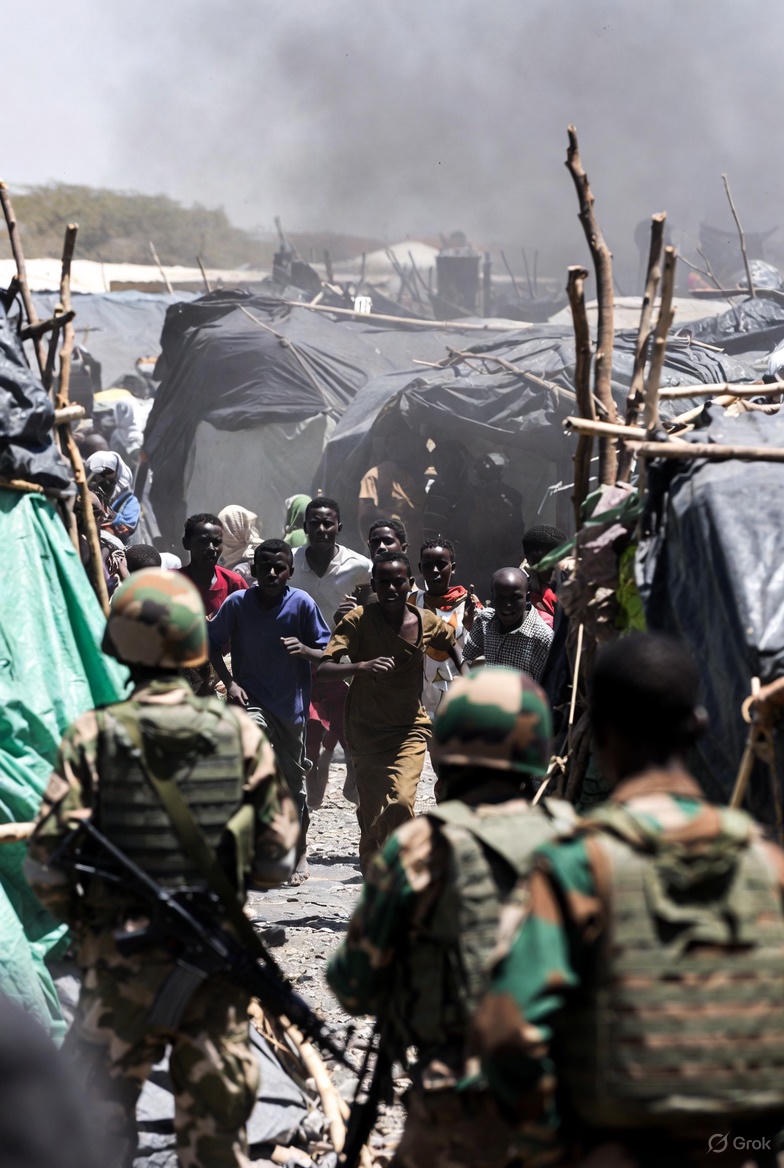
On December 18, 2025, the United Nations Human Rights Office (OHCHR) released a damning report detailing one of the most horrific episodes in Sudan’s ongoing civil war: the killing of more than 1,000 civilians during a three-day offensive by the Rapid Support Forces (RSF) on the Zamzam displacement camp in North Darfur from April 11–13, 2025. The findings, based on interviews with 155 survivors and witnesses who fled to eastern Chad, paint a picture of systematic atrocities, including summary executions, torture, rape, and deliberate attacks on civilians in a camp already ravaged by famine and blockade.
UN High Commissioner for Human Rights Volker Türk described the killings as potentially constituting the war crime of murder, urging immediate investigations and renewed calls for halting arms transfers fueling the conflict. The report’s release underscores the escalating ethnic violence in Darfur, where the RSF—rooted in the Janjaweed militias infamous for the 2003–2005 genocide—has been accused of targeting non-Arab communities amid a broader power struggle with the Sudanese Armed Forces (SAF).
The Assault on Zamzam: A Deliberate Campaign of Terror
Zamzam, one of the world’s largest camps for internally displaced persons (IDPs), housed nearly 500,000 people, many fleeing earlier waves of violence since the civil war erupted in April 2023. For months prior to the attack, RSF forces had imposed a suffocating blockade, preventing food, water, fuel, and medical supplies from entering. Civilians were reduced to surviving on peanut shells and animal feed, with famine conditions officially declared in parts of North Darfur.
The offensive began on April 11 with heavy artillery shelling and ground incursions. RSF fighters conducted house-to-house searches, killing residents in their homes, markets, schools, health facilities, and mosques. The UN report documents at least 319 summary executions: victims shot while hiding or attempting to flee. One survivor recounted RSF fighters inserting rifles through window holes in a room sheltering 11 men, indiscriminately killing eight. Another described returning to the camp to find it eerily empty, littered with bodies.
Sexual violence was widespread, with reports of rape, torture, and abductions. Hundreds were detained, and looting was rampant. The assault displaced over 400,000 people anew, many fleeing on foot to nearby areas like Tawila or across the border to Chad. Satellite imagery and witness accounts confirmed the destruction of critical infrastructure, exacerbating an already dire humanitarian crisis.
This was not an isolated incident but part of the RSF’s broader campaign to seize El Fasher, the North Darfur capital and the SAF’s last stronghold in the region, which fell in late October 2025 amid similar accusations of mass killings and cover-ups.
Historical Echoes: Darfur’s Cycle of Violence
The Zamzam massacre evokes painful memories of the 2003–2005 Darfur conflict, where Janjaweed militias—precursors to the RSF—were accused of genocide against non-Arab groups like the Fur, Masalit, and Zaghawa. That crisis killed hundreds of thousands and displaced millions, leading to International Criminal Court indictments, including against former President Omar al-Bashir.
The current war, pitting the RSF (led by Mohamed Hamdan “Hemedti” Dagalo) against the SAF (under General Abdel Fattah al-Burhan), stems from a fractured power-sharing arrangement after the 2021 coup. Ethnic dimensions persist, with the predominantly Arab RSF accused of targeting non-Arab civilians in Darfur. The UN has warned of potential genocide risks, and in January 2025, the US formally accused the RSF of genocidal acts.
Both sides have committed atrocities: the SAF and allies face allegations of reprisal killings in recaptured areas like Gezira state. However, the RSF’s actions in Darfur have drawn particular scrutiny, including reports of body disposal to conceal evidence in El Fasher.
Humanitarian Catastrophe and International Response
Sudan’s war has created the world’s largest displacement crisis, with over 12 million uprooted and 30 million in need of aid. Famine stalks multiple regions, and access restrictions hinder relief efforts.
The Zamzam report has prompted outrage. Türk called for states to halt arms supplies—implicating suppliers like the UAE (accused of backing the RSF) and others—and intensify diplomatic pressure for a ceasefire. Parallel efforts, including US-mediated talks, have yielded little progress.
Human rights groups like Amnesty International, which documented similar violations in Zamzam earlier, demand war crimes investigations. The Independent International Fact-Finding Mission for Sudan continues probing abuses, with potential referrals to the ICC.
Path Forward: Justice and Peace Amid Despair
As of December 19, 2025, fighting rages on, with RSF advances in Kordofan raising fears of further massacres. The Zamzam report serves as a stark reminder of the human cost: thousands dead, families shattered, and a generation scarred.
Survivors’ testimonies highlight resilience amid horror—one woman searching for her missing son amid the ruins—but also the urgency for accountability. Without enforced ceasefires, arms embargoes, and unimpeded aid, Darfur risks descending into even darker chapters. The international community, long criticized for inaction in Sudan, faces a moral imperative to act decisively to prevent history from repeating its bloodiest lessons.