M23 Rebels Initiate Withdrawal from Uvira: A Fragile Step Toward Peace in Eastern DRC
On December 17, 2025, fighters from the March 23 Movement (M23), part of the broader Alliance Fleuve Congo (AFC) coalition, began pulling out of the strate
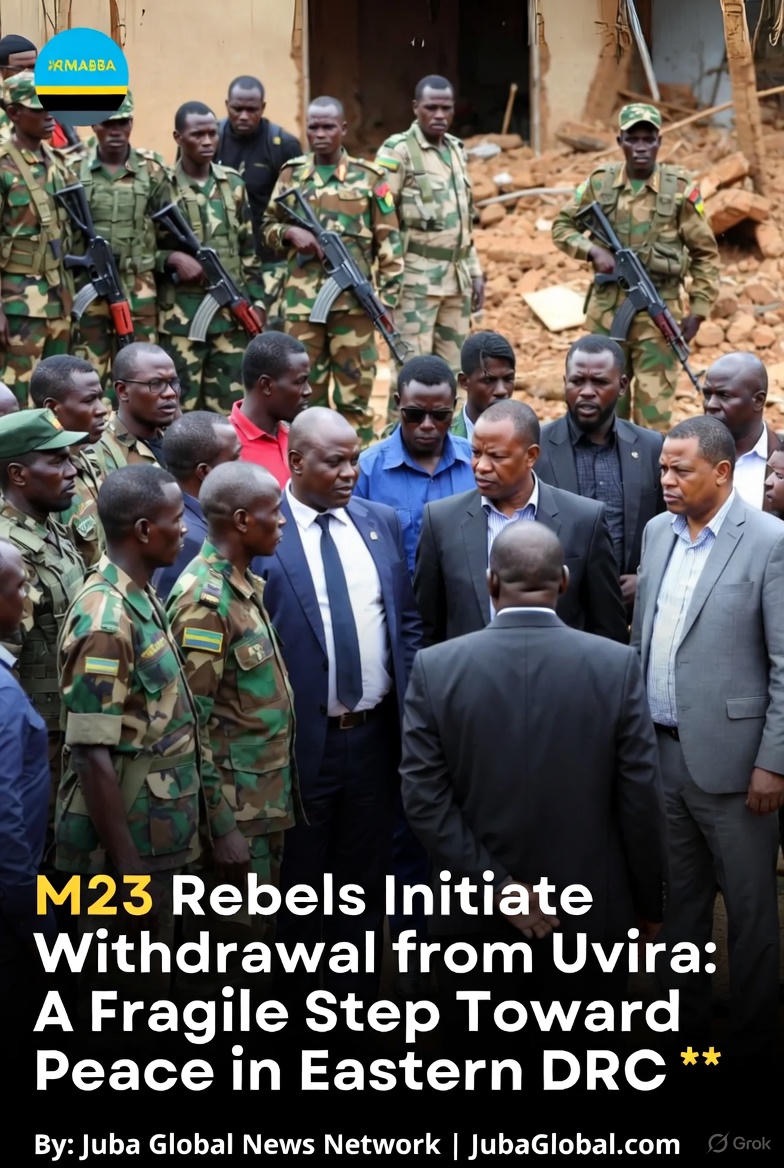
On December 17, 2025, fighters from the March 23 Movement (M23), part of the broader Alliance Fleuve Congo (AFC) coalition, began pulling out of the strategic town of Uvira in South Kivu province, eastern Democratic Republic of the Congo (DRC). Eyewitness reports and statements from rebel leaders confirmed military vehicles and troops departing key positions, with the process expected to conclude by December 18. This development follows intense diplomatic pressure from the United States, which had condemned the rebels’ seizure of the city just days earlier as a violation of recent peace accords.
The withdrawal marks a potential turning point in one of Africa’s most protracted conflicts, but skepticism abounds. DRC government officials have dismissed the move as a “diversion” tactic, while residents in Uvira remain cautious, questioning whether the pullout is genuine or temporary. As fighting continues elsewhere in the volatile east, the episode underscores the challenges in salvaging fragile peace efforts amid accusations of Rwandan involvement.
The Seizure of Uvira and Its Strategic Importance
Uvira, a lakeside city of several hundred thousand people on the northern shores of Lake Tanganyika, fell to M23 forces around December 10, 2025, after a rapid offensive that overwhelmed DRC army positions, allied militias, and Burundian troops. The capture was swift and decisive, consolidating M23 control over much of South Kivu following earlier seizures of provincial capitals Goma (January 2025) and Bukavu (February 2025).
Strategically located near the borders with Burundi and Rwanda, Uvira serves as a vital trade hub and controls key land routes. Its fall cut off DRC government access to potential military reinforcements from Burundi and brought the conflict perilously close to Bujumbura, Burundi’s economic capital, just 27 kilometers across the lake. The offensive displaced over 200,000 people within South Kivu, with tens of thousands fleeing into Burundi, exacerbating a humanitarian crisis marked by dozens killed and hundreds wounded.
The timing was particularly provocative: Uvira was seized less than a week after DRC President Félix Tshisekedi and Rwandan President Paul Kagame signed a US-brokered peace deal in Washington on December 4, 2025, hosted by President Donald Trump. Hailed as a “historic” accord aimed at ending decades of instability in the mineral-rich east, the agreement committed both nations to cease hostilities and address root causes, including the disarmament of armed groups.
US Pressure and the Decision to Withdraw
The US response was swift and stern. Secretary of State Marco Rubio labeled the Uvira offensive a “clear violation” of the Washington Accords, warning that the administration would “take action to ensure promises made to the President are kept.” US Ambassador to the UN Mike Waltz accused Rwanda of deploying thousands of troops and sophisticated weaponry in support of M23, estimating 5,000–7,000 Rwandan forces in the DRC and decrying actions “leading the region toward greater instability and war.”
Facing threats of sanctions and isolation, M23 announced on December 15–16 that it would “unilaterally withdraw” from Uvira at the explicit request of US mediators. Corneille Nangaa, coordinator of the AFC/M23 coalition, described it as a “trust-building measure” to bolster parallel Qatar-mediated talks in Doha, which include a November framework agreement for ceasefire monitoring and humanitarian improvements.
By December 17, spokespeople like Willy Ngoma and political leader Bertrand Bisimwa confirmed the pullout was underway, urging calm among civilians and calling for demilitarization of the city, protection of infrastructure, and deployment of a neutral monitoring force. Some reports suggested a proposed buffer zone, with both M23 and Congolese forces retreating several kilometers.
Skepticism and On-the-Ground Realities
Despite the announcements, verification remains elusive. DRC government spokesman Patrick Muyaya called the withdrawal a “diversion” intended to deflect US pressure on Rwanda, questioning who would confirm the rebels’ departure and what might be left behind—such as mass graves or disguised fighters. Residents in Uvira reported mixed signals: while some observed vehicles leaving, others noted rebel presence persisting into December 18.
Humanitarian agencies, including the UN’s OCHA, highlighted the dire situation, with displaced populations in desperate need and fears of reprisals if government forces return. Burundi’s foreign minister dismissed early claims as attempts to “ease international pressure” on Rwanda.
Analysts view the move as tactical. Past M23 withdrawals have been followed by reoccupations, and the group’s rapid gains in 2025—fueled by alleged Rwandan support—have shifted the balance of power. Rwanda continues to deny backing M23, blaming DRC-allied groups for insecurity, but UN experts and Western governments maintain evidence of Kigali’s command and control.
Broader Context: A Cycle of Conflict
The M23 rebellion, named after a failed March 23, 2009, peace accord, resurfaced dramatically in late 2021, claiming to defend Tutsi interests against Hutu militias and government neglect. Predominantly Tutsi-led, the group has been accused of atrocities but frames itself as a protector of marginalized communities.
The eastern DRC has endured over three decades of violence involving dozens of armed groups, fueled by ethnic tensions, resource exploitation (including coltan, gold, and cobalt), and regional rivalries. Rwanda’s involvement stems from historical fears of genocide perpetrators operating from Congolese soil, though critics argue Kigali uses this as pretext for influence over mineral wealth.
Parallel peace tracks—US-mediated between states and Qatar-hosted with rebels—aim to disentangle these threads, but violations like Uvira undermine trust. The Washington deal focused on state commitments, while Doha addresses rebel integration and disarmament.
Implications and the Path Ahead
As of December 19, 2025, the full withdrawal from Uvira appears in progress, potentially averting immediate sanctions on Rwanda and breathing life into stalled talks. If verified, it could facilitate humanitarian access and civilian returns, easing pressure on Burundi and allowing displaced families to rebuild.
Yet, fighting persists in other areas, and deeper issues—land disputes, resource governance, and regional mistrust—remain unresolved. The US, leveraging its influence under the Trump administration, has positioned itself as a key broker, prioritizing stability for economic interests like critical minerals.