

UN Envoy: Over 17,000 Injured in Iran from Ongoing Conflict
By Juba Global News Network | JubaGlobal.com March 12, 2026 NEW YORK / TEHRAN — Iran’s Permanent Representative to the United Nations, Ambassador Amir Saei
By Juba Global News Network | JubaGlobal.com
March 12, 2026
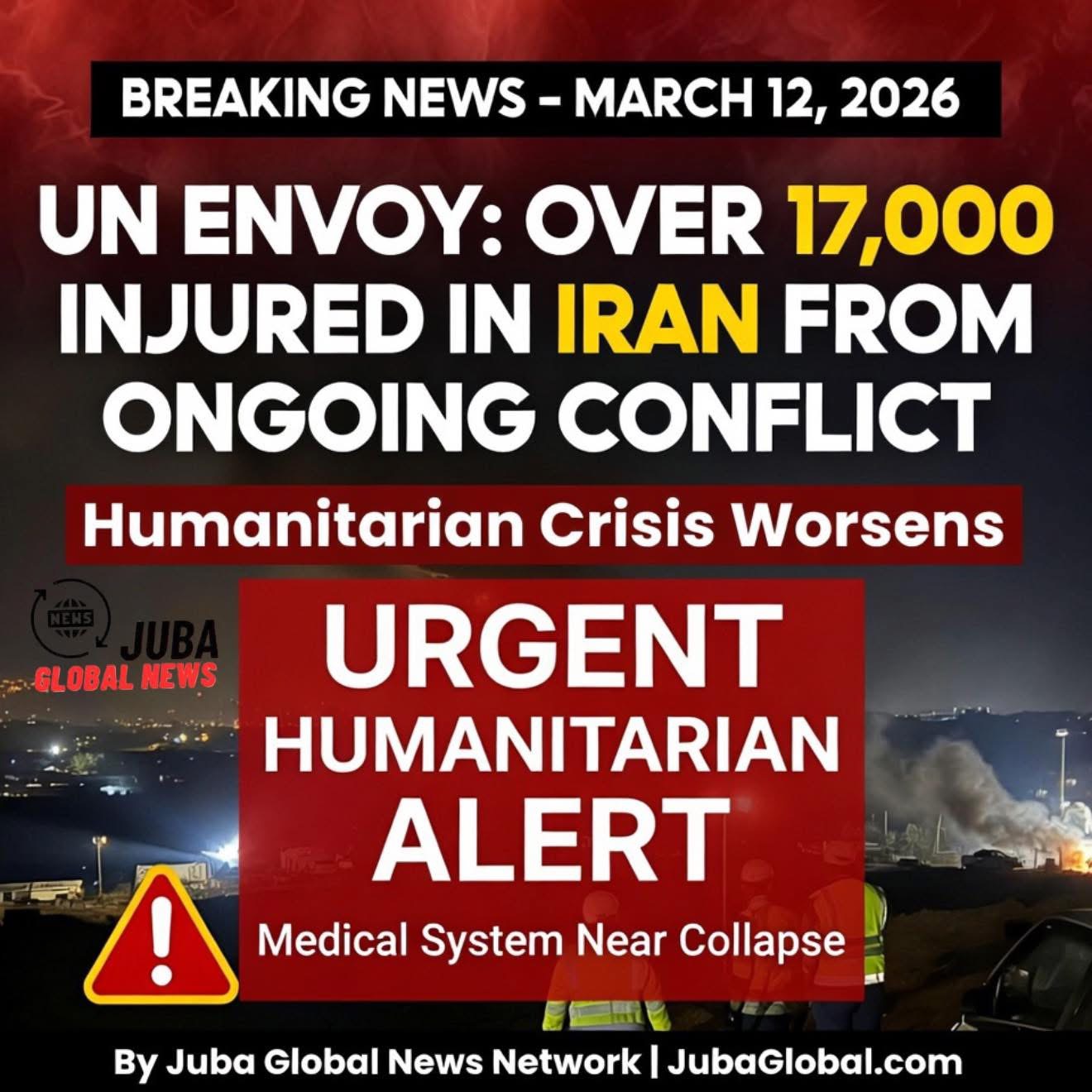
NEW YORK / TEHRAN — Iran’s Permanent Representative to the United Nations, Ambassador Amir Saeid Iravani, addressed an emergency session of the UN Security Council late Wednesday, presenting updated figures that the Islamic Republic has suffered more than 17,426 injuries — in addition to the previously reported 1,348 civilian deaths — as a direct result of U.S. and Israeli airstrikes since the conflict escalated at the end of February.
The stark numbers, delivered with visible emotion during the open briefing, mark the most comprehensive public accounting of the humanitarian toll released by Tehran since the campaign began. Ambassador Iravani described the injuries as ranging from severe shrapnel wounds and burns to crush injuries from collapsed buildings, traumatic amputations, and respiratory conditions caused by exposure to smoke and chemical by-products from strikes on energy and industrial facilities.
“These are not abstract statistics,” Iravani told the 15-member Council. “These are mothers blinded by flying glass, children with limbs torn off, elderly patients pulled from rubble only to die hours later from internal bleeding because hospitals have no electricity or medicine. This is what ‘precision strikes’ look like on the ground.”
Breakdown of the Figures
According to the data presented by the Iranian delegation and corroborated in part by the Iranian Red Crescent Society and Health Ministry:
- 17,426 total reported injuries (as of March 11 midnight Tehran time)
- Of these, approximately 4,800 are classified as “severe” or “critical” and remain hospitalized.
- 2,150 injuries involve children under 18.
- 3,720 injuries involve women.
- Over 1,200 cases of severe burns, many requiring specialized care that is now in critically short supply.
- Approximately 900 amputations (upper and lower limbs combined) already performed or pending due to crush injuries and infections.
The ambassador displayed photographs (heavily pixelated to protect identities) of overcrowded hospital wards, children on ventilators, and burn victims wrapped in gauze, as well as charts showing the geographic distribution of casualties: highest concentrations in Tehran, Isfahan, Tabriz, Shiraz, and Bandar Abbas — cities repeatedly targeted for their proximity to military, nuclear-related, or energy infrastructure.
Humanitarian Crisis Deepens
Beyond the raw injury count, the UN envoy painted a picture of cascading secondary effects:
- Power outages lasting 12–18 hours per day in major cities after strikes on substations and gas-fired power plants have crippled dialysis machines, incubators for premature infants, and refrigerated storage for insulin and vaccines.
- Shortages of antibiotics, painkillers, blood products, and surgical supplies have forced triage decisions in several hospitals.
- Mass displacement — estimated at 2.5–3 million internally displaced persons — has overwhelmed shelters, leading to outbreaks of respiratory infections and skin diseases in crowded conditions.
- Food insecurity is rising rapidly as transport costs soar and markets in affected provinces report 50–80% price increases for staples.
The International Committee of the Red Cross (ICRC) representative, who was granted limited access to several Iranian provinces last week, told the Council that “the public health system is under extreme strain and approaching a breaking point if hostilities do not pause soon.”
International Response and Calls for Action
The presentation triggered a range of reactions around the horseshoe table:
- China and Russia co-sponsored a draft resolution calling for an immediate 72-hour humanitarian pause, safe passage for medical supplies, and deployment of a UN fact-finding mission to verify casualty figures and assess damage to civilian infrastructure.
- France, United Kingdom, and several non-permanent members expressed “deep concern” over the reported scale of civilian harm and urged all parties to exercise “maximum restraint.”
- United States Ambassador Thomas-Greenfield rejected the casualty figures as “unverified and inflated by the Iranian regime” and reiterated that “every U.S. and partner strike is carefully planned to minimize civilian risk.” She accused Iran of deliberately siting military assets in populated areas and called on Tehran to cease attacks on international shipping and energy facilities.
- Israel — not a Council member but invited to speak — dismissed the briefing as “propaganda” and maintained that “Iran bears sole responsibility for any civilian suffering because it embeds its nuclear and missile programs inside civilian zones.”
UN Secretary-General António Guterres, in a separate statement released after the session, called the reported injury toll “alarming and unacceptable” and renewed his appeal for an immediate cessation of hostilities to allow humanitarian access.
On-the-Ground Realities
Independent reporting remains extremely difficult due to restricted media access inside Iran, widespread internet disruptions, and active combat zones. However, limited footage and testimony obtained by human-rights organizations and foreign correspondents based in neighboring countries corroborate significant civilian impact:
- In Isfahan, doctors described performing amputations by flashlight during blackouts.
- In Tehran’s southern suburbs, families reported waiting days for rescue teams to reach people trapped under collapsed apartment blocks.
- Pharmacists in Tabriz said they were rationing pain medication to one dose per patient per day.
The Iranian Red Crescent has appealed for international donations of trauma kits, burn dressings, antibiotics, and portable generators — items now classified as “dual-use” by some Western sanctions regimes, complicating rapid delivery.
What Comes Next?
Ambassador Iravani concluded his remarks by announcing that Iran would formally request the UN Human Rights Council to establish an independent commission of inquiry into alleged violations of international humanitarian law by all parties. He also reiterated President Pezeshkian’s three conditions for peace, framing the casualty figures as proof that “the aggressors must pay a price for what they have done.”
Whether the dramatic injury numbers — and the graphic presentation — will shift the diplomatic calculus remains uncertain. With oil markets already in turmoil, shipping insurers refusing Gulf voyages, and civilians on all sides bearing the cost, the UN briefing served as a stark reminder: behind every price spike and every military communiqué are thousands of broken bodies and shattered lives.
Juba Global News Network will continue to monitor the humanitarian situation in Iran, the Security Council’s response, and any developments on proposed pauses or inquiries. Full transcript of Ambassador Iravani’s remarks, updated casualty tracking (where independently verifiable), and live UN coverage are available now at JubaGlobal.com.
This is a rapidly evolving story. Check back for reactions from capitals, humanitarian-aid updates, and any breakthroughs on de-escalation efforts.
