

UK Condemns 10-Year Sentence Handed to British Couple in Iran: Diplomatic Row Deepens Amid Nuclear Talks Standoff
London, February 22, 2026 – The British government has issued its strongest condemnation yet after an Iranian court sentenced a British-Iranian couple to a
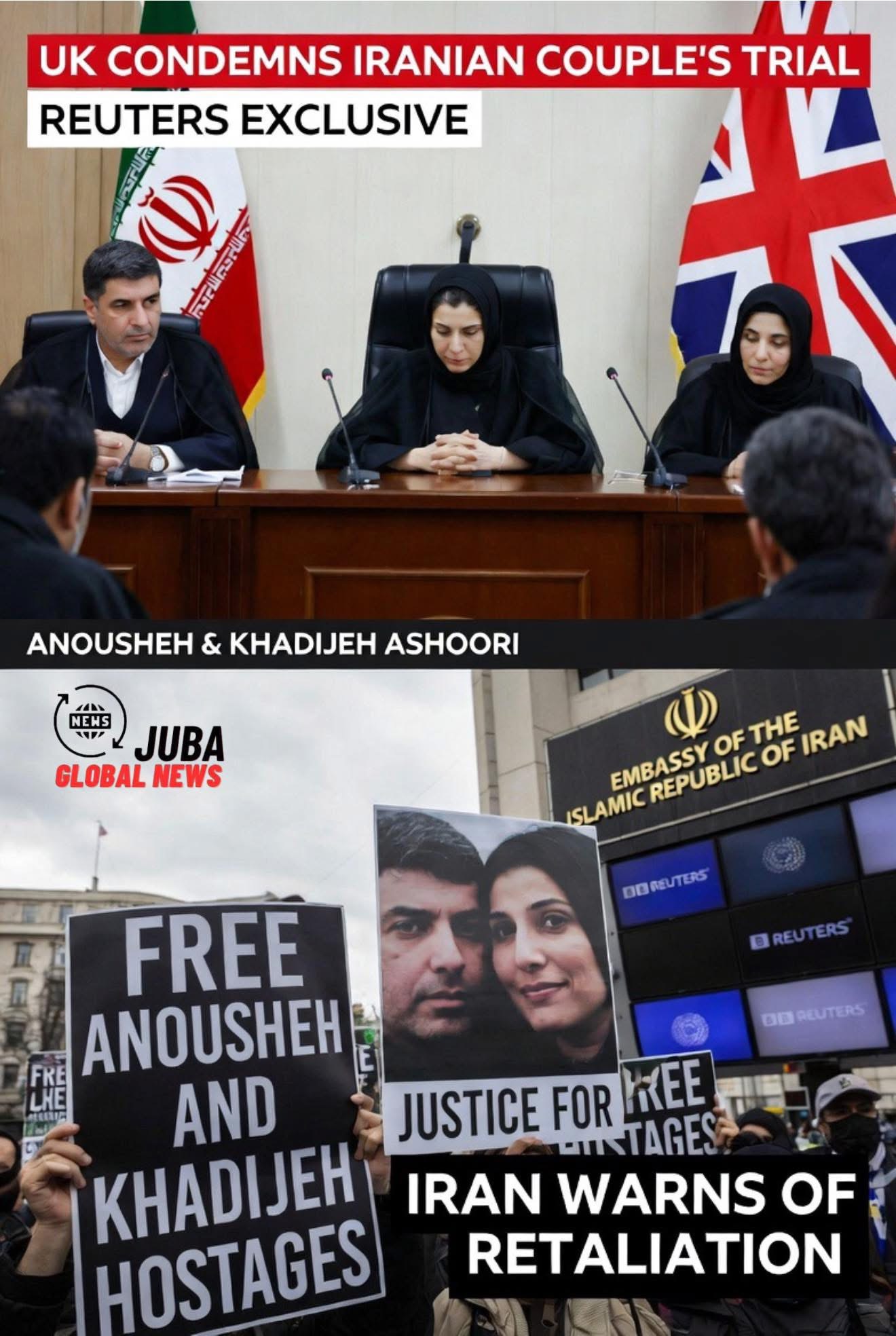
London, February 22, 2026 – The British government has issued its strongest condemnation yet after an Iranian court sentenced a British-Iranian couple to a combined 10 years in prison on charges widely viewed as politically motivated. Foreign Secretary David Lammy described the ruling as “utterly unjust” and “a clear act of hostage diplomacy,” vowing to use “every diplomatic lever” to secure their immediate release. The case has reignited tensions between London and Tehran at a time when fragile indirect nuclear negotiations remain stalled and U.S.-Iran relations are deteriorating under the second Trump administration.
The Case: Who Are the Couple?
The defendants—identified in British media as Anousheh Ashoori (67) and his wife Khadijeh (Ziba) Ashoori (63)—are dual British-Iranian nationals who had lived in the UK for decades. Anousheh, a retired engineer, was first arrested in August 2017 during a family visit to Iran on charges of “espionage for Israel” and “gathering classified information against national security.” After more than three years in solitary confinement and what his family described as severe psychological pressure, he was sentenced to 10 years in prison in 2019.
His wife Khadijeh was arrested in March 2022 while attempting to visit him in Evin Prison. Iranian authorities later charged her with “collaboration with a hostile government” and “propaganda against the state.” Both convictions relied heavily on forced confessions obtained under duress, according to human rights groups and the couple’s legal team.
On Thursday, February 20, 2026, Branch 26 of Tehran’s Revolutionary Court upheld Anousheh’s 10-year sentence and imposed an additional 10-year sentence on Khadijeh (to run concurrently with any future charges). The couple’s lawyers were not permitted to attend key hearings, and appeals have been repeatedly delayed or rejected without transparent reasoning.
UK Government Response: “State-Sponsored Hostage-Taking”
Speaking outside Downing Street on Friday, Foreign Secretary Lammy stated:
“The sentencing of Anousheh and Khadijeh Ashoori is an outrageous miscarriage of justice and another blatant example of Iran’s state-sponsored hostage-taking. These are innocent people caught in a cruel political game. The UK will not rest until they are safely back home.”
Prime Minister Keir Starmer called the verdicts “unacceptable” and instructed the Foreign, Commonwealth & Development Office (FCDO) to:
- Summon the Iranian chargé d’affaires in London for the third time in 18 months
- Impose new targeted sanctions on Iranian judges and prosecutors linked to the case
- Accelerate efforts to coordinate with allies (U.S., France, Germany, Canada) on a joint diplomatic push
- Explore further designations under the UK’s Iran Human Rights sanctions regime
The opposition Conservative Party accused the Labour government of being “too soft” on Tehran, while Liberal Democrats and some Labour backbenchers urged an immediate downgrade of diplomatic relations and the expulsion of Iranian diplomats.
Iran’s Position: “Judicial Independence” and Retaliation Warnings
Iran’s judiciary spokesman Gholam-Hossein Mohseni-Eje’i defended the sentences, insisting the cases were handled “in full accordance with the law” and unrelated to politics. Iranian state media portrayed the couple as part of a “British espionage network” targeting the Islamic Republic’s nuclear and military programs.
Tehran’s Foreign Ministry warned that any escalation—particularly new sanctions or expulsions—would be met with “reciprocal measures,” hinting at possible further arrests of dual nationals or restrictions on remaining British diplomatic staff in Tehran.
Broader Context: Hostage Diplomacy and Nuclear Impasse
The Ashoori case is the latest in a long pattern of dual-national detentions that human rights organizations have labeled systematic hostage-taking to extract concessions. Other high-profile cases include:
- Nazanin Zaghari-Ratcliffe (released 2022 after years of pressure)
- Morad Tahbaz (Anglo-American-Iranian environmentalist, released 2023)
- Alireza Akbari (executed 2023 despite UK pleas)
- Multiple other British-Iranian citizens still held or recently released
Analysts note that such detentions often intensify when nuclear talks falter or when Western governments increase pressure over Iran’s uranium enrichment, ballistic-missile program, or support for regional proxies. With U.S.-Iran indirect talks frozen since late 2025 and President Trump threatening military options if Tehran does not accept a new nuclear deal, the environment for hostage releases has grown even more hostile.
Family, Campaigners, and Next Steps
Anousheh and Khadijeh’s daughter, Nazanin Ashoori, who has led a high-profile campaign in London, told BBC News:
“My parents are being used as bargaining chips. Ten years for my father, now ten for my mother—this is cruelty, not justice. Every day they spend in Evin is a day stolen from our family.”
The Free Nazanin and other campaigns are planning intensified protests outside the Iranian embassy in London and are calling for a full economic boycott of Iranian goods until all dual nationals are released.
For now, the Ashoori case stands as one of the clearest symbols of the toxic entanglement between Iran’s domestic repression, its nuclear ambitions, and the West’s failed attempts to secure a new diplomatic breakthrough.
By: Juba Global News Network | JubaGlobal.com
Compiled from statements by the UK FCDO, BBC, Reuters, The Guardian, Iran International, and human rights reports as of February 22, 2026.
