

North Korea’s Kim Jong Un Outlines Sweeping Five-Year Plan at Historic Party Congress: From Economic Revival to “Irreversible” National Power
Pyongyang, February 22, 2026 – In a marathon multi-day address that dominated state media coverage, Supreme Leader Kim Jong Un presented the Workers’ Party
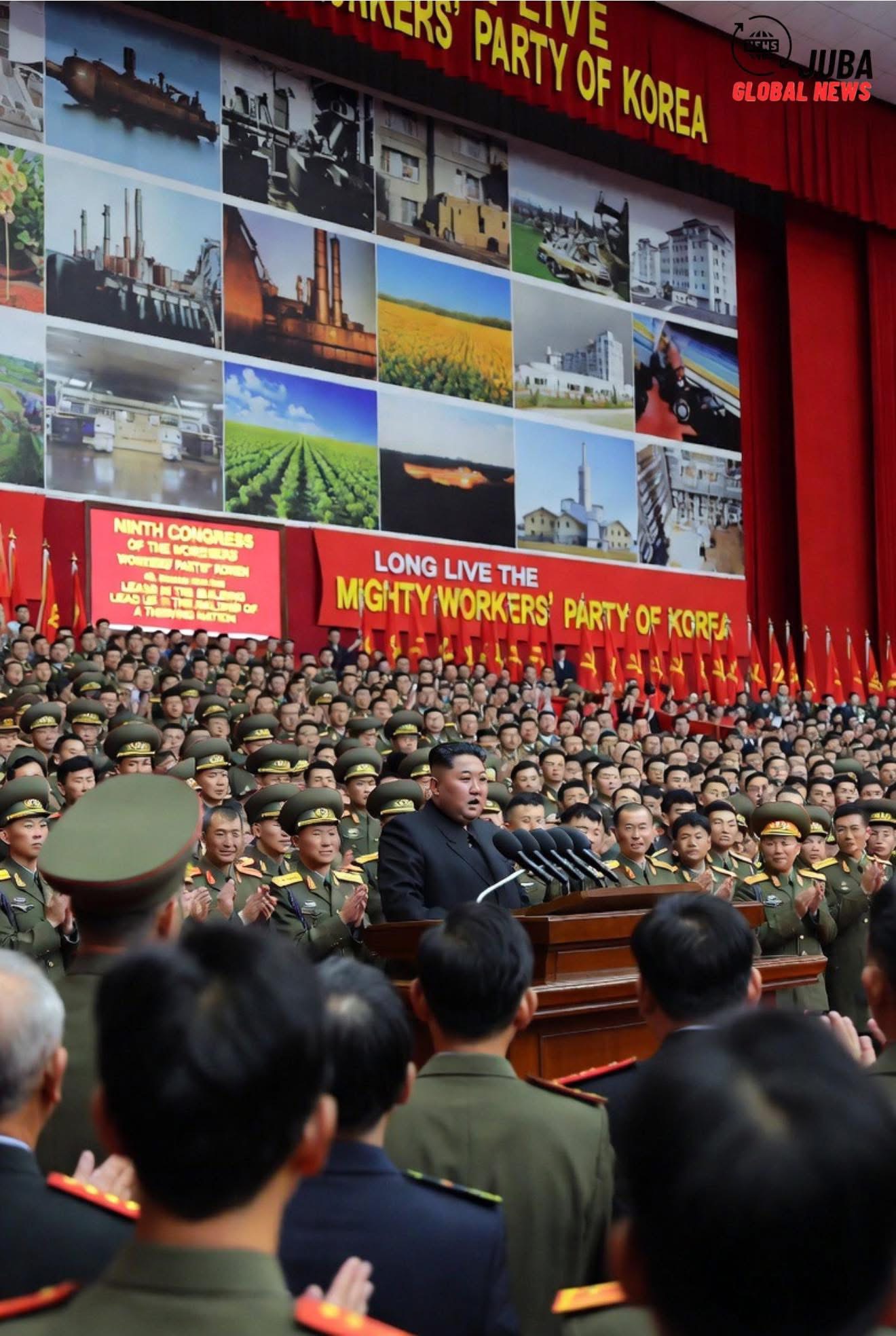
Pyongyang, February 22, 2026 – In a marathon multi-day address that dominated state media coverage, Supreme Leader Kim Jong Un presented the Workers’ Party of Korea’s (WPK) most comprehensive policy blueprint in years during the Ninth Congress of the party. The congress, which began on February 19 and continued through at least February 21, saw Kim deliver what Korean Central News Agency (KCNA) described as a “historic report” reviewing the achievements of the past five years while unveiling detailed, sector-by-sector goals for the 2026–2031 period.
The speech, delivered from the central podium of the April 25 House of Culture before thousands of clapping delegates, military brass, scientists, farmers, and factory workers, framed North Korea as having entered “a new stage of national development” characterized by “great upsurge” and “confidence in victory.”
Review of the Eighth Central Committee Term (2021–2026): “Overcoming the Worst Difficulties”
Kim began by assessing the performance of the party since the Eighth Congress in January 2021. He described the intervening years as a period of “severe trials” during which the country faced:
- Prolonged border closures due to the global health crisis
- Repeated natural disasters (floods, typhoons, droughts)
- Tightened international sanctions
- Hostile external pressure and military threats
Despite these challenges, Kim claimed the DPRK achieved “remarkable successes and great transformations” across every field. Highlights included:
- Strengthening of the “self-reliant” national economy
- “Leap-forward” development in national defence capabilities (widely understood to include continued nuclear and missile advancements)
- Visible improvement in people’s material and cultural life in certain regions
- Elevation of the country’s international status and strategic position
State media emphasized that these gains were made possible by the “unbreakable unity” between the party, the army, and the people under Kim’s leadership.
The New Five-Year Goals (2026–2031): “All-Out Advance” in Socialist Construction
The bulk of Kim’s report focused on the future. He presented what KCNA called “strategic and tactical tasks” and “specific goals” for the next five years, organized under the overarching slogan of “Let us bring about a fresh turn in socialist construction by dint of the spirit of leap forward, spirit of struggle and spirit of creation!”
Key pillars of the plan include:
- Economic Construction as the Main Thrust
- “Massive” investment in heavy industry, machine-building, metal, chemical, and electric-power sectors
- Modernization and capacity expansion of major factories and enterprises
- “Decisive” improvement in agriculture through mechanization, irrigation, and introduction of advanced farming methods
- Rapid development of light industry and local industry to raise people’s living standards
- Completion of major housing projects in Pyongyang and provincial capitals
- Nationwide energy revolution (more hydropower, solar, wind, and coal efficiency)
- People’s Livelihood as Top Priority
- “Visible and tangible” enhancement of diet, clothing, housing, and cultural life
- Nationwide push to eliminate “food shortages” and “supply instability”
- Expansion of medical services, education quality, and sports/cultural facilities
- Science, Technology, and Education
- “World-class” breakthroughs in core technologies (IT, biotechnology, materials science, space, nuclear energy for peaceful use)
- Building of talent reserves through strengthened university and vocational education
- National Defence
- Continued “qualitative and quantitative” strengthening of the armed forces
- Development of “overwhelming military power” capable of “pre-emptively and completely” neutralizing any threat
- Modernization of all services, with emphasis on nuclear deterrence and missile forces
- Party Building and Ideological Work
- Intensified anti-corruption, anti-bureaucracy, and anti-formalism campaigns
- Strengthening of party cells at every level
- Renewed emphasis on Juche ideology and anti-imperialist education
Kim repeatedly stressed that the five-year goals were “realistic yet ambitious,” achievable through “unconditional loyalty” to the party center and “burning patriotic zeal.”
Diplomatic and Security Framing
While the public report focused heavily on domestic construction, Kim alluded to the external environment:
- North Korea would “resolutely respond to any acts of infringement upon its sovereignty and security interests”
- The DPRK would continue to “develop relations with friendly countries” (a likely reference to deepened ties with Russia and growing cooperation with China)
- No direct mention of denuclearization talks or U.S. policy under the second Trump administration appeared in released excerpts
Domestic Reception and Next Steps
Delegates responded with prolonged applause and standing ovations. Several speakers—including senior officials, provincial party chiefs, and representatives of youth, women, and scientists—praised Kim’s report as “brilliant” and “scientific.” The congress is expected to adopt the new five-year plan formally, elect a new Central Committee, and possibly announce personnel changes before concluding.
Analysts outside North Korea remain skeptical about implementation feasibility given chronic resource shortages, sanctions, and the track record of previous plans. Yet inside the country, the messaging is clear: after years of hardship, the leadership is promising visible progress in people’s daily lives—if the people give “absolute” support to the party’s line.
Whether the 2026–2031 blueprint delivers meaningful change or serves mainly as ideological reinforcement will become clearer in the months and years ahead.
By: Juba Global News Network | JubaGlobal.com
Compiled from KCNA English service, Rodong Sinmun, Reuters monitoring, NK News, 38 North, and open-source analysis as of February 22, 2026.
