

Trump Unveils Ambitious Gaza Reconstruction and Peacekeeping Vision at Inaugural Board of Peace Meeting
By: Juba Global News Network | JubaGlobal.com February 20, 2026 In a high-profile display of diplomatic ambition, U.S. President Donald Trump chaired the i
By: Juba Global News Network | JubaGlobal.com
February 20, 2026
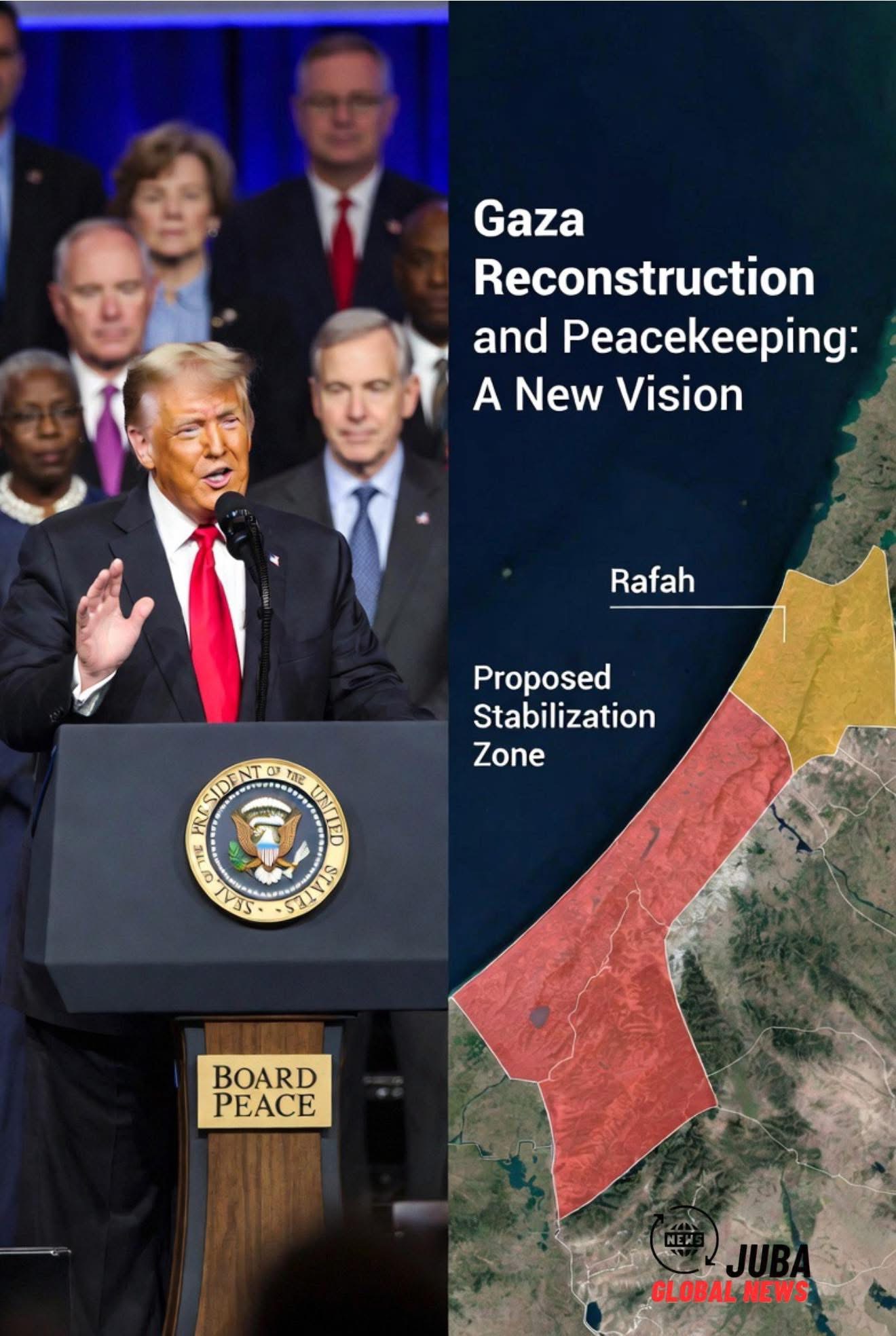
In a high-profile display of diplomatic ambition, U.S. President Donald Trump chaired the inaugural meeting of his newly established Board of Peace on February 19, 2026, in Washington, D.C., where he detailed sweeping plans for Gaza’s postwar reconstruction, international stabilization, and long-term governance. The gathering, held at the U.S. Institute of Peace (recently renamed in Trump’s honor), brought together representatives from more than 40 countries—though notably absent were several major Western allies and permanent UN Security Council members beyond the U.S.
Trump framed the session as a pivotal step in implementing Phase Two of his Comprehensive Plan to End the Gaza Conflict—a 20-point roadmap endorsed by UN Security Council Resolution 2803 in late 2025. Declaring the war in Gaza “effectively over” despite reports of ongoing ceasefire violations and sporadic violence, the president emphasized reconstruction, disarmament of Hamas, and the creation of a stable, prosperous future for the territory’s residents.
Major Financial Commitments Announced
Trump highlighted substantial pledges for Gaza’s rebuilding:
- The United States committed $10 billion over a multi-year period as part of a broader reconstruction fund.
- Nine member countries—including Kazakhstan, Azerbaijan, UAE, Morocco, Bahrain, Qatar, Saudi Arabia, Uzbekistan, and Kuwait—collectively pledged more than $7 billion toward humanitarian relief and infrastructure.
- Additional contributions included $2 billion from the United Nations and $75 million from FIFA, bringing early totals to around $17 billion (though independent estimates place full reconstruction needs at $50–70 billion or higher).
These funds aim to support massive infrastructure projects, including housing (starting with 100,000 homes in Rafah for up to 500,000 people), coastal development zones, and essential services. Trump described the effort as transforming Gaza from a “hotbed of radicalism and terror” into a model of success, with long-term visions including modern governance, economic investment, and pathways toward Palestinian self-determination under reformed institutions.
International Troop Commitments for Stabilization Force
A key highlight was the formation of the International Stabilization Force (ISF), a multinational peacekeeping contingent to secure Gaza, protect civilians, facilitate disarmament, and support a vetted Palestinian police force. U.S. Army General Jasper Jeffers was appointed as commander of the planned force.
Five countries pledged troops:
- Indonesia — Up to 8,000 personnel (with Indonesia accepting the deputy commander role), focusing on humanitarian aid, civilian protection, reconstruction support, and Palestinian police training.
- Morocco
- Kazakhstan
- Kosovo
- Albania
Egypt and Jordan committed to training Palestinian police officers, while the ISF is envisioned to eventually reach 20,000 troops deployed across sectors, beginning in Rafah in southern Gaza. The force will operate alongside Israeli and Egyptian border security elements to prevent arms smuggling and maintain stability during the transition.
Trump stressed that troop deployment would tie to progress on Hamas disarmament and demilitarization—core preconditions for full reconstruction and governance handover to a reformed Palestinian Authority or technocratic administration.
Broader Vision and Challenges Ahead
The Board of Peace, chaired indefinitely by Trump, positions itself as a coordinating body to oversee Gaza’s transition, mobilize resources, and ensure accountability. Trump insisted it would collaborate closely with the United Nations rather than supplant it, though he suggested the board would “look over” UN operations for efficiency.
The initiative includes ambitious redevelopment ideas, such as “New Gaza” and “New Rafah” projects with coastal tourism, modern housing, and infrastructure valued potentially at tens of billions. Jared Kushner and other advisors have been involved in shaping these economic visions.
However, significant hurdles remain:
- Ongoing ceasefire fragility, with reports of violations and no full Hamas disarmament.
- Absence of key players: Major European allies, Russia, China, and Palestinian representatives (though a separate National Committee for Gaza Administration includes Palestinian technocrats).
- Skepticism from critics who view the board as a U.S.-centric alternative to UN-led efforts, potentially sidelining multilateral norms.
- Logistical questions around troop timelines, command structure, and funding sustainability.
Protesters gathered outside the venue, expressing concerns over the plan’s implications for Palestinian rights and regional stability.
Trump hailed the meeting as historic, praising attendees and predicting it would bring “lasting harmony” to a region long plagued by conflict. As implementation begins—starting with initial deployments and fund disbursement—the coming months will test whether this bold framework can deliver tangible peace and rebuilding in Gaza.
Juba Global News Network will continue monitoring updates from the Board of Peace, ISF developments, and on-the-ground progress in Gaza.
(Images: President Donald Trump speaking at the Board of Peace podium with world leaders; Group photo of attending dignitaries including Indonesian President Prabowo Subianto; Map of Gaza highlighting Rafah and proposed stabilization zones; Conceptual rendering of postwar Gaza reconstruction with modern housing and infrastructure)
