

The U.S. Completes Syria Withdrawal: End of a 12-Year Military Presence Amid Lingering ISIS Concerns
By Juba Global News Network | JubaGlobal.com February 21, 2026 – Juba, South Sudan (Updated 11:42 AM EST / Greensburg, PA Correspondent Relay) In a decisiv
By Juba Global News Network | JubaGlobal.com
February 21, 2026 – Juba, South Sudan (Updated 11:42 AM EST / Greensburg, PA Correspondent Relay)
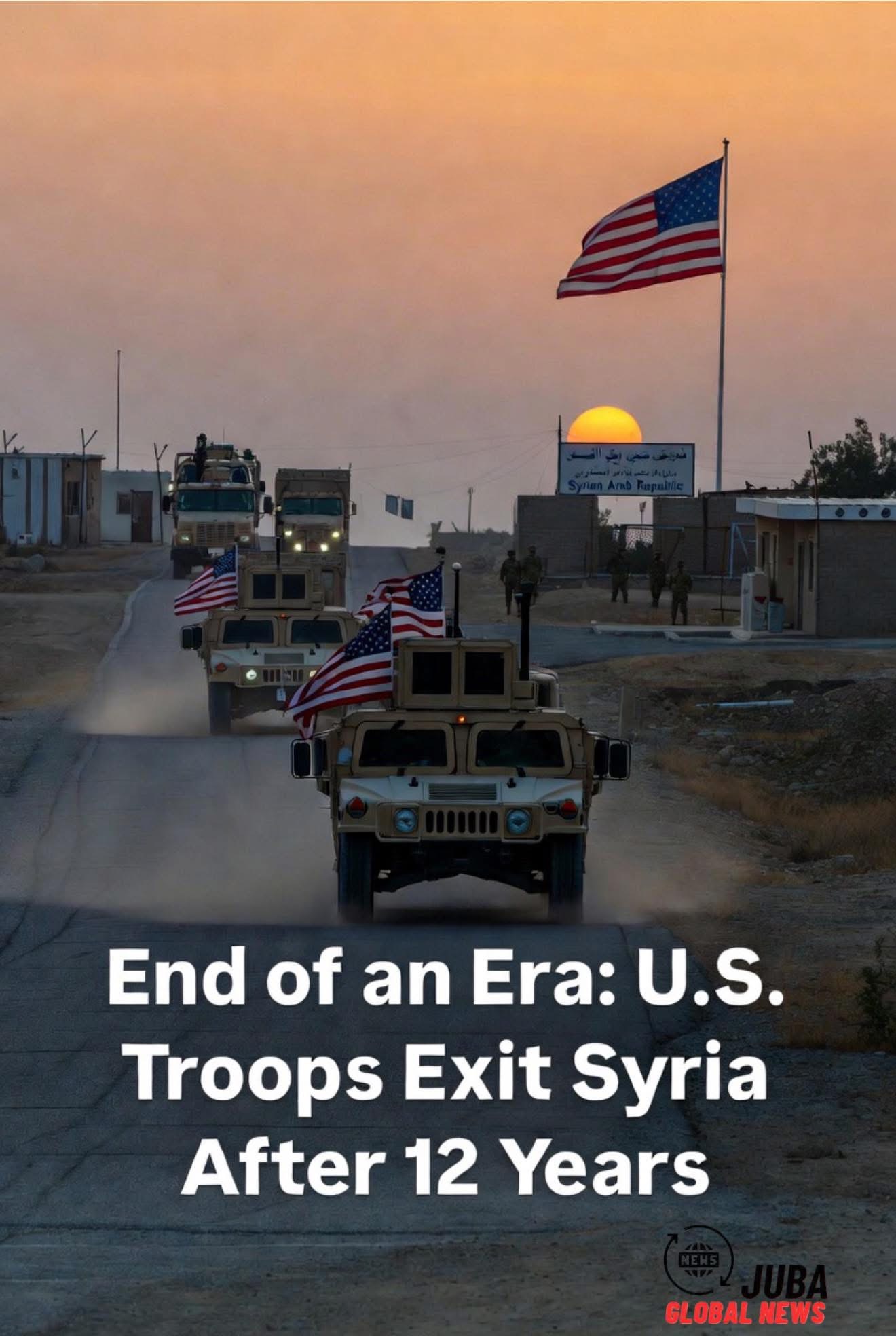
In a decisive step that fulfills a long-standing promise from President Donald Trump’s first term, the United States has initiated the full withdrawal of its remaining approximately 1,000 troops from Syria. According to multiple reports from The Wall Street Journal, Reuters, Fox News, CBS News, Al Jazeera, BBC, and others, the process is underway and expected to conclude within the next two months—by April 2026 at the latest. This marks the definitive end to America’s ground-level military involvement in Syria, which began in 2014 as part of the global coalition to defeat the Islamic State (ISIS).
Phased Withdrawal and Key Milestones
The drawdown follows a “deliberate and conditions-based transition,” as described by U.S. officials and U.S. Central Command (CENTCOM). Recent developments include:
• Al-Tanf Garrison Closure: On February 12, 2026, CENTCOM confirmed the “orderly departure” from this strategic southern base near the Iraq-Jordan border. The site, established in 2014, had served as a key hub for counter-ISIS operations and deconfliction efforts. Syrian government forces assumed control in a coordinated handover.
• Al-Shaddadi Base Handover: Shortly before or around the same period, U.S. troops vacated this northeastern facility in Hasakah province, transferring it to Syrian authorities as part of broader agreements involving the integration of Kurdish-led Syrian Democratic Forces (SDF) into national structures.
These base closures signal the broader exit. Senior White House and military officials have emphasized that while ground presence is ending, the U.S. retains “over-the-horizon” capabilities—including airstrikes, intelligence support, and rapid response options—to counter any ISIS resurgence. A senior administration official told the BBC that the Syrian government, under President Ahmed al-Sharaa, has committed to leading counter-terrorism efforts domestically, rendering a large-scale U.S. footprint unnecessary.
President Trump, who first announced intentions to withdraw in December 2018 (prompting Defense Secretary Jim Mattis’s resignation) and faced pushback again in 2019, has now seen the policy implemented in his second term. Officials cite the near-dissolution of the original SDF partnership model—following the group’s integration pledges—and Syria’s evolving stability post-Assad as key factors.
Historical Background: A Decade-Long Commitment
U.S. intervention in Syria stemmed from Operation Inherent Resolve, launched to dismantle ISIS’s territorial caliphate. At its height, around 2,000 American troops supported Kurdish-dominated SDF partners, securing oil fields, detaining ISIS fighters and families, and preventing territorial revival. The group’s caliphate collapsed by 2019, but low-level threats persisted via sleeper cells.
Trump’s earlier attempts at full withdrawal were scaled back due to concerns over ISIS resurgence, Iranian influence, and ally commitments. The current move aligns with “America First” priorities: reducing “endless wars,” reallocating resources amid rising tensions with Iran (including naval buildups), and supporting diplomatic normalization with Damascus.
Geopolitical Ramifications
The withdrawal reshapes the region:
• Syrian Sovereignty and Reconstruction — Damascus regains effective control east of the Euphrates, potentially unlocking oil investments, reconstruction aid, and economic recovery.
• Kurdish and SDF Dynamics — The SDF’s integration reduces U.S. leverage, raising concerns among Kurds about future marginalization or Turkish pressures.
• ISIS Risk — While ISIS no longer holds territory, critics warn of exploitation in the vacuum. Thousands of detainees (including foreign fighters) have been transferred to Iraq, but gaps in oversight remain. U.S. officials insist partner-led efforts and strike capabilities will suffice.
• Iran and Proxies — The exit coincides with heightened U.S.-Iran friction, possibly freeing assets for elsewhere while ceding some ground to Tehran’s influence.
• Allied Reactions — Turkey may view it positively (less U.S. backing for Kurds); Israel monitors closely; Gulf states express stability worries.
This fits broader U.S. posture shifts, echoing the 2021 Afghanistan withdrawal but with more phased execution.
Lingering Uncertainties
Can Syria’s new leadership effectively contain extremism without external boots? Will ISIS sleeper cells regroup? How does this impact U.S. credibility with partners?
As the last troops prepare to depart, this closes a major post-9/11 chapter. The fight against terrorism evolves—from ground occupation to remote deterrence—in a volatile Middle East.
Juba Global News Network sources include The Wall Street Journal (Feb 18, 2026), Reuters, Fox News, CBS News, BBC, Al Jazeera, Defense Priorities, PBS, CENTCOM statements, and regional analyses (as of February 21, 2026).
