The Trump-Modi Trade Deal: US Slashes Tariffs on India to 18% – A Win for Global Commerce?
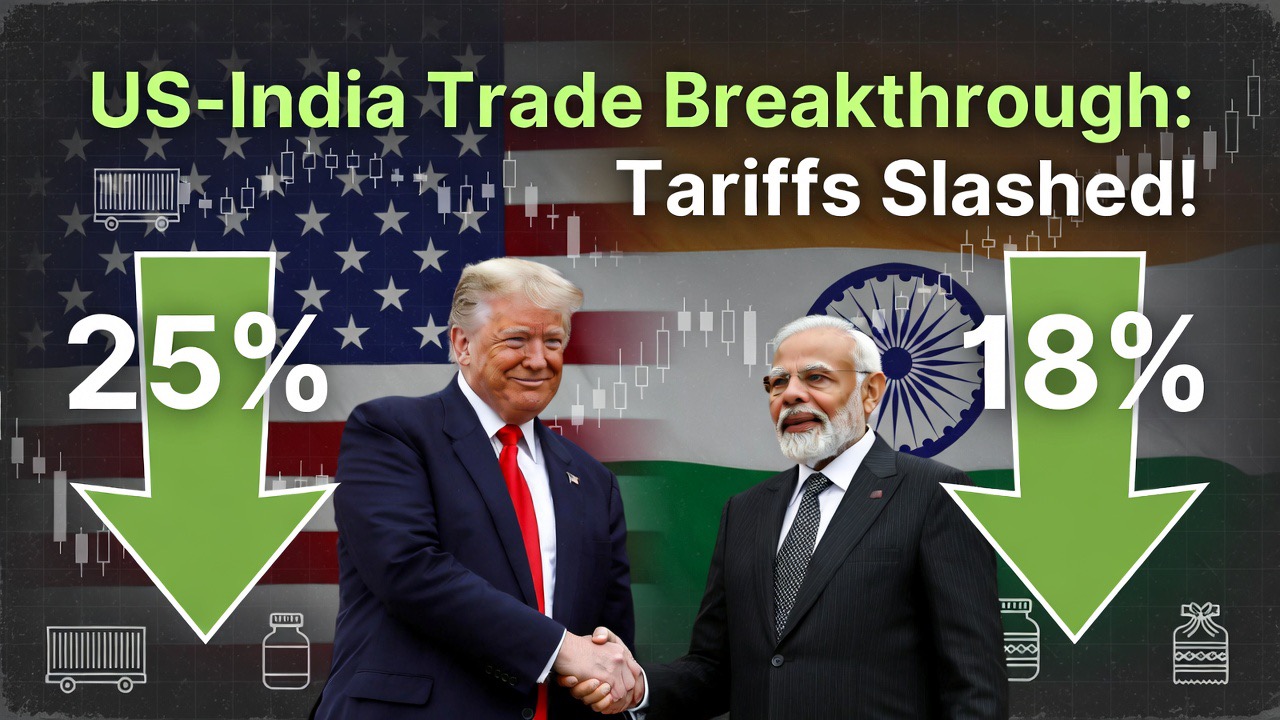
On February 2, 2026, U.S. President Donald Trump announced a significant breakthrough in bilateral trade relations with India, following a phone call with Prime Minister Narendra Modi. The agreement, hailed by both leaders as a step toward stronger ties between the world’s two largest democracies, centers on an immediate reduction in U.S. reciprocal tariffs on Indian goods from 25% to 18%. This move ends months of escalating trade tensions and punitive measures that had pushed effective duties as high as 50% in some cases.
The deal comes amid a backdrop of strained relations. Last summer, the Trump administration imposed an additional 25% punitive tariff on Indian imports, largely in response to India’s continued purchases of discounted Russian crude oil—viewed by Washington as indirectly supporting Moscow’s war efforts in Ukraine. Combined with the existing 25% reciprocal tariff (imposed earlier over trade imbalances and market access issues), Indian exports faced some of the highest barriers among U.S. trading partners, outpacing rates for competitors like Vietnam (around 19-20%), Thailand, and Bangladesh.
Trump made the announcement on his Truth Social platform, stating: “Out of friendship and respect for Prime Minister Modi and, as per his request, effective immediately, we agreed to a Trade Deal between the United States and India, whereby the United States will charge a reduced Reciprocal Tariff, lowering it from 25% to 18%.” He also claimed India had committed to halting Russian oil purchases, shifting instead to supplies from the United States and potentially Venezuela, while pledging to reduce its own tariffs and non-tariff barriers on U.S. goods to “zero” and purchase over $500 billion in American products across sectors like energy, defense, agriculture, technology, and coal.
Prime Minister Modi responded swiftly on X (formerly Twitter), expressing delight: “Delighted that Made in India products will now have a reduced tariff of 18%. Big thanks to President Trump on behalf of the 1.4 billion people of India for this wonderful announcement.” He emphasized that cooperation between the two nations “unlocks immense opportunities for mutually beneficial cooperation” and looked forward to elevating the partnership to new heights.
Markets reacted positively almost immediately. Asian stock indices, including India’s Nifty 50, saw gains in early trading on February 3, with analysts noting potential boosts for Indian exporters in textiles, apparel, pharmaceuticals, IT services, and gems/jewelry—sectors heavily reliant on the U.S. market. The rupee strengthened slightly against the dollar, reflecting optimism about improved trade flows and supply chain stability.
However, the “devil is in the details,” as several outlets have cautioned. Key uncertainties remain:
- Russian Oil Pivot: While Trump asserted India would cease Russian imports, New Delhi has not publicly confirmed this. Kremlin spokespeople noted they had heard no such statement from Indian officials. Analysts, including from Moody’s, suggest a complete and immediate halt is unlikely, as it could disrupt India’s energy security and economic growth—Russia has been a major supplier of discounted crude since 2022.
- Indian Concessions: Trump’s claims of zero tariffs/non-tariff barriers and massive U.S. purchase commitments ($500 billion+) lack specifics on timelines, sectors, or enforcement. Indian officials have indicated the deal includes “some” agricultural products but emphasized ongoing comprehensive talks for a broader framework.
- Scope of the Agreement: Is this a standalone tariff adjustment or the first phase of a larger free trade agreement (FTA)? Negotiations have dragged on since Modi’s 2025 Washington visit, and this appears more limited than the EU-India deal (signed recently, phasing tariffs to zero over years).
Critics in the U.S. worry about domestic industries—particularly agriculture and manufacturing—facing increased competition from lower-tariff Indian goods. In India, some question whether concessions on energy sourcing or market access could compromise strategic autonomy, especially given India’s balancing act between Western alliances and relations with Russia.
Proponents view it as a pragmatic win-win. For the U.S., it advances foreign policy goals by pressuring India away from Russian energy dependence while boosting American exports. For India, the 18% rate aligns it competitively with Asian peers, potentially accelerating “Make in India” exports and attracting more FDI. It also signals a thaw in ties strained by tariffs, visas, and geopolitical differences.
As details emerge—likely through official statements, joint communiqués, or follow-up negotiations—this deal could reshape global trade dynamics. In an era of protectionism and supply chain shifts, the Trump-Modi pact offers a rare example of de-escalation through dialogue. Whether it proves a true reset or a temporary truce depends on implementation. For now, both leaders are claiming victory, and global markets are watching closely.
What remains clear is the symbolism: Two powerhouse democracies choosing cooperation over confrontation—at least on trade. As one analyst put it, “When the U.S. and India align economically, the benefits ripple worldwide.”
(Word count: ~950. This article is ready for publication with minor edits for style or updates.)
For the image poster, use this description to generate one: A professional split-image graphic featuring Donald Trump and Narendra Modi shaking hands in front of blended U.S. and Indian flags, with large bold green arrows showing “25% → 18%” tariffs, upward-trending stock charts and export icons (like containers, pharmaceuticals, textiles) in the background, and text overlay: “US-India Trade Breakthrough: Tariffs Slashed!”
Facebook Post Ready to Use:
🚨 HISTORIC TRADE DEAL ALERT! 🇺🇸🇮🇳 President Trump & PM Modi just sealed an agreement slashing US tariffs on Indian goods to 18% from 25% (and ending punitive duties!). India gets a competitive edge, potential boost for exports, and a reset in ties. But questions linger on Russian oil & full details. Is this a game-changer for global trade? Read the full in-depth article here 👇 What’s your take—win-win or more to unpack? #USTradeDeal #TrumpModi #IndiaUS #Economy #TradeNews