

RSF Drone Strike Kills Three Aid Workers in Sudan’s Kordofan — Amid Ongoing Civil War, with UN Reports Highlighting ‘Hallmarks of Genocide’ in Prior El Fasher Assaults
In a stark illustration of the escalating dangers facing humanitarian operations in Sudan, a drone strike attributed to the Rapid Support Forces (RSF) hit
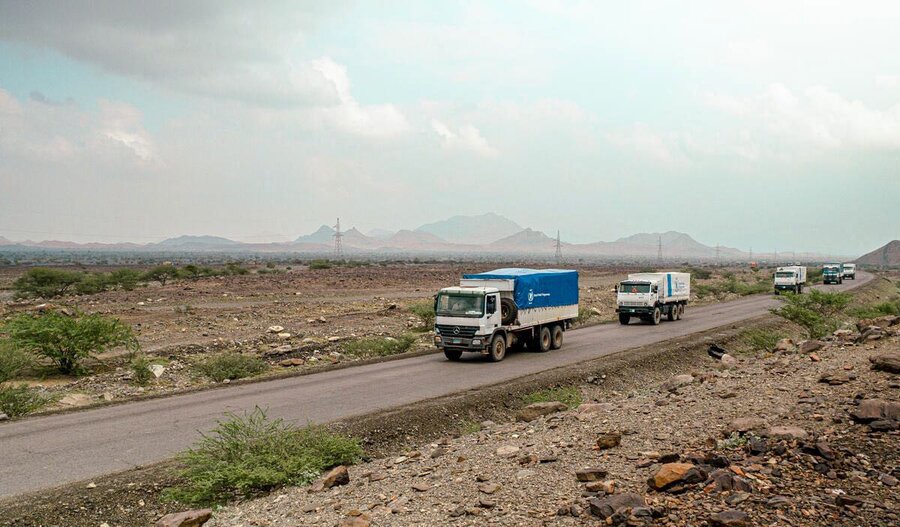
In a stark illustration of the escalating dangers facing humanitarian operations in Sudan, a drone strike attributed to the Rapid Support Forces (RSF) hit an aid convoy in South Kordofan on Thursday, February 20, 2026, killing at least three people — including aid workers — and wounding four others. The convoy, carrying food and essential humanitarian supplies destined for the besieged cities of Kadugli and Dilling, was struck in the Kartala area as it traversed contested territory in the heart of the country’s intensifying battlefield.
The Sudan Doctors Network, a local monitoring group that tracks violence across the war-torn nation, reported the incident on social media, explicitly blaming RSF drones. “This is the second such incident in less than a month,” the group stated, condemning the attack as a “blatant violation of international humanitarian law” that deliberately targets those delivering life-saving aid. The network urged immediate international pressure on RSF leadership to protect humanitarian convoys, establish safe corridors, and ensure accountability for those responsible.
This latest tragedy unfolds against the backdrop of Sudan’s brutal civil war, now entering its third year, which has already claimed tens of thousands of lives, displaced over 12 million people — making it the world’s largest displacement crisis — and triggered famine in multiple regions. The strike coincides almost precisely with the release, just one day earlier on February 19, of a damning United Nations report by the Independent International Fact-Finding Mission for Sudan. The report concludes that RSF actions during the October 2025 capture of El Fasher, the last major Sudanese Armed Forces (SAF) stronghold in North Darfur, bear the “hallmarks of genocide” against non-Arab ethnic communities, particularly the Zaghawa and Fur.
The Drone Strike: A Direct Threat to Aid Efforts
Details remain limited, as independent verification is challenging in the fog of war, but accounts from monitors and survivors paint a grim picture. The convoy consisted of trucks loaded with food and supplies intended to reach civilians in Kadugli — the capital of South Kordofan, long under siege — and the nearby town of Dilling. Both locations had only recently seen partial relief after SAF forces claimed to have broken prolonged RSF sieges in late January and early February 2026, allowing limited aid deliveries, including a UN convoy that reached over 130,000 people for the first time in months.
The attack in Kartala, a transit point in the volatile Kordofan region, underscores the growing reliance on drone warfare by both sides. RSF forces, allied in this instance with elements of the Sudan People’s Liberation Movement–North (SPLM-N), have increasingly turned to drones to harass SAF advances and disrupt supply lines following their expulsion from much of Khartoum earlier in the conflict. Sudan Doctors Network noted that at least 77 civilians had already been killed in Kordofan drone strikes in February alone, highlighting a surge in aerial attacks that spare no one — not even clearly marked humanitarian operations.
Aid workers and organizations expressed outrage but little surprise. Attacks on humanitarian convoys have become disturbingly routine, with over 130 humanitarian workers — nearly all Sudanese nationals — killed since the war began in April 2023. The latest incident follows a similar strike earlier in February on a World Food Programme convoy in North Kordofan. Humanitarian access, already severely restricted by sieges, roadblocks, and active combat, is now further imperiled. “No corner of Sudan is safe,” warned UN officials in recent Security Council briefings, as front lines shift rapidly across Kordofan, Darfur, and beyond.
UN Report: ‘Hallmarks of Genocide’ in El Fasher
The timing of the Kordofan strike amplifies the urgency of the UN fact-finding mission’s findings on El Fasher. Released on February 19, 2026, the report — titled “Hallmarks of Genocide in El Fasher” — details a coordinated, 18-month RSF siege followed by a ruthless takeover in late October 2025 that left thousands dead in just three days.
According to the mission, RSF forces and allied militias committed at least three underlying acts of genocide under the 1948 Genocide Convention: killing members of protected ethnic groups; causing serious bodily or mental harm; and deliberately inflicting conditions of life calculated to bring about the group’s physical destruction, in whole or in part. The targeted groups were primarily the Zaghawa and Fur communities — non-Arab ethnic groups long vulnerable in Darfur.
Evidence includes an 18-month siege that systematically deprived civilians of food, water, medicine, and humanitarian aid, weakening the population through starvation and confinement. When RSF fighters overran the city on October 26-27, 2025, they unleashed mass killings, widespread rape and sexual violence (selectively targeting non-Arab women and girls while sparing those perceived as Arab), torture, arbitrary detentions, extortion, enforced disappearances, and systematic looting. Survivors recounted RSF fighters shouting slurs such as “Is there anyone Zaghawa among you? If we find Zaghawa, we will kill them all,” “We want to eliminate anything black from Darfur,” and “These are slaves. Kill them, destroy them, rape them.”
The mission’s chair, Mohamed Chande Othman, stated unequivocally: “The scale, coordination, and public endorsement of the operation by senior RSF leadership demonstrate that the crimes committed in and around El Fasher were not random excesses of war. They formed part of a planned and organized operation that bears the defining characteristics of genocide.”
Fellow expert Mona Rishmawi added: “The body of evidence we collected — including the prolonged siege, starvation and denial of humanitarian assistance, followed by mass killings, rape, torture and enforced disappearance, systematic humiliation and perpetrators’ own declarations — leaves only one reasonable inference. The RSF acted with intent to destroy, in whole or in part, the Zaghawa and Fur communities in El Fasher. These are the hallmarks of genocide.”
Joy Ngozi Ezeilo warned of the broader risk: “As the conflict has expanded to the Kordofan region, urgent protection of civilians is needed — now more than ever. The conduct in El Fasher represents… an acute manifestation of patterns consistent with genocidal violence.”
The report estimates at least 6,000 killed in the initial assault on El Fasher alone, with thousands more unaccounted for. Only about 40% of the city’s pre-siege population of roughly 260,000 managed to flee. The findings build on earlier patterns of RSF atrocities in West Darfur, where mass killings of the Masalit ethnic group in 2023 drew comparisons to the early 2000s Darfur genocide.
Sudan’s Civil War: From Power Struggle to Humanitarian Catastrophe
Sudan’s conflict erupted on April 15, 2023, when long-simmering tensions between the Sudanese Armed Forces (SAF), led by General Abdel Fattah al-Burhan, and the RSF, commanded by General Mohamed Hamdan Dagalo (Hemedti), exploded into open warfare in Khartoum and beyond. The two generals had jointly seized power in a 2021 coup but fell out over the integration of the RSF — a paramilitary force with roots in the notorious Janjaweed militias of the 2003-2005 Darfur genocide — into the regular army.
What began as a fight for control of the capital and state institutions has devolved into a sprawling, multi-front war characterized by ethnic targeting, sexual violence on a massive scale, indiscriminate bombings, and deliberate starvation tactics. Estimates of the death toll vary widely due to the chaos and restricted access: credible figures range from over 150,000 direct and indirect deaths to potentially 400,000 when including famine and disease. More than 12 million people have been displaced internally or as refugees in neighboring countries, with two-thirds of Sudan’s 48 million population requiring humanitarian assistance. Famine has been confirmed in parts of North Darfur and South Kordofan, with millions more at risk.
After being pushed out of Khartoum in early 2025, the RSF consolidated control over much of Darfur and pivoted to the strategic Kordofan region — a vital corridor linking Darfur to central Sudan and Khartoum. Recent SAF advances, including the recapture of Dilling and breakthroughs toward Kadugli, have prompted RSF retaliation through intensified drone strikes and sieges around El Obeid in North Kordofan. Both sides have been accused of war crimes and crimes against humanity by the UN, human rights groups, and the International Criminal Court, which has opened investigations.
The RSF’s history in Darfur — where its predecessors carried out ethnic cleansing against non-Arab groups under Omar al-Bashir — lends particular weight to genocide allegations. Yet the SAF has also faced accusations of indiscriminate aerial bombings and blocking aid.
International Response and the Path Forward
The UN report has prompted swift, if limited, action. On the heels of its release, the United States announced sanctions on three senior RSF commanders implicated in the El Fasher atrocities. Over 30 countries issued a joint statement expressing “grave concern” over escalating drone attacks and calling for protection of civilians and humanitarian operations. The UN Security Council has heard repeated briefings urging an immediate ceasefire, unimpeded aid access, and accountability.
Yet enforcement remains elusive. Ceasefire talks, mediated by regional actors including Saudi Arabia, the United States, and the African Union, have repeatedly stalled. Both Burhan and Hemedti have shown little willingness to compromise, prioritizing military gains over civilian suffering. Calls for targeted sanctions, arms embargoes, and referral of the situation to the International Criminal Court have grown louder, but geopolitical divisions — including alleged external support for both sides from actors in the Gulf, Russia, and elsewhere — complicate unified action.
Humanitarian organizations warn that without immediate safe corridors and a halt to attacks on aid workers, the crisis will deepen. Famine is spreading, cholera and other diseases are rampant, and entire generations of children face interrupted education and trauma.
The Kordofan drone strike and the El Fasher report together serve as a grim warning: Sudan’s war is not merely a power struggle between two generals but a conflict with genocidal potential that threatens to engulf ever-larger swaths of the country. As Joy Ngozi Ezeilo noted, the patterns seen in El Fasher risk repeating in Kordofan unless the international community acts decisively to protect civilians, ensure accountability, and force the warring parties to the negotiating table.
For the aid workers killed on Thursday — Sudanese heroes risking their lives to feed the hungry in one of the world’s most forsaken crises — and for the millions trapped in the crossfire, time is running out. The world has watched Darfur before; repeating the failures of the past is not an option.
