

Pentagon Identifies First U.S. Casualties: Four Army Reservists Killed in Iranian Drone Strike on Kuwait Command Center – Additional American Service Members Reported Wounded or Missing
(As of March 4, 2026 – Amid Day 5 of the U.S.-Israel Campaign Against Iran) The human cost of the escalating U.S.-Israel war with Iran became starkly real
(As of March 4, 2026 – Amid Day 5 of the U.S.-Israel Campaign Against Iran)
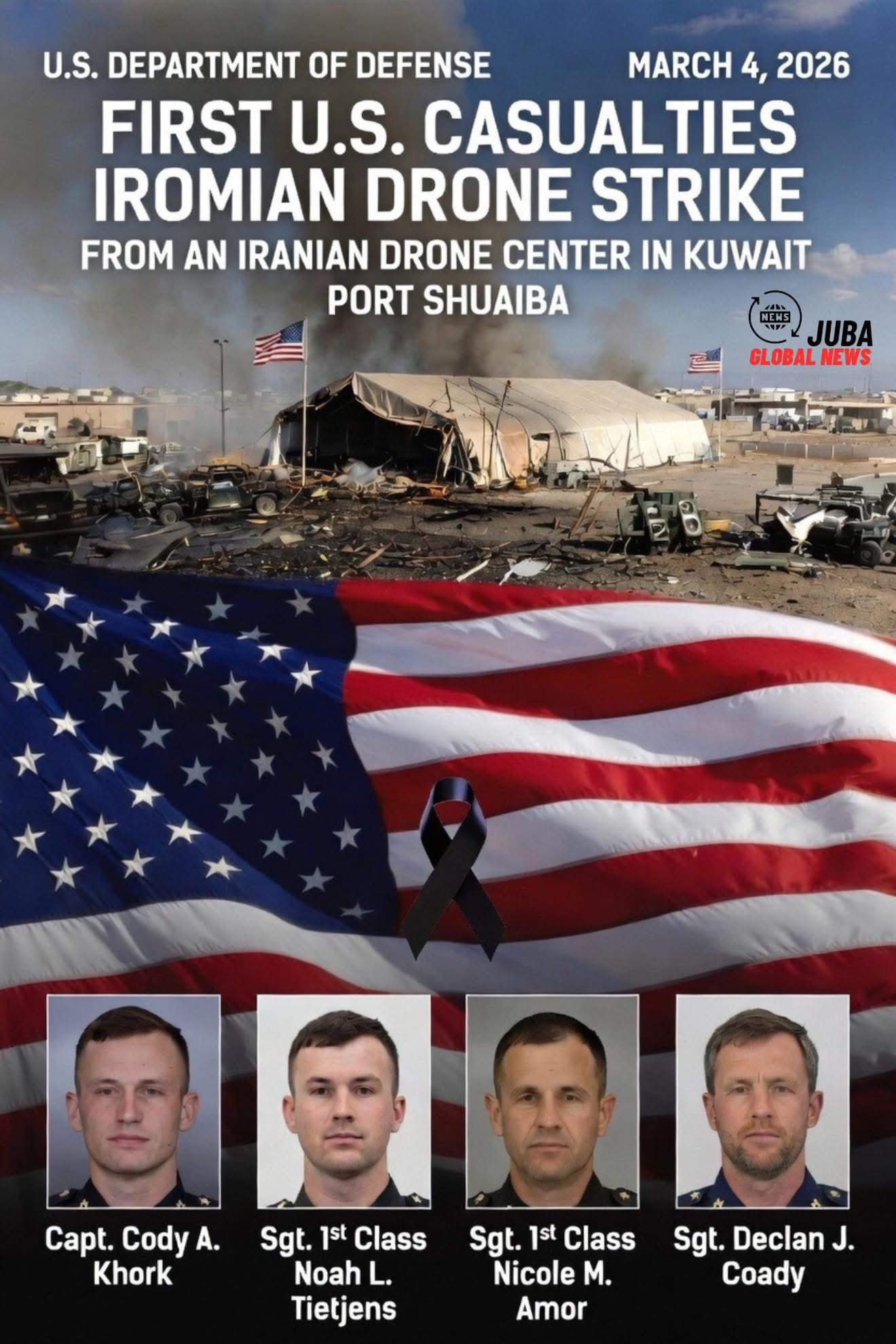
The human cost of the escalating U.S.-Israel war with Iran became starkly real on March 3, 2026, when the Pentagon publicly identified the first confirmed American fatalities in the conflict. Four U.S. Army Reserve soldiers were killed in an Iranian drone strike on a tactical operations center at Port Shuaiba, a key civilian logistics port in Kuwait used by U.S. forces for regional support. The attack, which occurred on March 1—just days after the opening strikes on Iran—marked the initial direct loss of American lives in what has rapidly become a multi-front regional war.
Details of the Attack and Casualties
The strike targeted a makeshift operations center described as a fortified triple-wide trailer serving as command and coordination space. Reports indicate the drone evaded or penetrated air defenses, detonating with no prior warning—no sirens or alerts gave troops time to evacuate or seek shelter. The blast caused catastrophic structural damage: walls blown outward, interior blackened by fire, and smoldering debris lingering hours later.
Initially reported as three fatalities with five seriously wounded, the toll rose to six killed after recovery teams located remains of two additional service members. The Pentagon has identified four of the six:
- Capt. Cody A. Khork, 35, of Winter Haven, Florida
- Sgt. 1st Class Noah L. Tietjens, 42, of Bellevue, Nebraska
- Sgt. 1st Class Nicole M. Amor, 39, of White Bear Lake, Minnesota
- Sgt. Declan J. Coady (also reported as Spc. Declan J. Coady in some sources), 20, of Des Moines (or West Des Moines), Iowa
All four were assigned to the 103rd Sustainment Command, an Iowa-based Army Reserve unit providing logistical support—supplying food, equipment, and operational sustainment to forward-deployed forces across the Middle East. Two additional soldiers killed in the strike remain unidentified pending family notifications.
Beyond the fatalities, at least 18 U.S. service members were seriously wounded in the same incident or related Iranian retaliatory actions, with others suffering shrapnel injuries and concussions. The attack formed part of Iran’s broader counteroffensive, which included hundreds of ballistic missiles and drones targeting U.S. bases in Kuwait, Qatar (Al Udeid), Bahrain, UAE (including Dubai), and other Gulf locations.
Context Within the Broader Conflict
The strike came amid Iran’s response to joint U.S.-Israeli airstrikes that began February 28, 2026, targeting Iranian missile sites, air defenses, nuclear facilities, naval assets, and leadership—including the confirmed death of Supreme Leader Ali Khamenei. Iran’s retaliation has widened the conflict, hitting U.S. assets in allied nations and prompting defensive actions across the region.
In a related incident, Kuwaiti air defenses mistakenly downed three U.S. F-15E Strike Eagles during active combat, with all six crew members ejecting safely and recovering in stable condition—an example of the chaotic, high-threat environment complicating operations.
CENTCOM and Defense officials have emphasized that these losses, while tragic, are part of a campaign described as “ahead of game plan.” President Trump has braced the public for more casualties, stating operations could last weeks or longer, focused on degrading Iran’s missile, naval, and nuclear capabilities without committing to regime change or large-scale ground invasion.
Reactions and Tributes
Emotional tributes have poured in from across the U.S. Communities in Florida, Nebraska, Minnesota, and Iowa have mourned their fallen neighbors—many highlighting the reservists’ civilian lives alongside military service. Family statements, unit memorials, and public vigils underscore the personal toll behind the headlines.
The Pentagon and White House have reiterated support for the troops and families, with notifications ongoing. Defense Secretary Pete Hegseth described the strike as hitting a “fortified” center but noted one projectile breached defenses. Officials warn of potential further losses as Iranian proxies (including Hezbollah) and direct strikes continue.
Implications and Outlook
These first confirmed U.S. combat deaths have intensified domestic debate. Polls show mixed support for the campaign, with some Americans questioning the scope and risks. The casualties highlight vulnerabilities in forward logistics hubs and the challenges of defending against low-flying drones in a dispersed theater.
As the air campaign intensifies—now striking over 2,000 targets in Iran—the focus remains on air superiority and degradation of threats. Yet the human price is mounting, with civilian deaths in Iran exceeding 1,000 (per Iranian reports) and spillover violence affecting Gulf civilians and infrastructure.
For the families of Capt. Khork, Sgt. 1st Class Tietjens, Sgt. 1st Class Amor, Sgt. Coady, and the unnamed fallen, the war is no longer abstract. Their sacrifice underscores the gravity of a conflict that shows no immediate signs of abating, as diplomatic efforts remain stalled and regional tensions boil. The coming days will test U.S. resolve amid growing calls for de-escalation and vigilance for further Iranian retaliation.
