Ongoing Fallout from U.S. Raid and Capture of Venezuela’s Nicolas Maduro
By: Juba Global News Network | JubaGlobal.com
January 10, 2026
One week after the audacious U.S. military operation codenamed Operation Absolute Resolve captured Venezuelan President Nicolás Maduro and his wife Cilia Flores in a pre-dawn raid on Caracas, the geopolitical shockwaves continue to reverberate across Latin America and beyond. The January 3, 2026, strikes — involving airstrikes on military infrastructure, suppression of air defenses, and a special forces assault on Maduro’s residence — marked the most direct U.S. intervention in the region since the 1989 invasion of Panama. While President Donald Trump hails it as a triumph against “narco-terrorism,” the aftermath has unleashed a volatile mix of political uncertainty, economic maneuvering over oil, regional protests, and international condemnation.
Here are dramatic images from the operation and its immediate aftermath, showing destroyed military sites in Caracas, smoke rising from La Carlota air base, and Maduro being escorted after capture:

These visuals capture the precision strikes that cleared the path for Delta Force operators to apprehend Maduro at his Fort Tiuna compound.
Details of the Raid and Immediate Consequences
The operation began around 2 a.m. local time with explosions across northern Venezuela as U.S. forces bombed key sites to neutralize air defenses. Elite units then stormed Maduro’s residence, capturing him and Flores before extracting them to the USS Iwo Jima and ultimately to New York. Maduro and his wife now face federal charges in Manhattan including narco-terrorism conspiracy, cocaine importation, and weapons offenses — charges they pleaded not guilty to on January 5.
Venezuelan authorities report over 100 deaths (including security personnel, civilians, and reportedly 32 Cuban bodyguards), while the Pentagon confirms seven U.S. troops injured (five recovered). Maduro described himself in court as a “prisoner of war,” insisting he remains Venezuela’s legitimate president.
Here are additional photos of Maduro in U.S. custody and the damaged sites in Caracas:

New Leadership and U.S. Influence Over Oil
Vice President Delcy Rodríguez was swiftly sworn in as acting president on January 5, backed by the Supreme Court and Maduro loyalists. Rodríguez initially denounced the raid as “kidnapping” and “illegitimate aggression” aimed at seizing Venezuela’s resources, but has since softened her tone, signaling possible dialogue with Washington. She released nine political prisoners (including foreigners) as a goodwill gesture, which Trump cited as avoiding further escalation.
The U.S. has seized control of Venezuelan oil sales “indefinitely,” boarding tankers, redirecting crude (up to 50 million barrels earmarked for the U.S.), and pushing for major American investments to revive the sector. Trump has promised revenue will benefit Venezuelans while prioritizing U.S. access to the world’s largest proven reserves. Critics call it resource exploitation; supporters see it as stabilizing a collapsing economy.
These images illustrate the focus on oil — seized tankers, damaged facilities, and potential U.S.-influenced reconstruction:

Regional Protests and Tensions, Especially in Colombia
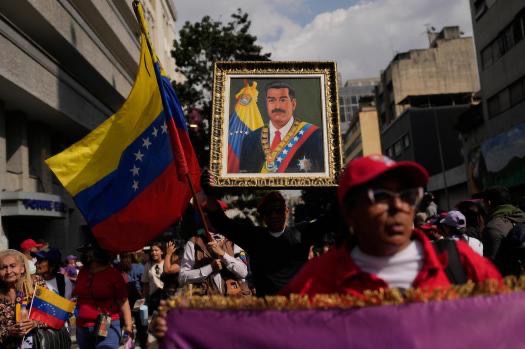
The capture has ignited widespread protests. In Venezuela, Maduro supporters marched in Caracas demanding his release, while some celebrated the ouster. Tensions are highest along the Colombia-Venezuela border: President Gustavo Petro mobilized forces anticipating refugees and warned of armed response to any similar U.S. action against Colombia. On January 8, thousands protested in Cúcuta and other cities against the intervention, chanting anti-U.S. slogans and supporting Venezuela’s sovereignty.
Here are scenes from protests in Colombia and along the border:

Broader Implications and International Reactions
Trump’s statements — including threats of further strikes if cooperation falters and suggestions of actions against Colombia — have raised fears of wider conflict. Internationally, Russia, China, Cuba, Brazil, and others condemned the operation as a violation of sovereignty. The UN Security Council held emergency discussions, with calls labeling it a “crime of aggression.”
As Rodríguez navigates U.S. demands amid domestic divisions, and with opposition figures like María Corina Machado eyeing a return, Venezuela faces an uncertain path. Will U.S. oil-focused influence stabilize the nation, or spark prolonged resistance and regional instability?
Juba Global News Network will continue tracking this fast-moving crisis. For exclusive updates, visuals, and in-depth analysis, visit JubaGlobal.com. Stay informed in an era of bold geopolitical moves.